
The heat treatments of U stainless steel heat exchanger

When talking about the heat treatment of austenitic U-shaped stainless steel tubes, most people think it’s not necessary because of sensitization and high solution treatment temperature, it is easy to cause deformation of the pipe. In fact, the heat treatment of Austenitic stainless steel is inevitable, heat treatment can not change the structure of stainless steel tubes, but can change the processability.

For example, due to low carbon content, 304 stainless steel heat exchange tube is difficult when normalizing to make the surface roughness of the gear shaping cutter to meet the requirements, reduce the tool life. The low carbon martensite and iron cable structure obtained after incomplete quenching can greatly improve the hardness and surface roughness, and the service life of the pipe can also be increased by 3 ~ 4 times. In addition, the u-shaped heat exchange tube bending part has a small bending radius and obvious work hardening phenomenon, heat treatment is necessary, and compared with the whole equipment for heat treatment, austenitic stainless steel pipe solution heat treatment, pickling passivation is much simpler. In this paper, a series of tests have been taken on U-shaped tubes with different specifications, bending radius and heat treatment conditions, and the necessity of heat treatment for U-shaped tubes made of austenitic stainless steel has been analyzed.


Experimental materials:

304 stainless steel U-tube

Size: 19*2mm, bending radius: 40, 15, 190, 265, 340mm

Size: 25*2.5mm Bending radius: 40, 115, 190, 265, 340,mm

Heat treatment: untreated, subsolid solution treatment, solid solution treatment


Hardness Testing

The bending section of u-shaped heat exchange tube without heat treatment and subsolid solution treatment: with the decrease of bending radius, the hardness value increases. The hardness value of heat exchange tube after solution treatment (compared with that before bending) has no obvious change. This indicates that Austenitic stainless steel work hardening effect is obvious, and with the increase of deformation, the trend of work hardening increases.


Microscopic inspection

For the u-shaped bend section with a bending radius of 40mm: there are a lot of martensite and slip lines in the microstructure without heat treatment, and the equiaxed shape of austenite in the microstructure has completely disappeared (too much martensite will make the steel brittle). Most of the martensite in the subsolid solution treated tissue has been transformed, but a small amount of martensite still exists.

After solution treatment, the austenite grains were equiaxed and no martensite was found. The slip bands and martensite also existed in the unheated microstructure of u-shaped tubes with bending radius R of 115, 190, 265 and 340mm after bending, but the content decreased gradually with the increase of bending radius. When the bending radius R of the U-shaped tube is greater than or equal to 265mm, the effect on the microstructure before and after heat treatment is not significant. When the bending radius R is less than 265mm, there is martensite in the microstructure of unheated U-shaped tubes, and the content of martensite decreases with the increase of heat treatment temperature (subsolid solution treatment and solid solution treatment).


Intergranular corrosion test

By microscopic examination, it was found that the presence of martensite did not affect intergranular corrosion. Although there is a large amount of martensite in the absolutized microstructure, there is no tendency of intergranular corrosion along with the distribution of martensite. Some grain boundaries widened before and after solution treatment, and the distribution of grain boundaries widened was independent of the distribution of martensite. On the basis of microscopic examination after the corrosion test, the bending test was carried out for u-shaped tubes in various states according to the test standard. No intergranular corrosion cracks were found in the tubes after bending 180°.


Solution treatment temperature

The effect of solution treatment is affected by the low solution temperature, and the results of microstructure and hardness can not be obtained. If the temperature is slightly higher, defects such as concave or crack may appear inside the U-shaped segment.


From the experiment, it is known that the martensite transformation of stainless steel after cold processing, the influence of corrosion resistance is far greater than the stress. When the bending radius of the u-shaped tube is less than 115mm, the microstructure of the u-shaped tube before and after solution treatment is significantly different. For this small radius U-shaped pipe bend segment, solid solution treatment should be performed after cold forming. If there is no requirement for higher intergranular corrosion resistance, it is recommended that the u-shaped bending section with a bending radius less than or equal to 265mm be treated with solution treatment (note to eliminate residual stress). For u-shaped heat exchange tubes with large radius curvature, the bending section may not be treated with solution, except for stress corrosion sensitive environments. Because the small pipe diameter fluid resistance is large, it is inconvenient to clean and easy to block the structure, and the large diameter stainless steel pipe fluid resistance is not as large as the small pipe diameter, easy to clean, more used for viscous or dirty fluid.


WLD Company can provide 304/316 stainless steel heat exchange tubes from 10mm to 114mm, the thickness of 0.6mm to 3.0mm; The length can be customized according to your actual working conditions. If you need it please contact us today.
De polijstbehandeling op roestvrijstalen buizen

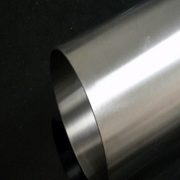
The polishing treatment of stainless steel tubes is actually a surface grinding process, through the instrument and stainless steel tube surface friction to obtain a bright surface. Stainless steel tube outside polishing is used to cut the surface with different coarse particle size linen wheel to obtain the bright surface, and the internal polishing is in the stainless steel tube inside the reciprocating or selective movement of the internal grinding with plastic grinding head. It is worth noting that polishing can not improve the original machining accuracy but only change the surface flatness, the surface roughness value of polished stainless steel tube can reach 1.6-0.008um. According to the processing process, can be divided into mechanical abandonment and chemical polishing.


Mechanische polijsting

Wheel polishing: The use of the flexible polishing wheel and fine abrasive on the surface of the steel pipe roll and micro-cutting to achieve the polishing process. The polishing wheel is made of overlapping layers of canvas, felt or leather, used for polishing large workpieces.

Roller polishing and vibration polishing is to put the workpiece, abrasive and polishing fluid into the drum or vibration box, the drum slowly rolling or vibration box vibration makes the workpiece and abrasive friction, polishing liquid chemical reaction can remove the steel pipe surface stains, corrosion, and burr to obtain a smooth surface. It’s suitable for large workpieces. The grinding resistance is related to the grinding machinery, the rigidity of the workpiece, and also has a relationship with the grinding vibration amplitude or grinding temperature, which affects the life of the grinding tool and the character of the grinding surface. The grinding temperature will cause the thermal deformation of the workpiece, reduce the dimensional accuracy, and also affect the processing metamorphic layer of the grinding surface.

Chiraleer

The stainless steel tube is immersed in a special chemical solution. The phenomenon that the raised part of the metal surface dissolves faster than the concave part is used to achieve the process of polishing.

Chemical polishing is less investment, fast speed, high efficiency, good corrosion resistance; However, there are also brightness differences, gas overflow needs ventilation equipment, heating difficulties, suitable for complex parts and small parts of the light intensity requirements are not high products.

Elektrolytisch polijsten

Electrolytic anode polishing on stainless steel tube is the process insoluble metal as the cathode, the poles into the electrochemical trough at the same time, through direct current (dc) and selective anodic dissolution, so stainless steel tube surface to achieve high brightness and luster appearance, and form – a sticky film on the surface, enhance the corrosion resistance of the pipe, applicable to occasions with higher requirements for surface quality.

Mirror polishing

Stainless steel mirror processing is actually a kind of polishing process, to the stainless steel pipe through the grinder counterclockwise rotation, correction wheel drive workpiece rotation, pressure on the pipe in the way of gravity pressure, In the matching grinding emulsion (mainly metal oxide, inorganic acid, organic lubricant and weak alkaline cleaning agent melt), stainless steel decorative tube and grinding disk for relative operation friction to achieve the purpose of grinding and polishing. The grade of polishing is divided into ordinary polishing, 6K, 8K, 10K, of which 8K grinding has been widely used because of the low process cost.

De gewichtsklasse van roestvrijstalen vierkante en rechthoekige buizen

Het roestvrij staal biedt een goede corrosieweerstand tegen de meest voorkomende chemische corrosieve stoffen en industriële atmosferen. De roestvrije vierkante of rechthoekige buizen hebben het voordeel van een lange levensduur, een goede corrosieweerstand en zijn lichtgewicht. Ze kunnen worden gebruikt in industriële leidingen, de automobielindustrie, instrumentatie, medische en constructie-industrieën, zoals trapleuningen, leuningen, scheidingswanden, fietsen, medische apparatuur, auto's, enz. Hieronder vindt u de gewichtskalender van deze buizen. 304 Vierkante en rechthoekige buizen:

304 roestvrij staal vierkant en rechthoekige buisgewicht 

Lengte: 6000 mm, Eenheid: kg

Afmetingen 0.4 0.5 0.6 0.7 0.8 0.9 1 1.2 1.5 2 2.5 3 4 5
10×10 0.74 0.91 1.09 1.26 1.43 1.59
12×12 0.89 1.1 1.32 1.53 1.73 1.93 2.13 2.53
15×15 1.12 1.39 1.66 1.92 2.19 2.45 2.71 3.21 3.95
18×18 1.35 1.68 2 2.32 2.64 2.96 3.28 3.9 4.8
19×19 1.42 1.77 2.12 2.46 2.8 3.13 3.47 4.12 5.09 6.63
20×20 1.5 1.87 2.23 2.59 2.95 3.3 3.66 4.35 5.37 7.01
22×22 2.06 2.46 2.86 3.25 3.65 4.04 4.81 5.94 7.78
23×11 1.58 1.89 2.19 2.49 2.79 3.09 3.67 4.52 5.87
23×23 2.15 2.57 2.99 3.14 3.82 4.23 5.04 6.23 8.16
24×12 1.77 2.12 2.46 2.8 3.13 3.47 4.12 5.09 6.63
24×24 2.25 2.69 3.12 3.56 3.99 4.42 5.27 6.51 8.54
25×25 2.34 2.8 3.26 3.71 4.16 4.61 5.49 6.8 8.92
28×28 2.63 3.14 3.66 4.17 4.67 5.18 6.18 7.66 10.06
30×30 2.82 3.37 3.92 4.47 5.02 5.56 6.64 8.23 10.82
36×23 2.77 2.31 3.86 4.4 4.93 5.46 6.52 8.08 10.63
36×36 3.39 4.06 4.72 5.38 6.04 6.7 8.01 9.94 13.1
38×38 4.99 5.69 6.39 7.08 8.46 10.51 13.86
40×40 5.26 5.99 6.73 7.46 8.92 11.08 14.63
48×23 4 4.66 5.31 5.96 6.61 7.89 9.8 12.91
48×48 6.32 7.21 8.1 8.98 10.75 13.37 17.67
50×50 6.59 7.52 8.44 9.37 11.2 13.94 18.43 22.85
20×10 1.12 1.39 1.66 1.92 2.19 2.45 2.71 3.21
25×13 1.42 1.77 2.12 2.46 2.8 3.13 3.47 4.12 5.09 6.63
30×15 2.1 2.52 2.92 3.33 3.73 4.13 4.92 6.09 7.97
38×25 3.54 4.12 4.7 5.27 5.84 6.98 8.66 11.39
40×10 2.8 3.26 3.71 4.16 4.61 5.49 6.8 8.92
40×20 3.37 3.92 4.47 5.02 5.56 6.64 8.23 10.82
50×25 4.23 4.92 5.61 6.3 6.99 8.35 10.37 13.67
60×30 5.92 6.76 7.59 8.41 10.06 12.51 16.53 20.47
75×45 7.92 9.04 10.16 11.27 13.49 16.79 22.24
55×13 3.83 4.46 5.08 5.7 6.32 7.55 9.37 12.34
60×40 6.59 7.52 8.44 9.37 11.2 13.94 18.43 22.85
60×60 7.92 9.04 10.16 11.27 13.49 16.79 22.24 27.61 32.91
70×30 6.59 7.52 8.44 9.37 11.2 13.94 18.43 22.85
73×43 7.65 8.73 9.81 10.89 13.03 16.22 21.48 26.66
80×40 10.16 11.27 13.49 16.79 22.24 27.61 32.91
80×60 11.87 13.17 15.77 19.64 26.04 32.37 38.62 50.89
80×80 13.58 15.07 18.05 22.5 29.85 37.13 44.33 58.5
95×45 11.87 13.17 15.77 19.64 26.04 32.37 38.62 50.89
100×40 13.17 15.77 19.64 26.04 32.37 38.62 50.89
100×50 14.12 16.91 21.07 27.95 34.75 41.47 54.7
120×60 20.34 25.35 33.66 41.88 50.04 66.12 81.9
150×100 35.34 46.98 58.53 70.02 92.76 115.2
100×100 22.62 28.21 37.46 46.64 55.74 73.73 91.41
150×150 42.48 56.52 70.43 84.29 111.79 138.99

Is Alloy20 een nikkelhoudend legeringsmetaal of roestvrij staal?

Alloy20 (N08020) is an Austenitic nickel-iron-chromium-based superalloy with excellent resistance to total, intergranular, pitting and crevice corrosion in chemicals containing chlorides, sulfuric acid, phosphoric acid and nitric acid. Its corrosion resistance is good between 316L and Hastelloy, and it is not as good as 316L stainless steel in some amine solutions because it is easy to form nickel ammonium complexes.

In addition, it has a good cold forming and weldability even at up to 500℃. The low carbon content and the addition of niobium help to reduce the precipitation of carbides in the HEAT affected zone, so it can be used in the welded state in most cases.

For a long time, many people have been arguing: Is Alloy 20 a stainless steel or a nickel Alloy? Because their 32-38% nickel content is just close to 36%, the boundary between stainless steel and nickel-based alloys blurs the classification of materials. In general, it is true that alloy20 is a nickel alloy. The new edition of ASTM A240 includes alloy 20, which supports that alloys 20 have been classified as stainless steel from the side. Alloy20 plates are in accordance with ASTM B463, ASME SB463. The same materials as N08904 (904L), N08926(1.4529), etc., were early classified in the ASTM B nickel alloy standard series.


Alloy20 has the common characteristics of nickel alloy in terms of welding properties, that is, generally does not produce cold cracks when welding, and is more prone to produce hot cracks. Because of nickel and sulfur, phosphorus can form low melting eutectic, solidification often forms a thick dendritic austenite crystal, low melting point impurity is more likely to focus on grain boundary, the grain size and the effect of solidification shrinkage stress and welding stress, not entirely solidification grain boundary of low melting point material is easy to cracking formation of hot crack, so should strictly control the sulfur and phosphorus content of welding material.

Alloy 20 has excellent resistance to stress corrosion cracking, good resistance to local corrosion, satisfactory corrosion resistance in many chemical process media, chlorine gas and all kinds of media containing chloride, dry chlorine gas, formic and acetic acid, anhydride, seawater and saltwater, etc. At the same time, 20 alloy oxidation-reducing composite media corrosion, is often used in a sulfuric acid environment and containing halogen ions and metal ions sulfuric acid solution applications, such as hydrometallurgy and sulfuric acid industrial equipment.

First developed in 1951 for application in sulfuric acid, alloy 20 is the preferred alloy for sulfuric acid industrial environments. In 20% ~ 40% boiling sulfuric acid, it shows excellent resistance to stress corrosion cracking, and is an excellent material for many industries such as the chemical industry, food industry, pharmaceutical industry and plastics. It can be used in heat exchangers, mixing tanks, metal cleaning and pickling equipment and pipelines. Alloy 20 can also be applied in synthetic rubber manufacturing equipment, pharmaceuticals, plastics, organic and heavy chemical processing, storage tanks, pipes, heat exchangers, pumps, valves and other process equipment, pickling equipment, chemical process pipes, bubble caps, food and dye production is often used.

De theoretische gewichtsklasse van een 304 roestvrijstalen buisknie

Stainless steel pipe fittings are extensively used in the manufacturing industries for its durability and cost-effectiveness. It has many advantages over the traditional pipe fittings that make it more preferable than any other. The cost-effectiveness of the alloy products greatly contributes to their wide application. Besides this, it helps in the maintenance of the pipe systems too. These are the main reasons why the 304 pipe fittings and accessories have become popular in the market. As the industry requires, the 304 pipe elbows made by the welded and seamless process can be easily found online. But before buying them, you must ensure their weight for your needs, because it will affect the cost of your shipping and transportation.


TP 304 Stainless steel elbow weight chart(Theoretical, kg)

DN O.D Radius Nominal wall thickness, T
NPS DN D R=1.5D SCH5s W SCH10s W SCH10 W SCH20 W SHC30 W SCH40s W STD W SCH40 W SCH60 W
1/2 15 21.3 38 1.7 0.05 2.11 0.06 2.11 0.06 2.41 0.07 2.77 0.08 2.77 0.08 2.77 0.08
3/4 20 26.7 38 1.7 0.06 2.11 0.08 2.11 0.08 2.41 0.09 2.87 0.10 2.87 0.10 2.87 0.10
1 25 33.4 38 1.7 0.08 2.77 0.13 2.77 0.13 2.9 0.13 3.38 0.15 3.38 0.15 3.38 0.15
1 1/4 32 42.2 48 1.7 0.13 2.77 0.20 2.77 0.20 2.97 0.22 3.56 0.26 3.56 0.26 3.56 0.26
1 1/2 40 48.3 57 1.7 0.17 2.77 0.28 2.77 0.28 3.18 0.32 3.68 0.37 3.68 0.37 3.68 0.37
2 50 60.3 76 1.7 0.29 2.77 0.47 2.77 0.47 3.18 0.54 3.91 0.66 3.91 0.66 3.91 0.66
2 1/2 65 73 95 2.1 0.56 3.05 0.79 3.05 0.79 4.78 1.21 5.16 1.30 5.16 1.30 5.16 1.30
3 80 88.9 114 2.1 0.82 3.05 1.17 3.05 1.17 4.78 1.79 5.49 2.04 5.49 2.04 5.49 2.04
3 1/2 90 101.6 133 2.1 1.09 3.05 1.56 3.05 1.56 4.78 2.41 5.74 2.86 5.74 2.86 5.74 2.86
4 100 114.3 152 2.1 1.41 3.05 2.02 3.05 2.02 4.78 3.11 6.02 3.87 6.02 3.87 6.02 3.87
5 125 141.3 190 2.8 2.85 3.4 3.48 3.4 3.48 6.55 6.56 6.55 6.56 6.55 6.56
6 150 168.3 229 2.8 4.11 3.4 5.02 3.4 5.02 7.11 10.26 7.11 10.26 7.11 10.26
8 200 219.1 305 2.8 7.15 3.76 9.66 3.76 9.66 6.35 16.11 7.04 17.80 8.18 20.58 8.18 20.58 8.18 20.58 10.31 25.67
10 250 273.1 381 3.4 13.66 4.19 16.79 4.19 16.79 6.35 25.23 7.8 30.83 9.27 36.43 9.27 36.43 9.27 36.43 12.7 49.27
12 300 323.9 457 4 22.64 4.57 26.08 4.57 26.08 6.35 36.03 8.38 47.25 9.53 53.53 9.53 53.53 10.31 57.77 14.27 78.95
14 350 355.6 533 4 29.02 4.78 34.95 6.35 46.22 7.92 57.39 9.53 68.73 9.53 68.73 11.13 79.90 15.09 107.08
16 400 406.4 610 4.2 40.20 4.78 45.79 6.35 60.59 7.92 75.27 9.53 90.21 9.53 90.21 12.7 119.25 16.66 154.87
18 450 457.2 686 4.2 50.91 4.78 58.01 6.35 76.79 7.92 95.44 11.13 133.17 9.53 114.43 14.27 169.54 19.05 223.88
20 500 508 762 4.8 71.67 5.54 82.94 6.35 94.91 9.53 141.53 12.7 187.41 9.53 141.53 15.09 221.61 20.62 299.43
22 550 558.8 838 4.8 86.77 5.54 100.43 6.35 114.94 9.53 171.51 12.7 227.25 9.53 171.51 22.23 390.83
24 600 609.6 914 5.5 119.59 6.35 136.90 6.35 136.90 9.53 204.37 14.27 303.60 9.53 204.37 17.48 369.89 24.61 514.50


Waar wordt duplex roestvrij staal voor gebruikt?

Dubbelwandig roestvrij staal verwijst naar roestvrij staal dat elk 50% ferrit en austeniet bevat. De algemene inhoud van de minder voorkomende fase is minimaal 30%. Het heeft zowel de eigenschappen van austeniet als ferritisch roestvrij staal. In vergelijking met ferritisch roestvrij staal heeft het een hogere plasticiteit, een hogere hardheid, geen breekbaarheid bij kamertemperatuur, een aanzienlijk verbeterde intergranulaire corrosiebestendigheid en een betere lasprestatie, behoudt het ook de breekbaarheid van ferritisch roestvrij staal bij 475 °C en de hoge thermische geleidbaarheid, superplasticiteit en andere eigenschappen. In vergelijking met austenitisch roestvrij staal hebben dubbelfaseroestvrij staal een hogere sterkte en een hogere weerstand tegen intergranulaire corrosie en chloride-stresscorrosie. Dubbelwandig roestvrij staal wordt veel gebruikt in verschillende toepassingen vanwege de uitstekende algemene mechanische eigenschappen en de weerstand tegen chloride-stresscorrosie. In de papierindustrie, de chemische en petrochemische industrieën, hydrometalurgie; maritieme en kusttoepassingen, leidinginstallaties voor voedsel- en drankfabrieken, gebouwen, enz.

Pulp en papier

Beginnend in 1930 werd een van de eerste toepassingen van duplex roestvrij staal gebruikt in de sulfitepapierindustrie. Vandaag wordt duplex roestvrij staal gebruikt in de pulp- en papierindustrie als bleekmiddel, digesters, opslagtanken voor chips, zwart-wit opslagtanken en zuigrolhuisvestingen. Duplex roestvrij staalsoorten hebben een hoge sterkte, uitstekende corrosieweerstand en dezelfde drukklasse waardoor dunnerlopende platen kunnen worden gebruikt. Ze vervangen nu austenitische roestvrij staalsoorten en koolstofstaalsoorten in toepassingen in de papierindustrie. Ze hebben lagere kosten voor gecomprimeerde materialen, kortere lassen- en laswerkstijden en lagere transport- en verwerkingskosten.


Desaliniatie

Door de hoge chloordichtheid, de corrosieve omgeving bij hoge temperaturen en de afscheiding van zeewater onderging het materiaal een van de strengste tests. Desalinaatklanten moeten een evenwicht vinden tussen de vereisten voor corrosieweerstand en het behoud van betaalbare investeringen. In eerdere desalinatieprojecten werden de verdamperen voor de MSF- en MED-desalinaatinstallaties vervaardigd met koolstofstaal. Later worden de verdamperen van de MSF meestal met austenitisch roestvrij staal 316L gecoat. De verdamper van de MED wordt eerst met epoxyhars en vervolgens met roestvrij staal gecoat.

De voordelen van duplex roestvrij staal zijn een hoge sterkte (twee keer zo hoog als die van conventionele austenitische roestvrij staal) gecombineerd met een hoge corrosieweerstand. Hierdoor kunnen dubbelwandige roestvrijstalen verdamperen worden vervaardigd uit dunner materiaal, wat minder materiaal en minder lassen vereist. Andere voordelen zijn gemakkelijke verwerking en een geringer effect op het milieu. 2205 Dubbelwandig roestvrij staal wordt gebruikt om bulk-dubbelwandige stalen evaporatoren te vervaardigen. De installaties Melittah MSF in Libië en Zuara Med in Libië werden gebouwd om drie sets multistage flash-MSF-units te construeren met behulp van het concept van het combineren van twee dubbelwandige staalsoorten. 2205 en UNS S32101.


Olie en gas

In de olie- en gasindustrie spelen duplex roestvrije staalsoorten een cruciale rol bij het helpen bestand te zijn tegen zware omstandigheden. Dit komt doordat hun sterkte, pittingweerstand en scheurcorrosiebestendigheid beter zijn dan standaard austenitische roestvrije staalsoorten, en de pittingwaarde (PREN) van dubbelfaseroestvrije staalsoorten is meestal hoger dan 40. Dubbelfaseroestvrij staal wordt voornamelijk gebruikt in vloeibare leidingen, procesleidingen en apparatuur zoals scheiders, scrubunits en pompen. In de maritieme sector worden deze materialen gebruikt in boringen, appendages en montagelijnen, onderdelen van de productieboom, vloeibare leidingen en pijpleidingen voor het transporteren van corrosieve olie en gas. Superduplex roestvrij staal (25% Cr) heeft een hoge sterkte, uitstekende vermoeiingsbestendigheid en een goede koppelingcompatibiliteit met andere hooggelegeerde roestvrije staalsoorten.


Voedsel en drank

Economische duplexstaalsoorten hebben ook hun waarde bewezen in de voedingsmiddelen- en drankenindustrie. Het materiaal wordt gebruikt in twee projecten in Spanje: een opslagruimte voor voedingsmiddelen en een opslagruimte voor wijn.

In de haven van Barcelona bouwde Emypro SA alle voedselopslagcontainers met behulp van S32101, in plaats van EN304/304L. Het wijnopslagmagazijn voor Garcia Carrion, gebouwd door de Spaanse tankfabrikant Martinez Sole in Demiere, in het zuiden van Spanje, was het eerste dat dubbele fasenroestvrij staal gebruikte: de S32101 en 2304, als goedkope vervangers voor 304/316L, werden gebruikt om het dak en het hoogste deel van het dak van alle nieuwe tanks te bouwen.


Bouwnijverheid

Duplexstaal speelt een belangrijke rol bij de constructie van bruggen die een hoge draagkracht vereisen wanneer ze worden gebruikt in een corrosieve en zoutrijke omgeving. Het 2205-duplexroestvrij staal wordt gebruikt voor de Stonecutters Bridge in Hong Kong en de Double Helix Walking Bridge in Singapore. In 2006 werden 2.000 ton 2205-duplexstaalplaten en -buizen gebruikt voor de Stonecutters Island Bridge. Het oppervlak van de brug werd gemaakt van op maat gemaakte platen Chinese fabrikanten van dubbelwandig roestvrij staalDeze roestvrijstalen platen zijn gepolijst en geschoten gepolijst voor een optimale reflectie, zowel overdag als 's nachts.

Het grootste roestvrijstalen dak ter wereld op de nieuwe internationale luchthaven van Doha in Qatar is gemaakt van een economisch duplexroestvrij staal (S32003) met molybdeen. Het meest opvallende kenmerk van de terminal is het golvende dak, dat naar verluidt het grootste roestvrijstalen dak ter wereld is. Het dak beslaat ongeveer 195.000 vierkante meter (2,1 miljoen vierkante voet) en gebruikt ongeveer 1.600 ton (3,5 miljoen pond) dubbelfaseroestvrij staal. Er moeten verschillende factoren in aanmerking worden genomen bij de keuze van de roestvrijstalen kwaliteiten. De belangrijkste factor is de afstand tussen de luchthaven en de zee. Het dak moet niet alleen bestand zijn tegen de hitte en vochtigheid van het Midden-Oosten, maar ook tegen zout. Andere factoren voor het kiezen van Duplex Roestvrij staal zijn de kosten en de goede sterkte-gewichtsverhouding in vergelijking met andere staalsoorten.