
The heat treatments of U stainless steel heat exchanger

When talking about the heat treatment of austenitic U-shaped stainless steel tubes, most people think it’s not necessary because of sensitization and high solution treatment temperature, it is easy to cause deformation of the pipe. In fact, the heat treatment of Austenitic stainless steel is inevitable, heat treatment can not change the structure of stainless steel tubes, but can change the processability.

For example, due to low carbon content, 304 stainless steel heat exchange tube is difficult when normalizing to make the surface roughness of the gear shaping cutter to meet the requirements, reduce the tool life. The low carbon martensite and iron cable structure obtained after incomplete quenching can greatly improve the hardness and surface roughness, and the service life of the pipe can also be increased by 3 ~ 4 times. In addition, the u-shaped heat exchange tube bending part has a small bending radius and obvious work hardening phenomenon, heat treatment is necessary, and compared with the whole equipment for heat treatment, austenitic stainless steel pipe solution heat treatment, pickling passivation is much simpler. In this paper, a series of tests have been taken on U-shaped tubes with different specifications, bending radius and heat treatment conditions, and the necessity of heat treatment for U-shaped tubes made of austenitic stainless steel has been analyzed.


Experimental materials:

304 stainless steel U-tube

Size: 19*2mm, bending radius: 40, 15, 190, 265, 340mm

Size: 25*2.5mm Bending radius: 40, 115, 190, 265, 340,mm

Heat treatment: untreated, subsolid solution treatment, solid solution treatment


Hardness Testing

The bending section of u-shaped heat exchange tube without heat treatment and subsolid solution treatment: with the decrease of bending radius, the hardness value increases. The hardness value of heat exchange tube after solution treatment (compared with that before bending) has no obvious change. This indicates that Austenitic stainless steel work hardening effect is obvious, and with the increase of deformation, the trend of work hardening increases.


Microscopic inspection

For the u-shaped bend section with a bending radius of 40mm: there are a lot of martensite and slip lines in the microstructure without heat treatment, and the equiaxed shape of austenite in the microstructure has completely disappeared (too much martensite will make the steel brittle). Most of the martensite in the subsolid solution treated tissue has been transformed, but a small amount of martensite still exists.

After solution treatment, the austenite grains were equiaxed and no martensite was found. The slip bands and martensite also existed in the unheated microstructure of u-shaped tubes with bending radius R of 115, 190, 265 and 340mm after bending, but the content decreased gradually with the increase of bending radius. When the bending radius R of the U-shaped tube is greater than or equal to 265mm, the effect on the microstructure before and after heat treatment is not significant. When the bending radius R is less than 265mm, there is martensite in the microstructure of unheated U-shaped tubes, and the content of martensite decreases with the increase of heat treatment temperature (subsolid solution treatment and solid solution treatment).


Intergranular corrosion test

By microscopic examination, it was found that the presence of martensite did not affect intergranular corrosion. Although there is a large amount of martensite in the absolutized microstructure, there is no tendency of intergranular corrosion along with the distribution of martensite. Some grain boundaries widened before and after solution treatment, and the distribution of grain boundaries widened was independent of the distribution of martensite. On the basis of microscopic examination after the corrosion test, the bending test was carried out for u-shaped tubes in various states according to the test standard. No intergranular corrosion cracks were found in the tubes after bending 180°.


Solution treatment temperature

The effect of solution treatment is affected by the low solution temperature, and the results of microstructure and hardness can not be obtained. If the temperature is slightly higher, defects such as concave or crack may appear inside the U-shaped segment.


From the experiment, it is known that the martensite transformation of stainless steel after cold processing, the influence of corrosion resistance is far greater than the stress. When the bending radius of the u-shaped tube is less than 115mm, the microstructure of the u-shaped tube before and after solution treatment is significantly different. For this small radius U-shaped pipe bend segment, solid solution treatment should be performed after cold forming. If there is no requirement for higher intergranular corrosion resistance, it is recommended that the u-shaped bending section with a bending radius less than or equal to 265mm be treated with solution treatment (note to eliminate residual stress). For u-shaped heat exchange tubes with large radius curvature, the bending section may not be treated with solution, except for stress corrosion sensitive environments. Because the small pipe diameter fluid resistance is large, it is inconvenient to clean and easy to block the structure, and the large diameter stainless steel pipe fluid resistance is not as large as the small pipe diameter, easy to clean, more used for viscous or dirty fluid.


WLD Company can provide 304/316 stainless steel heat exchange tubes from 10mm to 114mm, the thickness of 0.6mm to 3.0mm; The length can be customized according to your actual working conditions. If you need it please contact us today.
The polishing treatment on stainless steel tube

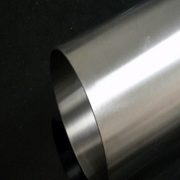
The polishing treatment of stainless steel tubes is actually a surface grinding process, through the instrument and stainless steel tube surface friction to obtain a bright surface. Stainless steel tube outside polishing is used to cut the surface with different coarse particle size linen wheel to obtain the bright surface, and the internal polishing is in the stainless steel tube inside the reciprocating or selective movement of the internal grinding with plastic grinding head. It is worth noting that polishing can not improve the original machining accuracy but only change the surface flatness, the surface roughness value of polished stainless steel tube can reach 1.6-0.008um. According to the processing process, can be divided into mechanical abandonment and chemical polishing.


Mechanical polishing

Wheel polishing: The use of the flexible polishing wheel and fine abrasive on the surface of the steel pipe roll and micro-cutting to achieve the polishing process. The polishing wheel is made of overlapping layers of canvas, felt or leather, used for polishing large workpieces.

Roller polishing and vibration polishing is to put the workpiece, abrasive and polishing fluid into the drum or vibration box, the drum slowly rolling or vibration box vibration makes the workpiece and abrasive friction, polishing liquid chemical reaction can remove the steel pipe surface stains, corrosion, and burr to obtain a smooth surface. It’s suitable for large workpieces. The grinding resistance is related to the grinding machinery, the rigidity of the workpiece, and also has a relationship with the grinding vibration amplitude or grinding temperature, which affects the life of the grinding tool and the character of the grinding surface. The grinding temperature will cause the thermal deformation of the workpiece, reduce the dimensional accuracy, and also affect the processing metamorphic layer of the grinding surface.

Chemical polishing

The stainless steel tube is immersed in a special chemical solution. The phenomenon that the raised part of the metal surface dissolves faster than the concave part is used to achieve the process of polishing.

Chemical polishing is less investment, fast speed, high efficiency, good corrosion resistance; However, there are also brightness differences, gas overflow needs ventilation equipment, heating difficulties, suitable for complex parts and small parts of the light intensity requirements are not high products.

Electrolytic polishing

Electrolytic anode polishing on stainless steel tube is the process insoluble metal as the cathode, the poles into the electrochemical trough at the same time, through direct current (dc) and selective anodic dissolution, so stainless steel tube surface to achieve high brightness and luster appearance, and form – a sticky film on the surface, enhance the corrosion resistance of the pipe, applicable to occasions with higher requirements for surface quality.

Mirror polishing

Stainless steel mirror processing is actually a kind of polishing process, to the stainless steel pipe through the grinder counterclockwise rotation, correction wheel drive workpiece rotation, pressure on the pipe in the way of gravity pressure, In the matching grinding emulsion (mainly metal oxide, inorganic acid, organic lubricant and weak alkaline cleaning agent melt), stainless steel decorative tube and grinding disk for relative operation friction to achieve the purpose of grinding and polishing. The grade of polishing is divided into ordinary polishing, 6K, 8K, 10K, of which 8K grinding has been widely used because of the low process cost.

Таблица веса квадратных и прямоугольных труб из нержавеющей стали

The stainless steel offers good corrosion resistance against most common chemical corrodents and industrial atmospheres. The stainless square or rectangle tubes have the advantages of long service life, good corrosion resistance and lightweight can be used in industrial piping, automotive, instrumentation, medical and construction industries, such as stair handrails, railings, partitions, bicycles, medical equipment, cars and so on. Here is the weight chart of 304 square and rectangle tubing:

304 Stainless steel square and rectangle tubing weight 

Length:6000mm, Unit:KG

Размер 0.4 0.5 0.6 0.7 0.8 0.9 1 1.2 1.5 2 2.5 3 4 5
10×10 0.74 0.91 1.09 1.26 1.43 1.59
12×12 0.89 1.1 1.32 1.53 1.73 1.93 2.13 2.53
15×15 1.12 1.39 1.66 1.92 2.19 2.45 2.71 3.21 3.95
18×18 1.35 1.68 2 2.32 2.64 2.96 3.28 3.9 4.8
19×19 1.42 1.77 2.12 2.46 2.8 3.13 3.47 4.12 5.09 6.63
20×20 1.5 1.87 2.23 2.59 2.95 3.3 3.66 4.35 5.37 7.01
22×22 2.06 2.46 2.86 3.25 3.65 4.04 4.81 5.94 7.78
23×11 1.58 1.89 2.19 2.49 2.79 3.09 3.67 4.52 5.87
23×23 2.15 2.57 2.99 3.14 3.82 4.23 5.04 6.23 8.16
24×12 1.77 2.12 2.46 2.8 3.13 3.47 4.12 5.09 6.63
24×24 2.25 2.69 3.12 3.56 3.99 4.42 5.27 6.51 8.54
25×25 2.34 2.8 3.26 3.71 4.16 4.61 5.49 6.8 8.92
28×28 2.63 3.14 3.66 4.17 4.67 5.18 6.18 7.66 10.06
30×30 2.82 3.37 3.92 4.47 5.02 5.56 6.64 8.23 10.82
36×23 2.77 2.31 3.86 4.4 4.93 5.46 6.52 8.08 10.63
36×36 3.39 4.06 4.72 5.38 6.04 6.7 8.01 9.94 13.1
38×38 4.99 5.69 6.39 7.08 8.46 10.51 13.86
40×40 5.26 5.99 6.73 7.46 8.92 11.08 14.63
48×23 4 4.66 5.31 5.96 6.61 7.89 9.8 12.91
48×48 6.32 7.21 8.1 8.98 10.75 13.37 17.67
50×50 6.59 7.52 8.44 9.37 11.2 13.94 18.43 22.85
20×10 1.12 1.39 1.66 1.92 2.19 2.45 2.71 3.21
25×13 1.42 1.77 2.12 2.46 2.8 3.13 3.47 4.12 5.09 6.63
30×15 2.1 2.52 2.92 3.33 3.73 4.13 4.92 6.09 7.97
38×25 3.54 4.12 4.7 5.27 5.84 6.98 8.66 11.39
40×10 2.8 3.26 3.71 4.16 4.61 5.49 6.8 8.92
40×20 3.37 3.92 4.47 5.02 5.56 6.64 8.23 10.82
50×25 4.23 4.92 5.61 6.3 6.99 8.35 10.37 13.67
60×30 5.92 6.76 7.59 8.41 10.06 12.51 16.53 20.47
75×45 7.92 9.04 10.16 11.27 13.49 16.79 22.24
55×13 3.83 4.46 5.08 5.7 6.32 7.55 9.37 12.34
60×40 6.59 7.52 8.44 9.37 11.2 13.94 18.43 22.85
60×60 7.92 9.04 10.16 11.27 13.49 16.79 22.24 27.61 32.91
70×30 6.59 7.52 8.44 9.37 11.2 13.94 18.43 22.85
73×43 7.65 8.73 9.81 10.89 13.03 16.22 21.48 26.66
80×40 10.16 11.27 13.49 16.79 22.24 27.61 32.91
80×60 11.87 13.17 15.77 19.64 26.04 32.37 38.62 50.89
80×80 13.58 15.07 18.05 22.5 29.85 37.13 44.33 58.5
95×45 11.87 13.17 15.77 19.64 26.04 32.37 38.62 50.89
100×40 13.17 15.77 19.64 26.04 32.37 38.62 50.89
100×50 14.12 16.91 21.07 27.95 34.75 41.47 54.7
120×60 20.34 25.35 33.66 41.88 50.04 66.12 81.9
150×100 35.34 46.98 58.53 70.02 92.76 115.2
100×100 22.62 28.21 37.46 46.64 55.74 73.73 91.41
150×150 42.48 56.52 70.43 84.29 111.79 138.99

Алуминий 20 — это никелевая или нержавеющая сталь?

Alloy20 (N08020) — это аустенитный суперсплав на основе никеля, железа и хрома с отличной устойчивостью к общей коррозии, коррозии между зернами, коррозии от ржавчины и коррозии в щелях в химических средах, содержащих хлориды, серную кислоту, фосфорную кислоту и азотную кислоту. Его коррозионная стойкость хорошая между марками 316L и Hastelloy, но не так хороша, как у нержавеющей стали марки 316L, в некоторых амминосодержащих растворах из-за способности легко образовывать комплексы никеля с аммиаком.

Кроме того, у него хорошая способность к холодному формованию и сварке даже при температуре до 500 °C. Низкий углеродный состав и добавление ниобия способствуют снижению образования карбидов в зоне подверженности нагреву, поэтому в большинстве случаев его можно использовать в сварном состоянии.

На протяжении длительного времени многие люди спорят: является ли сплав 20 нержавеющей сталью или никелевым сплавом? Поскольку их содержание никеля составляет всего 36%%, граница между нержавеющей сталью и никелевыми сплавами становится нечеткой. В целом можно сказать, что сплав 20 — это никелевый сплав. Новая версия стандарта ASTM A240 включает в себя сплав 20, что подтверждает, что сплавы 20 классифицируются как нержавеющая сталь с этой стороны. Латунные листы из сплава 20 соответствуют стандарту ASTM B463, ASME SB463. Такие же материалы, как N08904 (904L), N08926 (1.4529), и т. д., уже классифицировались в стандарте ASTM B серии никелевых сплавов.


Alloy20 обладает общими характеристиками никелевых сплавов с точки зрения сварочных свойств: в целом он не образует холодных трещин при сварке, а более подвержен образованию горячих трещин. Из-за никеля и серы фосфор может образовывать низкотемпературные эвтектические соединения; при затвердевании часто образуется толстая дендрическая аустенитная структура; примеси с низким температурой плавления чаще образовывают центры в границах зерна; размер зерна и влияние кристаллизации на усадку и сжатие при сварке, а также отсутствие полной кристаллизации граница материала с низким температурой плавления легко приводит к образованию горячих трещин, поэтому необходимо строго контролировать содержание серы и фосфора в сварочном материале.

Металл сплав 20 обладает отличной устойчивостью к коррозии при напряжении, хорошей устойчивостью к локальной коррозии, удовлетворительным уровнем коррозионной стойкости в большинстве химических сред, в частности в хлорном газе и во всех видах сред, содержащих хлориды, в частности в сухом хлорном газе, в кислоте мёртвой и уксусной кислоте, в ангидридах, в морской воде и соленой воде и т. д. При этом 20-х сплав используется для коррозии композитных материалов, снижающих окисление, часто применяя его в среде серной кислоты и при обработке солями хлора, содержащими ионы галогена и металлы, например в гидрометрологии и в промышленных установках по производству серной кислоты.

Первоначально разработанный в 1951 году для применения в серной кислоте, сплав 20 является предпочтительным сплавом для промышленных сред с серной кислотой. При температуре кипения серной кислоты от 20% до 40% °C он демонстрирует отличную устойчивость к коррозии при напряжении и является отличным материалом для многих отраслей промышленности, таких как химическая промышленность, пищевая промышленность, фармацевтическая промышленность и производство пластмасс. Он может использоваться в теплообменниках, смесительных цистернах, оборудовании для очистки и кипячения металлов и трубопроводах. Сплав 20 также может применяться в оборудовании для производства синтетических каучуков, фармацевтических препаратов, пластмасс, органических и тяжелых химических процессов, в резервуарах для хранения, трубах, теплообменниках, насосах, клапанах и других технологических устройствах, в устройствах для кипячения, в химических технологических трубопроводах, в пузырьковых крышках, в производстве продуктов питания и красителей. Часто его используют для производства пищевых продуктов и красителей.

Теоретическое веса 304-го резьбового соединения из нержавеющей стали

Stainless steel pipe fittings are extensively used in the manufacturing industries for its durability and cost-effectiveness. It has many advantages over the traditional pipe fittings that make it more preferable than any other. The cost-effectiveness of the alloy products greatly contributes to their wide application. Besides this, it helps in the maintenance of the pipe systems too. These are the main reasons why the 304 pipe fittings and accessories have become popular in the market. As the industry requires, the 304 pipe elbows made by the welded and seamless process can be easily found online. But before buying them, you must ensure their weight for your needs, because it will affect the cost of your shipping and transportation.


TP 304 Stainless steel elbow weight chart(Theoretical, kg)

DN O.D Radius Nominal wall thickness, T
NPS DN D R=1.5D SCH5s W SCH10s W SCH10 W SCH20 W SHC30 W SCH40s W STD W SCH40 W SCH60 W
1/2 15 21.3 38 1.7 0.05 2.11 0.06 2.11 0.06 2.41 0.07 2.77 0.08 2.77 0.08 2.77 0.08
3/4 20 26.7 38 1.7 0.06 2.11 0.08 2.11 0.08 2.41 0.09 2.87 0.10 2.87 0.10 2.87 0.10
1 25 33.4 38 1.7 0.08 2.77 0.13 2.77 0.13 2.9 0.13 3.38 0.15 3.38 0.15 3.38 0.15
1 1/4 32 42.2 48 1.7 0.13 2.77 0.20 2.77 0.20 2.97 0.22 3.56 0.26 3.56 0.26 3.56 0.26
1 1/2 40 48.3 57 1.7 0.17 2.77 0.28 2.77 0.28 3.18 0.32 3.68 0.37 3.68 0.37 3.68 0.37
2 50 60.3 76 1.7 0.29 2.77 0.47 2.77 0.47 3.18 0.54 3.91 0.66 3.91 0.66 3.91 0.66
2 1/2 65 73 95 2.1 0.56 3.05 0.79 3.05 0.79 4.78 1.21 5.16 1.30 5.16 1.30 5.16 1.30
3 80 88.9 114 2.1 0.82 3.05 1.17 3.05 1.17 4.78 1.79 5.49 2.04 5.49 2.04 5.49 2.04
3 1/2 90 101.6 133 2.1 1.09 3.05 1.56 3.05 1.56 4.78 2.41 5.74 2.86 5.74 2.86 5.74 2.86
4 100 114.3 152 2.1 1.41 3.05 2.02 3.05 2.02 4.78 3.11 6.02 3.87 6.02 3.87 6.02 3.87
5 125 141.3 190 2.8 2.85 3.4 3.48 3.4 3.48 6.55 6.56 6.55 6.56 6.55 6.56
6 150 168.3 229 2.8 4.11 3.4 5.02 3.4 5.02 7.11 10.26 7.11 10.26 7.11 10.26
8 200 219.1 305 2.8 7.15 3.76 9.66 3.76 9.66 6.35 16.11 7.04 17.80 8.18 20.58 8.18 20.58 8.18 20.58 10.31 25.67
10 250 273.1 381 3.4 13.66 4.19 16.79 4.19 16.79 6.35 25.23 7.8 30.83 9.27 36.43 9.27 36.43 9.27 36.43 12.7 49.27
12 300 323.9 457 4 22.64 4.57 26.08 4.57 26.08 6.35 36.03 8.38 47.25 9.53 53.53 9.53 53.53 10.31 57.77 14.27 78.95
14 350 355.6 533 4 29.02 4.78 34.95 6.35 46.22 7.92 57.39 9.53 68.73 9.53 68.73 11.13 79.90 15.09 107.08
16 400 406.4 610 4.2 40.20 4.78 45.79 6.35 60.59 7.92 75.27 9.53 90.21 9.53 90.21 12.7 119.25 16.66 154.87
18 450 457.2 686 4.2 50.91 4.78 58.01 6.35 76.79 7.92 95.44 11.13 133.17 9.53 114.43 14.27 169.54 19.05 223.88
20 500 508 762 4.8 71.67 5.54 82.94 6.35 94.91 9.53 141.53 12.7 187.41 9.53 141.53 15.09 221.61 20.62 299.43
22 550 558.8 838 4.8 86.77 5.54 100.43 6.35 114.94 9.53 171.51 12.7 227.25 9.53 171.51 22.23 390.83
24 600 609.6 914 5.5 119.59 6.35 136.90 6.35 136.90 9.53 204.37 14.27 303.60 9.53 204.37 17.48 369.89 24.61 514.50


Для чего используется дуплексный нержавеющий сталь?

Duplex stainless steel refers to the stainless steel that have each 50% of ferrite and austenite , the general content of the less phase is at least 30%, it has both the characteristics of austenite and ferrite stainless steel. Compared with ferrite, it has higher plasticity, toughness, no room temperature brittleness, intergranular corrosion resistance and welding performance are significantly improved, also maintain the 475℃ brittleness of ferrite stainless steel and high thermal conductivity, superplasticity and other characteristics. Compared with austenitic stainless steels, dual-phase stainless steels have higher strength and higher resistance to intergranular corrosion and chloride stress corrosion. Duplex stainless steel is widely used in various applications because of its excellent comprehensive mechanical properties and resistance to chloride stress corrosion, papermaking industry, Chemical and petrochemical industries, Hydrometallurgy; Marine and coastal applications, plumbing installations for food and beverage plants, buildings, etc

Pulp and paper

Beginning in 1930, one of the first applications of duplex stainless steel was in the sulfite paper industry. Today, duplex stainless steel is used in the pulp and paper industry as bleaching equipment, digesters, chip storage tanks, black and white storage tanks, and suction roll housings. duplex stainless steels have high strength, excellent corrosion resistance, and the same pressure rating that allows for the use of thinner sheets, and have now replaced austenitic stainless steels and carbon steels in paper industry applications. It has lower composite material costs, shorter welding times, and lower transportation and handling costs.


Desalination

Due to the high chloride content, high-temperature corrosive process environment, seawater desalination subjected the material to one of the most stringent tests. Desalination customers need to strike a balance between meeting corrosion resistance requirements and keeping their investments affordable. In earlier desalination projects, the evaporators for the MSF and MED desalination plants were manufactured using carbon steel. Later, MSF evaporators are generally coated with 316L austenitic stainless steel. The MED evaporator is first coated with epoxy resin and then stainless steel.

The benefits of duplex stainless steel have high strength (twice that of conventional austenitic stainless steel) combined with high corrosion resistance. As a result, duplex stainless steel evaporators can be manufactured from thinner steel plates, requiring less material and welding. Other benefits include ease of handling and less overall impact on the environment. 2205 duplex stainless steel is used to manufacture bulk duplex steel evaporators. The Melittah MSF facility and the Zuara Med facility in Libya were installed to construct three sets of multistage flash MSF units using the concept of combining two duplex steel, 2205 and UNS S32101.


Oil and gas

In the oil and gas industry, duplex stainless steels play a vital role in helping to withstand harsh conditions. This is because its strength, pitting resistance and crevice corrosion resistance are better than standard austenitic stainless steels, and the pitting value (PREN) of dual-phase stainless steels is usually higher than 40. Duplex stainless steel is mainly used in fluid piping, process piping systems and equipment such as separators, scrubbing units and pumps. At sea area, these materials are used in downhole production pipes, fittings and assembly lines, production tree parts, fluid pipes and pipelines for transporting corrosive oil and gas. Super Duplex Stainless Steel (25% Cr) has high strength, excellent fatigue resistance and good coupling compatibility with other high alloy stainless steels.


Food and Beverages

Economic duplex steels have also proved their value in the food and beverage industry. The material is used in two projects in Spain, a food storage facility and a wine storage facility.

At the Port of Barcelona, Emypro SA built all the food storage tanks using S32101, replacing the EN304/304L. The wine storage warehouse for Garcia Carrion, built by Spanish tank manufacturer Martinez Sole in Demiere, southern Spain, was the first to use dual-phase stainless steel: The S32101 and 2304, as low-cost replacements for 304/316L, were used to build the roof and topmost roof for all new tanks.


Construction industry

Duplex steel plays an important role in the construction of Bridges that need high bearing strength when used in a corrosive and salt environment. The 2205 duplex stainless steel is used for the Stonecutters Bridge in Hong Kong and the Double Helix Walking Bridge in Singapore. In 2006, 2,000 tons of 2205 duplex steel sheets and pipes were used for the Stonecutters Island Bridge. The surface part of the bridge was constructed from custom-sized sheets by Chinese duplex stainless steel manufacturers. These stainless steel sheets are polished and shot-peened for optimum reflectance both day and night.

The world’s largest stainless steel roof at the new Doha International Airport in Qatar is constructed using an economical duplex stainless steel (S32003) containing molybdenum. The terminal’s most prominent feature is its wavy roof, which is said to be the largest stainless steel roof in the world. The roof covers about 195,000 square meters (2.1 million square feet) and uses about 1,600 tons (3.5 million pounds) of dual-phase stainless steel. Several factors must be considered in the choice of stainless steel grades, the most important of which is the distance between the airport and the sea. Not only must the roof resist the heat and humidity of the Middle East, but it must also withstand salt. Other factors for choosing Duplex Stainless steel include cost and a good strength-to-weight ratio when compared to other steels.