
Topné ošetření u nerezového tepelného výměníku

Když mluvíme o tepelné úpravě austenitických U-tvarovaných nerezových trubek, většina lidí si myslí, že to není nutné kvůli senzibilizaci a vysoké teplotě úprav roztoku, což může způsobit deformaci trubky. Ve skutečnosti je tepelné zpracování austenitické nerezové oceli nevyhnutelné; tepelným zpracováním nelze změnit strukturu austenitických trubek, ale lze změnit jejich zpracovatelnost.

Například kvůli nízkému obsahu uhlíku 304 Nerezová tepelná výměnná trubka je při normalizaci obtížná na to, aby se hladkost povrchu frézovacího nástroje vyhověla požadavkům a snížila se tak životnost nástroje. Nízkocelová martenzitová a železná struktura kabelu získaná po neúplném uvolnění mohou výrazně zvýšit tvrdost a hladkost povrchu a životnost potrubí lze také zvýšit o 3 až 4 krát. Kromě toho má ohýbací část tvaru U vlnité tepelné výměnné trubky malý poloměr ohýbání a zřetelný jev ztvrdnutí při tepelné úpravě. Pro tepelnou úpravu je nutná tepelná úprava austenitické nerezové oceli a v porovnání s celým zařízení pro tepelnou úpravu je tepelná úprava austenitickou nerezovou ocelí vlnitého tvaru a pasivací pomocí pálení mnohem jednodušší. V této práci byla provedena řada testů u tvarových trubek s různými specifikacemi, poloměrem ohýbání a podmínkami tepelné úpravy a byla analyzována potřeba tepelné úprav pro tvarové trubky z austenitické nerezové oceli.


Experimentální materiály:

304 Nerezová U-trubka

Velikost: 19*2 mm, poloměr ohybu: 40, 15, 190, 265, 340 mm

Rozměry: 25*2,5 mm Poloměr ohybu: 40, 115, 190, 265, 340 mm

Ošetření horkým párem: neléčeno, ošetření subsolidní roztokovou, ošetření pevnou roztokovou


Testování tvrdosti

Ohýbací úsek u-tvarovaného tepelných výměníků bez tepelného zpracování a subsolidačního ošetření: s poklesem poloměru ohýbání se hodnota tvrdosti zvyšuje. Hodnota tvrdosti tepelných výměníků po ošetření roztokem (v porovnání s hodnotou před ohýbáním) se nijak významně nemění. To naznačuje, že Austenitický nerezový ocelový materiál má výrazný tvrzený efekt, a s nárůstem deformace se trend tvrzení zvyšuje.


Mikroskopická kontrola

Pro úhelný oblouk se smrštivým poloměrem 40 mm: v mikrostruktuře bez tepelného zpracování se vyskytuje mnoho martenzitu a skloubových linií, a rovinná forma austenitu v mikrostruktuře je zcela zmizela (příliš mnoho martenzitu by zkolištělo ocel). Většina martenzitu v tkáni ošetřené subsolutní otopou byla transformována, ale malé množství martenzitu stále existuje.

Po úpravě roztavením se zrná austenitu vyrovnaly a nebyl nalezen žádný martenzit. V neohřáté mikrostruktuře u-tvarovaných trubek s poloměrem ohybu R 115, 190, 265 a 340 mm se po ohýbání také vyskytly pásy skluzu a martenzit, ale obsah se postupně snižoval s nárůstem poloměru ohybu. Při poloměru R u-tvarované trubky větší než nebo rovný 265 mm účinek na mikrostrukturu před a po tepelné úpravě není významný. Při poloměru R nižším než 265 mm v mikrostruktuře neohřátých u-tvarovaných trubek dochází k přítomnosti martenzitu a obsah martenzitu klesá s nárůstem teploty tepelné úpravy (subsolidační a peletová úprava).


Test intergranulární korozivosti

Mikroskopickým vyšetřením bylo zjištěno, že přítomnost martenzitu nemá vliv na intergranulární korozi. Ačkoli v absolutizované mikrostruktuře existuje velké množství martenzitu, s distribucí martenzitu nedochází k tendenci intergranulární koroze. Některé zrnitá hranice se rozšířily před a po úpravě roztokem, a rozšíření rozdělení zrnitých hranic bylo nezávislé na distribuci martenzitu. Na základě mikroskopického vyšetření po zkoušce koroze bylo provedeno ohybové zkoušení u-tvarých trubek v různých stavích podle testovacího standardu. Po ohnutí o 180° nebyla v trubkách nalezena žádná roztrženina intergranulární koroze.


Teplota řešení úprav

Účinok úprav roztokom je ovplyvnený nízkou teplotou roztoku a výsledky analýzy mikrostruktury a tvrdosti nemožno získať. Ak je teplota o niečo vyššia, vo vnútri U-tvarového segmentu sa môžu objaviť defekty, ako napríklad konkávnosť alebo trhliny.


Z experimentu je známo, že martenzitická transformace nerezové oceli po chladném zpracování má mnohem větší vliv na odolnost proti korozi než na pevnost. Když je poloměr ohybu u-tvarované trubice menší než 115 mm, mikrostruktura u-tvarované trubice před a po ošetření roztokem se výrazně liší. Pro tento úsek ohybu u-tvarované trubice o malém poloměru by měla být po chladném tvarování prováděna pevná roztoková úprava. Pokud není požadováno vyšší odolnost proti intergranulární korozi, doporučuje se, aby se úsek ohybu u-tvarované trubice s poloměrem menším nebo rovným 265 mm ošetřil roztokovou úpravou (poznámka: pro eliminaci zbytkového napětí). Pro u-tvarované tepelná výměnová trubice s velkým poloměrem zakřivení se úsek ohybu nelze ošetřit roztokem, s výjimkou prostředí citlivého na korozní napětí. Protože je odpor tekutin k malé průměrnosti trubky vysoký, je obtížné jej čistit a snadno se ucpává konstrukce, zatímco odpor tekutin z nerezové oceli s velkou průměrností není tak vysoký jako u trubek malého průměru a je snadno čistitelný, což je běžnější pro viskózní nebo nečisté tekutiny.


Společnost WLD může poskytnout 304/316 nerezové tepelná výměnná trubice o tloušťce od 10 mm do 114 mm a tloušťce od 0,6 mm do 3,0 mm. Délka může být přizpůsobena podle vašich skutečných pracovních podmínek. Pokud ji potřebujete, kontaktujte nás prosím ještě dnes.
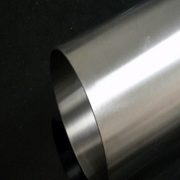
Leštění nerezové ocelové trubky

The polishing treatment of stainless steel tubes is actually a surface grinding process, through the instrument and stainless steel tube surface friction to obtain a bright surface. Stainless steel tube outside polishing is used to cut the surface with different coarse particle size linen wheel to obtain the bright surface, and the internal polishing is in the stainless steel tube inside the reciprocating or selective movement of the internal grinding with plastic grinding head. It is worth noting that polishing can not improve the original machining accuracy but only change the surface flatness, the surface roughness value of polished stainless steel tube can reach 1.6-0.008um. According to the processing process, can be divided into mechanical abandonment and chemical polishing.


Mechanical polishing

Wheel polishing: The use of the flexible polishing wheel and fine abrasive on the surface of the steel pipe roll and micro-cutting to achieve the polishing process. The polishing wheel is made of overlapping layers of canvas, felt or leather, used for polishing large workpieces.

Roller polishing and vibration polishing is to put the workpiece, abrasive and polishing fluid into the drum or vibration box, the drum slowly rolling or vibration box vibration makes the workpiece and abrasive friction, polishing liquid chemical reaction can remove the steel pipe surface stains, corrosion, and burr to obtain a smooth surface. It’s suitable for large workpieces. The grinding resistance is related to the grinding machinery, the rigidity of the workpiece, and also has a relationship with the grinding vibration amplitude or grinding temperature, which affects the life of the grinding tool and the character of the grinding surface. The grinding temperature will cause the thermal deformation of the workpiece, reduce the dimensional accuracy, and also affect the processing metamorphic layer of the grinding surface.

Chemical polishing

The stainless steel tube is immersed in a special chemical solution. The phenomenon that the raised part of the metal surface dissolves faster than the concave part is used to achieve the process of polishing.

Chemical polishing is less investment, fast speed, high efficiency, good corrosion resistance; However, there are also brightness differences, gas overflow needs ventilation equipment, heating difficulties, suitable for complex parts and small parts of the light intensity requirements are not high products.

Electrolytic polishing

Electrolytic anode polishing on stainless steel tube is the process insoluble metal as the cathode, the poles into the electrochemical trough at the same time, through direct current (dc) and selective anodic dissolution, so stainless steel tube surface to achieve high brightness and luster appearance, and form – a sticky film on the surface, enhance the corrosion resistance of the pipe, applicable to occasions with higher requirements for surface quality.

Mirror polishing

Stainless steel mirror processing is actually a kind of polishing process, to the stainless steel pipe through the grinder counterclockwise rotation, correction wheel drive workpiece rotation, pressure on the pipe in the way of gravity pressure, In the matching grinding emulsion (mainly metal oxide, inorganic acid, organic lubricant and weak alkaline cleaning agent melt), stainless steel decorative tube and grinding disk for relative operation friction to achieve the purpose of grinding and polishing. The grade of polishing is divided into ordinary polishing, 6K, 8K, 10K, of which 8K grinding has been widely used because of the low process cost.

The weight chart of stainless steel square and rectangle tube

The stainless steel offers good corrosion resistance against most common chemical corrodents and industrial atmospheres. The stainless square or rectangle tubes have the advantages of long service life, good corrosion resistance and lightweight can be used in industrial piping, automotive, instrumentation, medical and construction industries, such as stair handrails, railings, partitions, bicycles, medical equipment, cars and so on. Here is the weight chart of 304 square and rectangle tubing:

304 Stainless steel square and rectangle tubing weight 

Length:6000mm, Unit:KG

Velikost 0.4 0.5 0.6 0.7 0.8 0.9 1 1.2 1.5 2 2.5 3 4 5
10×10 0.74 0.91 1.09 1.26 1.43 1.59
12×12 0.89 1.1 1.32 1.53 1.73 1.93 2.13 2.53
15×15 1.12 1.39 1.66 1.92 2.19 2.45 2.71 3.21 3.95
18×18 1.35 1.68 2 2.32 2.64 2.96 3.28 3.9 4.8
19×19 1.42 1.77 2.12 2.46 2.8 3.13 3.47 4.12 5.09 6.63
20×20 1.5 1.87 2.23 2.59 2.95 3.3 3.66 4.35 5.37 7.01
22×22 2.06 2.46 2.86 3.25 3.65 4.04 4.81 5.94 7.78
23×11 1.58 1.89 2.19 2.49 2.79 3.09 3.67 4.52 5.87
23×23 2.15 2.57 2.99 3.14 3.82 4.23 5.04 6.23 8.16
24×12 1.77 2.12 2.46 2.8 3.13 3.47 4.12 5.09 6.63
24×24 2.25 2.69 3.12 3.56 3.99 4.42 5.27 6.51 8.54
25×25 2.34 2.8 3.26 3.71 4.16 4.61 5.49 6.8 8.92
28×28 2.63 3.14 3.66 4.17 4.67 5.18 6.18 7.66 10.06
30×30 2.82 3.37 3.92 4.47 5.02 5.56 6.64 8.23 10.82
36×23 2.77 2.31 3.86 4.4 4.93 5.46 6.52 8.08 10.63
36×36 3.39 4.06 4.72 5.38 6.04 6.7 8.01 9.94 13.1
38×38 4.99 5.69 6.39 7.08 8.46 10.51 13.86
40×40 5.26 5.99 6.73 7.46 8.92 11.08 14.63
48×23 4 4.66 5.31 5.96 6.61 7.89 9.8 12.91
48×48 6.32 7.21 8.1 8.98 10.75 13.37 17.67
50×50 6.59 7.52 8.44 9.37 11.2 13.94 18.43 22.85
20×10 1.12 1.39 1.66 1.92 2.19 2.45 2.71 3.21
25×13 1.42 1.77 2.12 2.46 2.8 3.13 3.47 4.12 5.09 6.63
30×15 2.1 2.52 2.92 3.33 3.73 4.13 4.92 6.09 7.97
38×25 3.54 4.12 4.7 5.27 5.84 6.98 8.66 11.39
40×10 2.8 3.26 3.71 4.16 4.61 5.49 6.8 8.92
40×20 3.37 3.92 4.47 5.02 5.56 6.64 8.23 10.82
50×25 4.23 4.92 5.61 6.3 6.99 8.35 10.37 13.67
60×30 5.92 6.76 7.59 8.41 10.06 12.51 16.53 20.47
75×45 7.92 9.04 10.16 11.27 13.49 16.79 22.24
55×13 3.83 4.46 5.08 5.7 6.32 7.55 9.37 12.34
60×40 6.59 7.52 8.44 9.37 11.2 13.94 18.43 22.85
60×60 7.92 9.04 10.16 11.27 13.49 16.79 22.24 27.61 32.91
70×30 6.59 7.52 8.44 9.37 11.2 13.94 18.43 22.85
73×43 7.65 8.73 9.81 10.89 13.03 16.22 21.48 26.66
80×40 10.16 11.27 13.49 16.79 22.24 27.61 32.91
80×60 11.87 13.17 15.77 19.64 26.04 32.37 38.62 50.89
80×80 13.58 15.07 18.05 22.5 29.85 37.13 44.33 58.5
95×45 11.87 13.17 15.77 19.64 26.04 32.37 38.62 50.89
100×40 13.17 15.77 19.64 26.04 32.37 38.62 50.89
100×50 14.12 16.91 21.07 27.95 34.75 41.47 54.7
120×60 20.34 25.35 33.66 41.88 50.04 66.12 81.9
150×100 35.34 46.98 58.53 70.02 92.76 115.2
100×100 22.62 28.21 37.46 46.64 55.74 73.73 91.41
150×150 42.48 56.52 70.43 84.29 111.79 138.99

Is Alloy20 a nickel-based alloy or stainless steel?

Alloy20 (N08020) is an Austenitic nickel-iron-chromium-based superalloy with excellent resistance to total, intergranular, pitting and crevice corrosion in chemicals containing chlorides, sulfuric acid, phosphoric acid and nitric acid. Its corrosion resistance is good between 316L and Hastelloy, and it is not as good as 316L stainless steel in some amine solutions because it is easy to form nickel ammonium complexes.

In addition, it has a good cold forming and weldability even at up to 500℃. The low carbon content and the addition of niobium help to reduce the precipitation of carbides in the HEAT affected zone, so it can be used in the welded state in most cases.

For a long time, many people have been arguing: Is Alloy 20 a stainless steel or a nickel Alloy? Because their 32-38% nickel content is just close to 36%, the boundary between stainless steel and nickel-based alloys blurs the classification of materials. In general, it is true that alloy20 is a nickel alloy. The new edition of ASTM A240 includes alloy 20, which supports that alloys 20 have been classified as stainless steel from the side. Alloy20 plates are in accordance with ASTM B463, ASME SB463. The same materials as N08904 (904L), N08926(1.4529), etc., were early classified in the ASTM B nickel alloy standard series.


Alloy20 has the common characteristics of nickel alloy in terms of welding properties, that is, generally does not produce cold cracks when welding, and is more prone to produce hot cracks. Because of nickel and sulfur, phosphorus can form low melting eutectic, solidification often forms a thick dendritic austenite crystal, low melting point impurity is more likely to focus on grain boundary, the grain size and the effect of solidification shrinkage stress and welding stress, not entirely solidification grain boundary of low melting point material is easy to cracking formation of hot crack, so should strictly control the sulfur and phosphorus content of welding material.

Alloy 20 has excellent resistance to stress corrosion cracking, good resistance to local corrosion, satisfactory corrosion resistance in many chemical process media, chlorine gas and all kinds of media containing chloride, dry chlorine gas, formic and acetic acid, anhydride, seawater and saltwater, etc. At the same time, 20 alloy oxidation-reducing composite media corrosion, is often used in a sulfuric acid environment and containing halogen ions and metal ions sulfuric acid solution applications, such as hydrometallurgy and sulfuric acid industrial equipment.

First developed in 1951 for application in sulfuric acid, alloy 20 is the preferred alloy for sulfuric acid industrial environments. In 20% ~ 40% boiling sulfuric acid, it shows excellent resistance to stress corrosion cracking, and is an excellent material for many industries such as the chemical industry, food industry, pharmaceutical industry and plastics. It can be used in heat exchangers, mixing tanks, metal cleaning and pickling equipment and pipelines. Alloy 20 can also be applied in synthetic rubber manufacturing equipment, pharmaceuticals, plastics, organic and heavy chemical processing, storage tanks, pipes, heat exchangers, pumps, valves and other process equipment, pickling equipment, chemical process pipes, bubble caps, food and dye production is often used.

The theoretical weight of 304 stainless steel pipe elbow

Stainless steel pipe fittings are extensively used in the manufacturing industries for its durability and cost-effectiveness. It has many advantages over the traditional pipe fittings that make it more preferable than any other. The cost-effectiveness of the alloy products greatly contributes to their wide application. Besides this, it helps in the maintenance of the pipe systems too. These are the main reasons why the 304 pipe fittings and accessories have become popular in the market. As the industry requires, the 304 pipe elbows made by the welded and seamless process can be easily found online. But before buying them, you must ensure their weight for your needs, because it will affect the cost of your shipping and transportation.


TP 304 Stainless steel elbow weight chart(Theoretical, kg)

DN O.D Radius Nominal wall thickness, T
NPS DN D R=1.5D SCH5s W SCH10s W SCH10 W SCH20 W SHC30 W SCH40s W STD W SCH40 W SCH60 W
1/2 15 21.3 38 1.7 0.05 2.11 0.06 2.11 0.06 2.41 0.07 2.77 0.08 2.77 0.08 2.77 0.08
3/4 20 26.7 38 1.7 0.06 2.11 0.08 2.11 0.08 2.41 0.09 2.87 0.10 2.87 0.10 2.87 0.10
1 25 33.4 38 1.7 0.08 2.77 0.13 2.77 0.13 2.9 0.13 3.38 0.15 3.38 0.15 3.38 0.15
1 1/4 32 42.2 48 1.7 0.13 2.77 0.20 2.77 0.20 2.97 0.22 3.56 0.26 3.56 0.26 3.56 0.26
1 1/2 40 48.3 57 1.7 0.17 2.77 0.28 2.77 0.28 3.18 0.32 3.68 0.37 3.68 0.37 3.68 0.37
2 50 60.3 76 1.7 0.29 2.77 0.47 2.77 0.47 3.18 0.54 3.91 0.66 3.91 0.66 3.91 0.66
2 1/2 65 73 95 2.1 0.56 3.05 0.79 3.05 0.79 4.78 1.21 5.16 1.30 5.16 1.30 5.16 1.30
3 80 88.9 114 2.1 0.82 3.05 1.17 3.05 1.17 4.78 1.79 5.49 2.04 5.49 2.04 5.49 2.04
3 1/2 90 101.6 133 2.1 1.09 3.05 1.56 3.05 1.56 4.78 2.41 5.74 2.86 5.74 2.86 5.74 2.86
4 100 114.3 152 2.1 1.41 3.05 2.02 3.05 2.02 4.78 3.11 6.02 3.87 6.02 3.87 6.02 3.87
5 125 141.3 190 2.8 2.85 3.4 3.48 3.4 3.48 6.55 6.56 6.55 6.56 6.55 6.56
6 150 168.3 229 2.8 4.11 3.4 5.02 3.4 5.02 7.11 10.26 7.11 10.26 7.11 10.26
8 200 219.1 305 2.8 7.15 3.76 9.66 3.76 9.66 6.35 16.11 7.04 17.80 8.18 20.58 8.18 20.58 8.18 20.58 10.31 25.67
10 250 273.1 381 3.4 13.66 4.19 16.79 4.19 16.79 6.35 25.23 7.8 30.83 9.27 36.43 9.27 36.43 9.27 36.43 12.7 49.27
12 300 323.9 457 4 22.64 4.57 26.08 4.57 26.08 6.35 36.03 8.38 47.25 9.53 53.53 9.53 53.53 10.31 57.77 14.27 78.95
14 350 355.6 533 4 29.02 4.78 34.95 6.35 46.22 7.92 57.39 9.53 68.73 9.53 68.73 11.13 79.90 15.09 107.08
16 400 406.4 610 4.2 40.20 4.78 45.79 6.35 60.59 7.92 75.27 9.53 90.21 9.53 90.21 12.7 119.25 16.66 154.87
18 450 457.2 686 4.2 50.91 4.78 58.01 6.35 76.79 7.92 95.44 11.13 133.17 9.53 114.43 14.27 169.54 19.05 223.88
20 500 508 762 4.8 71.67 5.54 82.94 6.35 94.91 9.53 141.53 12.7 187.41 9.53 141.53 15.09 221.61 20.62 299.43
22 550 558.8 838 4.8 86.77 5.54 100.43 6.35 114.94 9.53 171.51 12.7 227.25 9.53 171.51 22.23 390.83
24 600 609.6 914 5.5 119.59 6.35 136.90 6.35 136.90 9.53 204.37 14.27 303.60 9.53 204.37 17.48 369.89 24.61 514.50


What’s the duplex stainless steel used for?

Duplex stainless steel refers to the stainless steel that have each 50% of ferrite and austenite , the general content of the less phase is at least 30%, it has both the characteristics of austenite and ferrite stainless steel. Compared with ferrite, it has higher plasticity, toughness, no room temperature brittleness, intergranular corrosion resistance and welding performance are significantly improved, also maintain the 475℃ brittleness of ferrite stainless steel and high thermal conductivity, superplasticity and other characteristics. Compared with austenitic stainless steels, dual-phase stainless steels have higher strength and higher resistance to intergranular corrosion and chloride stress corrosion. Duplex stainless steel is widely used in various applications because of its excellent comprehensive mechanical properties and resistance to chloride stress corrosion, papermaking industry, Chemical and petrochemical industries, Hydrometallurgy; Marine and coastal applications, plumbing installations for food and beverage plants, buildings, etc

Pulp and paper

Beginning in 1930, one of the first applications of duplex stainless steel was in the sulfite paper industry. Today, duplex stainless steel is used in the pulp and paper industry as bleaching equipment, digesters, chip storage tanks, black and white storage tanks, and suction roll housings. duplex stainless steels have high strength, excellent corrosion resistance, and the same pressure rating that allows for the use of thinner sheets, and have now replaced austenitic stainless steels and carbon steels in paper industry applications. It has lower composite material costs, shorter welding times, and lower transportation and handling costs.


Desalination

Due to the high chloride content, high-temperature corrosive process environment, seawater desalination subjected the material to one of the most stringent tests. Desalination customers need to strike a balance between meeting corrosion resistance requirements and keeping their investments affordable. In earlier desalination projects, the evaporators for the MSF and MED desalination plants were manufactured using carbon steel. Later, MSF evaporators are generally coated with 316L austenitic stainless steel. The MED evaporator is first coated with epoxy resin and then stainless steel.

The benefits of duplex stainless steel have high strength (twice that of conventional austenitic stainless steel) combined with high corrosion resistance. As a result, duplex stainless steel evaporators can be manufactured from thinner steel plates, requiring less material and welding. Other benefits include ease of handling and less overall impact on the environment. 2205 duplex stainless steel is used to manufacture bulk duplex steel evaporators. The Melittah MSF facility and the Zuara Med facility in Libya were installed to construct three sets of multistage flash MSF units using the concept of combining two duplex steel, 2205 and UNS S32101.


Oil and gas

In the oil and gas industry, duplex stainless steels play a vital role in helping to withstand harsh conditions. This is because its strength, pitting resistance and crevice corrosion resistance are better than standard austenitic stainless steels, and the pitting value (PREN) of dual-phase stainless steels is usually higher than 40. Duplex stainless steel is mainly used in fluid piping, process piping systems and equipment such as separators, scrubbing units and pumps. At sea area, these materials are used in downhole production pipes, fittings and assembly lines, production tree parts, fluid pipes and pipelines for transporting corrosive oil and gas. Super Duplex Stainless Steel (25% Cr) has high strength, excellent fatigue resistance and good coupling compatibility with other high alloy stainless steels.


Food and Beverages

Economic duplex steels have also proved their value in the food and beverage industry. The material is used in two projects in Spain, a food storage facility and a wine storage facility.

At the Port of Barcelona, Emypro SA built all the food storage tanks using S32101, replacing the EN304/304L. The wine storage warehouse for Garcia Carrion, built by Spanish tank manufacturer Martinez Sole in Demiere, southern Spain, was the first to use dual-phase stainless steel: The S32101 and 2304, as low-cost replacements for 304/316L, were used to build the roof and topmost roof for all new tanks.


Construction industry

Duplex steel plays an important role in the construction of Bridges that need high bearing strength when used in a corrosive and salt environment. The 2205 duplex stainless steel is used for the Stonecutters Bridge in Hong Kong and the Double Helix Walking Bridge in Singapore. In 2006, 2,000 tons of 2205 duplex steel sheets and pipes were used for the Stonecutters Island Bridge. The surface part of the bridge was constructed from custom-sized sheets by Chinese duplex stainless steel manufacturers. These stainless steel sheets are polished and shot-peened for optimum reflectance both day and night.

The world’s largest stainless steel roof at the new Doha International Airport in Qatar is constructed using an economical duplex stainless steel (S32003) containing molybdenum. The terminal’s most prominent feature is its wavy roof, which is said to be the largest stainless steel roof in the world. The roof covers about 195,000 square meters (2.1 million square feet) and uses about 1,600 tons (3.5 million pounds) of dual-phase stainless steel. Several factors must be considered in the choice of stainless steel grades, the most important of which is the distance between the airport and the sea. Not only must the roof resist the heat and humidity of the Middle East, but it must also withstand salt. Other factors for choosing Duplex Stainless steel include cost and a good strength-to-weight ratio when compared to other steels.