De diktemergevoeligheid van roestvrij staalplaat

We noemen de dikte van de roestvrijstalen plaat tussen 4 en 25,0 mm de middelste plaat, de dikte van de roestvrijstalen plaat met een dikte van 25,0 tot 100,0 mm is extra dik en de dikte van meer dan 100,0 mm is een extra dikke plaat. Wanneer u op zoek bent naar een geschikte roestvrijstalen plaat, zijn er verschillende kwaliteiten beschikbaar op basis van de sterkte van het metaal en de chemische samenstelling ervan. Er is een hoogwaardige plaat gemaakt van Cr-Ni-legeringen die over het algemeen worden gebruikt in commerciële toepassingen zoals drukketels, ketelmantels, bruggen, auto's, scheepsbouw, constructie en andere industriële toepassingen.

Het is belangrijk om te weten welke toepassing het roestvrijstalen plaatje zal krijgen in een bepaalde industriële toepassing. Sommige toepassingen vereisen een geharde, versterkte plaat die bestand moet zijn tegen hamerstoten, krassen en impact. Andere vereisen een broosere, zachtere plaat die bestand moet zijn tegen buigen en vervorming. Andere criteria die moeten worden geëvalueerd zijn de mate van corrosieweerstand en deze bepalen welke soort roestvrijstalen plaat het beste geschikt is voor de toepassing. De meest gebruikte kwaliteiten zijn: 304, 316LRoestvrijstalen plaat van 310S en 904L. Hieronder vindt u de toegestane diktemarge voor roestvrijstalen plaat volgens de specificaties van ASTM, JIS en GB.


JIS roestvrijstalen plaat

Dikte Breedte
<1250 ≥1250<1600
≥0.30~<0.60 0,05 S0,06
≥0.60~<0.80 S0,07 S 0,09
≥0.80~<1.00 S 0,09 0,10
≥1.00~<1.25 0,10 S 0,12
≥1.25~<1.60 S 0,12 0,15 punten
≥1.60~<2.00 0,15 punten S 0,17
≥2.00~<2.50 S 0,17 S0.20
≥2.50~<3.15 S0.22 0,25
≥3.15~<4.00 0,25 S 0,30
≥4.00~<5.00 S0,35 S 0,40
≥5.00~<6.00 S 0,40 S 0,45
≥6.00~<7.00 S 0,50 S 0,50


ASTM roestvrij staalplaat

Dikte Toelatingstolerantie Breedte
Onder Nieuw ≤1000 >1000~≤1300
0.10 0.03 0.03
0.15 0.04 0.04
0.20 0.05 0.05
0.25 0.05 0.05
0.30 0.03 ——-
0.40 0.04 0.04
0.50 0.08 0.08
0.50 0.045 0.05
0.60 0.05 0.05
0.75 0.10 0.10
0.80 0.05 0.05
1.00 0.055 0.06
1.20 0.08 0.08
1.25 0.13 0.13
1.50 0.08 0.08
1.75 0.15 0.15
2.00 0.18 0.18
2.00 0.10 0.10
2.25 0.20 0.20
2.50 0.23 0.23
2.50 0.10 0.11
2.75 0.25 0.25
3.00 0.25 0.25
3.00 0.13 0.13
3.25 0.30 0.30
3.50 0.30 0.30
3.75 0.36 0.36
4.00 0.36 0.36
4.00 0.17 0.17
4.99 0.36 0.36
5.00 0.17 0.17
6.00 0.17 0.20
8.00 0.17 0.


GB roestvrijstalen plaat

Dikte Toelatingstolerantie voor de dikte
Hoge precisie (A) Standaard nauwkeurigheid (B)
>600~1000 >1000~1250 >600~1250
0.05~0.10 ——- ——- ——-
>0.10~0.15 ——- ——- ——-
>0.15~0.25 ——- ——- ——-
>0.25~0.45 S 0,040 S 0,040 S 0,040
>0.45~0.65 S 0,040 S 0,040 S 0,050
>0.65~0.90 S 0,050 S 0,050 S0.060
>0.90~1.20 S 0,050 S0.060 S0.080
>1.20~1.50 S0.060 S0.070 S 0,110
>1.50~1.80 S0.070 S0.080 S 0,120
>1.50~2.00 S0.090 S 0,100 S 0,130
>2.00~2.30 S 0,100 S 0,110 S 0,140
>2.30~2.50 S 0,100 S 0,110 S 0,140
>2.50~3.10 S 0,110 S 0,120 S 0,160
>3.10~4.00 S 0,120 S 0,130 S 0,180

Is 318LN een type duplex roestvrij staal?

318LN is roestvrij staal met een verhoogde hoeveelheid stikstof en wordt vaak gebruikt om corrosieproblemen bij roestvrij staal van de 300-serie aan te pakken. De structuur van 318LN roestvrij staal bestaat uit austeniet, omringd door continue ferrietfasen. 318LN bevat ongeveer 40% -50 ferriet in de gehamerde toestand en kan worden beschouwd als duplex roestvrij staal. De duplexstructuur combineert ferrietlegeringen (weerstand tegen stresscorrosie en hoge sterkte) met de superieure eigenschappen van austenitische legeringen (gemakkelijke vervaardiging en corrosieweerstand). 318LN is bestand tegen uniforme corrosie door H2S, sulfidestresscracking, waterstofbreukbaarheid en pitting en tegen corrosie door verwerkingsmedia. Het wordt vaak gebruikt om zwavelbestendige putkoppen, kleppen, staven en bevestigingsmiddelen te produceren voor gebruik in mijnbouwomgevingen waar de partijdruk van H2S hoger is dan 1 MPa. Het gebruik van 318LN dubbelwandig roestvrij staal moet echter beperkt blijven tot minder dan 600°F omdat langdurige hoge temperaturen het 318LN roestvrij staal kunnen kraken.


De chemische samenstelling van staal 318LN

Cr Ni Mo C N Mn Si P S
22.0-23.0 4.50-6.50 3.00-3.50 ≤0.030 0.14-0.20 ≤2.00 ≤1.00 ≤0.030 ≤0.020
Mechanische eigenschappen
Ys (Mpa) Ts (Mpa) Uitrekbaarheid (%) Hv
Normen ≥ 450 ≥ 620 ≥ 18
Fysieke eigenschappen
Dichtheid (g/cm) Specifieke warmte(J/g.C) Thermische geleidbaarheid

100C (W/m.)

De coëfficiënt van thermische uitzetting

20~100C (10/C)

7.8 0.45 19.0 13.7


Kenmerken van 318LNstaal

  • Uitstekende weerstand tegen sulfidestresscorrosie
  • Goede resistentie tegen chloride-stresscorrosie, pitting en crevicecorrosie
  • Hoge sterkte,
  • Goede lasbaarheid en bewerkbaarheid


Toepassingen van 318LNstaal

  • Containers voor chemische behandeling, leidingen en warmtewisselaars
  • Pulpfabriekstrogers, bleekzuurreinigers, containers voor voorverwarmen van de chips
  • Eigendomsrecht op voedselverwerkingsapparatuur
  • Petrochemische pijpleidingen en warmtewisselaars
  • Uitlaatgassafscherming


318LN dubbelwandig roestvrij staal is een economische en effectieve oplossing voor toepassingen waar roestvrij staal uit de 300-serie gevoelig is voor chloride-stresscorrosie. Wanneer roestvrij staal wordt onderworpen aan trekspanning, zal er stresscorrosie ontstaan bij contact met een oplossing die chloride bevat. Een stijgende temperatuur verhoogt ook de gevoeligheid van roestvrij staal voor stresscorrosie. De combinatie van chroom, molybdeen en stikstof verbetert de weerstand van 318LN tegen chloride-pit en scheurcorrosie, wat cruciaal is voor toepassingen zoals mariene omgevingen, brak water, bleekingsprocessen, gesloten watercirculatiesystemen en bepaalde voedselverwerkingsprocessen. In de meeste omgevingen biedt het hoge chroom-, molybdeen- en stikstofgehalte van 318LN een superieure corrosieweerstand in vergelijking met gewone roestvrijstalen materialen zoals 316L en 317L.

Hoge sterkte roestvrij staal gebruikt in vliegtuigtoepassingen

We noemen meestal een treksterkte hoger dan 800 MPa; roestvrij staal met een treksterkte hoger dan 500 MPa wordt een roestvrij staal met hoge sterkte; roestvrij staal met een treksterkte hoger dan 1380 MPa wordt een ultra-hoogsterkte roestvrij staal genoemd. De ontwikkeling van de luchtvaartindustrie heeft aangetoond dat de verbetering van de prestaties van vliegtuigen en vliegtuigmotoren grotendeels afhankelijk is van metalen materialen. Dankzij de hoge sterkte, de hoge taaiheid, de hoge krasbestendigheid tegen corrosie bij hoge spanning en de goede slagvastheid van staal worden sommige belangrijke structurele componenten van vliegtuigen, zoals landingsgestel, brugdeel, hoogspanningsverbindingen, bevestigingsmiddelen en andere roestvrij staalsoorten met hoge sterkte nog steeds gebruikt.

Roestvrij staal met hoge sterkte omvat voornamelijk Martensiet-precipitatiehardstaal en semi-Austenit-precipitatiehardstaal. De sterkte van het Martensiet-precipitatiehardstaal wordt verkregen door de transformatie van het Martensiet en de precipitatiehardheidsbehandeling; het voordeel is een hoge sterkte; tegelijkertijd vanwege het lage gehalte aan koolstof, hoog chroom, hoog molybdeen en/of hoog koper is de corrosieweerstand over het algemeen niet minder dan 18Cr-8Ni austenitisch roestvrij staal; vrij snijden, goede lasbaarheid, geen lokale warmtebehandeling na het lassen nodig; het warmtebehandelingsproces is relatief eenvoudig. Het belangrijkste nadeel is dat het structuur van het staal ook na het verharden nog steeds een laag gehalte aan koolstof bevat, waardoor het moeilijk is om diepe vormveranderingen bij koud bewerken uit te voeren. De meest voorkomende staallegering is 17-4PH en PH13-8Mo, gebruikt voor de productie van corrosiebestendige lagermaterialen met hoge sterkte, zoals motorlagers, bevestigingsmiddelen, enz. Werkend bij 400°C. PH13-8Mo wordt veel gebruikt in structurele onderdelen voor corrosiebestendige lagers in de luchtvaartindustrie.

Het semi-austenitische, geharde roestvrij staal kan in de austenitische toestand worden bewerkt, koud vervormd en gelast, en vervolgens kan de martenziet-omvorming en de geharde precipitation worden gecontroleerd door het aanpassen van de verouderingstijd om een goede coördinatie van sterkte en taaiheid te verkrijgen. Het staal heeft een goede corrosieweerstand en thermische sterkte, met name tegen stresscorrosie, en is vooral geschikt voor de vervaardiging van onderdelen die worden gebruikt bij temperaturen onder 540 °C. Het nadeel is dat het warmtebehandelingsproces complex is, de vereisten voor de temperatuurregeling bij het warmtebehandelen zijn zeer nauwkeurig (±5 °C); de warmteverhardingsneiging van het staal is groot en er zijn vaak meerdere tussenliggende warmtebehandelingsfasen nodig voor diepvervormende koudebewerking. Typische kwaliteiten zijn: 17-7PHPH15-7Mo, enzovoort. Dit soort staal wordt voornamelijk gebruikt in de luchtvaartindustrie om onder een corrosiebestendige omgeving van 400°C te werken, zoals allerlei buizen, pijpverbindingen, veren, bevestigingsmiddelen enzovoort.


Vliegplatform van een vliegtuig

De materialen die worden gebruikt voor de constructie van de landingsgestellen van vliegtuigen zijn 30CrMnSiNi2A, 4340, 300M, Aermet100 en andere materialen die geschikt zijn voor vliegtuigen. De landingsgestellen en bevestigingsmiddelen met hogere eisen worden meestal gemaakt van roestvrij staal met een precipitationhardeningsproces, zoals 17-4PH Voor de landingsgestellen van F-15-vliegtuigen is 15-5pH geschikt, voor de landingsgestellen van B-767-vliegtuigen is 15-5pH geschikt. Staal met een PH-waarde van 13-8mo heeft het potentieel om 17-4PH te vervangen. 15-5PH, 17-7PH, PH15-7Mo en andere staalsoorten vanwege de betere stresscorrosiebestendigheid dan precipitation-hardversteld roestvrij staal van dezelfde kwaliteit.

Het vliegtuig dat zich voortbeweegt

Het Duitse bedrijf FAG ontwikkelde het stikstofgevoede martensietroestvrij staal Cronidur30 (0,C-0,N-15% Cr-L %Mo), dat wordt geproduceerd volgens het PESR-proces van elektroslagremelning onder een hoge druk in een stikstofatmosfeer. Het is een roestvrij staal met een hoge nitraatgehalte dat volledig gehard is. Dit roestvrij staal is bestand tegen corrosie en is dus meer bestand tegen corrosie dan SUS440. Het is niet geschikt voor hoge DN-waarden (D: binnendiameter van het lager/mm, N: omwenteling van de as/min) vanwege het volledige harden van het staal. Hetzelfde Cronidur30 kan de resterende drukspanning en de breukstevigheid bij DN4 miljoen tegelijkertijd behouden door middel van hoge-frequentie-verhitting. De temperatuur van het temperen is echter lager dan 15O°C. Het kan de temperatuurstijging van het lager niet weerstaan die wordt veroorzaakt door thermische schokken na het afsluiten van de motor.

Vliegtuigen met structurele onderdelen

Hoge sterkte roestvrij staal in vliegtuiglagerstructuren is voornamelijk 15-5PH, 17-4PH, PH13-8Mo, enz., inclusief sluiting voor de luikkap, een sterktebout, een veer en andere onderdelen. Burgerluchtvaartuigen gebruiken dergelijke hoogwaardig roestvrij staal voor vleugelspanten, zoals staal van 15-5PH voor de vleugelspanten van de Boeing 737-600; staal van type A340-300 voor vleugelspanten PH13-8Mo. Ph13-8Mo wordt gebruikt voor onderdelen die een hoge sterkte en taaiheid vereisen, vooral voor transversale prestaties, zoals rompframes. In het recente verleden is Custom465 getest vanwege de verbeterde taaiheid en de weerstand tegen spanningscorrosie. Custom465 is ontwikkeld door Carpenter op basis van Custom450 en Custom455 voor de vervaardiging van vleugelgeleiders, slatgeleiders, transmissies, motorophangingen, enz. Het staal is momenteel opgenomen in de technische specificaties MMPDS-02, AMS5936 en ASTM A564. HSL180 roestvrij staal met hoge sterkte (0.21C-12.5Cr-1.0Ni-15.5Co-2.0Mo) wordt gebruikt voor de vervaardiging van de vliegtuigstructuur, die dezelfde sterkte heeft van 1800 MPa als laaglegeringsstaal zoals 4340 en dezelfde corrosieweerstand en taaiheid als precipitatiegehard roestvrij staal zoals SUS630.

 

Voordelen van een roestvrijstalen elleboogfitting

RVS-buisbeslag, met name tees, ellebogen en reductoren, komt steeds vaker voor in de pijpleidingenbouw vanwege hun goede vormbaarheid, corrosieweerstand, hoge temperatuurbestendigheid en druksterkte, lassen en andere eigenschappen. In vergelijking met RVS-buisbeslag is RVS-buisbeslag vaak gebruikt in drinkwaterleidingen, petrochemische installaties en andere pijpleidingen waar hoge eisen worden gesteld aan de omgeving. Om het voor mensen die er weinig van weten makkelijker te maken, is dit artikel bedoeld om u inzicht te geven in deze productlijn en de verschillende kenmerken ervan. Bovendien bespreken we de voordelen die u kunt verwachten bij het gebruik ervan. Als u dit artikel hebt gelezen, zult u er zeker een goed beeld van hebben van wat deze producten zijn en hoe u ze kunt aanschaffen.

Specificaties voor 304 roestvrijstalen buigstukken

DN NPS Serie A Serie B 45°schouder 90°boog 180°omloopboog
DN NPS Serie A Serie B L.R L.R S.R L.R S.R L.R S.R
15 1/2 21.3 18 16 38 – 76 – 48 –
20 3/4 26.9 25 19 38 – 76 – 51 –
25 1 33.7 32 22 38 25 76 51 56 41
32 1.1/4 42.4 38 25 48 32 95 64 70 52
40 1.1/2 48.3 45 29 57 38 114 76 83 62
50 2 60.3 57 35 76 51 152 102 106 81
65 2.1/2 76.1(73) 76 44 95 64 190 127 132 100
80 3 88.9 89 51 114 76 229 152 159 121
90 3.1/2 101.6 – 57 133 89 267 178 184 140

Deze veelgebruikte kwaliteiten voor de pijpleidingverbindingen zijn: 304RVS-kniebuis van 316 en 316l. Deze producten worden vaak gebruikt in de industrieën van de vervaardiging en de automobielindustrie, de farmaceutische industrie en de voedingsindustrie. Het is zelfs niet ongebruikelijk om deze producten te vinden in voedselverwerkende installaties. De reden voor hun brede toepassing is vrij eenvoudig: ze bieden effectieve ondersteuning aan de werkende onderdelen van de machines, zonder de kwaliteit van de werking te belemmeren. Zoals hierboven vermeld, wordt er een speciaal ontworpen lasproces gebruikt, genaamd Heat Cure Bending, om ervoor te zorgen dat de knieverbinding wordt ondersteund door roestvrijstalen buigstukken met hoge sterkte. Dit zorgt er vervolgens voor dat de buigstukken altijd kunnen worden vervangen wanneer dat nodig is.

Een ander groot voordeel van het gebruik van roestvrijstalen fittingen is de corrosieweerstand ervan. Omdat roestvrij staal een legeringsstaal is met Cr en Mo toegevoegd, heeft het de mogelijkheid om een integraal onderdeel te worden van veel industriële processen, waar geleiding cruciaal is. Dit betekent dat een elektrische storing de werking van een installatie kan beïnvloeden en dat het niet alleen gaat om het uitschakelen van de stroomvoorziening. Bijvoorbeeld wanneer er een stroomstoring optreedt in een chemische productiefaciliteit, moeten noodpersoneel zelf toegang krijgen tot het gebied, wat voor hen zeer moeilijk kan zijn als de elektriciteitsdistributiepunten niet goed zijn geplaatst.


WLD steel is een 304 leverancier en fabrikant van roestvrijstalen 90-graden-boog. Allereerst worden ze geproduceerd om een hoogwaardige prestatie te garanderen. Dit betekent dat ze zijn voorzien van roestvrijstalen pijpfittingen van het juiste diameter en de juiste lengte voor de toepassing, ongeacht de pijpmaat of -vorm. Bijvoorbeeld kan het nodig zijn om buizen met verschillende breedtes te monteren, variërend van twee inch tot vier inch. Een goed ontworpen product kan deze eisen zonder problemen aanpakken.


The corrosion prevention of above-ground pipeline

The corrosion of above-ground pipelines is caused by the combined action of corrosive ions (Cl-, S2-), CO2, bacteria and dissolved oxygen. Dissolved oxygen is a strong oxidant, it is easy to oxidize iron ions to form precipitation, and the relationship between dissolved oxygen and corrosion rate is linear. Sulfate-reducing bacteria will the existence of the sulfate-reducing hydrogen sulphide in the water, may lead to pipe hydrogen induced cracking and stress corrosion cracking, corrosion products generated ferrous sulfide and adhere on the surface of the steel is poor, easy to fall off, is potential, as the cathode constitute an active micro battery and steel matrix, and continue to produce corrosion to the steel substrate. Saprophytic bacteria adhere to the pipeline and cause fouling blockage, and also produce oxygen concentration cells and cause pipeline corrosion. The oil-water mixture in the surface pipeline may enter the sewage tank after separation. Therefore, when choosing anti-corrosion measures for the above-ground pipelines in the oil fields, the protection effect, construction difficulty, cost and other factors should be considered. Some commonly used anti-corrosion measures are for oil field above-ground pipelines:


Coating

There are many anticorrosive coatings on pipelines, and their performance is different. Choosing appropriate coatings can greatly extend the service life of pipelines. According to the corrosive environment, transport media and other conditions to choose the appropriate coating. The outer protective coating is the first and most important barrier of the above-ground steel pipe, mainly organic coating and metal coating (or coating). Organic coatings can be divided into epoxy resin, modified phenolic epoxy, asphalt, coal tar and other coatings. The experimental results show that the surface of the coating does not bubble when soaked in brine and oil, and the coating meets the requirements of API RP 5L2 adhesion and peel test, indicating that the coating has good adhesion. The coating is heated at 250℃ for 30min and then cooled by water at room temperature. The coating surface has no peeling, no cracking, no bubble, no adhesion loss, etc., that is, the coating has good heat resistance. According to ASTM D522, ASTM D968 and other standards to carry out bending and wear tests, the coating also has good bending and wear resistance.


Cathodic protection

It is not easy to coat the internal surface for small diameter pipelines (pipe diameter less than 60mm), even if the coating is completed indoors, it is difficult to achieve 100% pinhole free. In addition, the inner wall coating is often subjected to wear in the process of use, so the use of cathodic protection can effectively reduce corrosion perforation. Sacrificial anode protection is the earliest cathodic protection method, which is simple to operate and does not require power supply. The sacrificial anode materials commonly used in China include magnesium, zinc, aluminum and their alloys.

The output current of the sacrificial anode depends on its shape and size. In the laboratory test of magnesium, zinc, an aluminum alloy of cathodic protection potential (relative to the copper/copper sulfate reference electrode), three types of alloy are accord with the requirement of oil and gas station cathodic protection specification (cathodic protective potential is 0.85 V or more), including aluminum alloy anode protective effect is best, magnesium anode and zinc alloy anode is poorer.


Special joint

The special joint is designed to solve the damage to the interface coating caused by pipe welding after coating. Methods include: using refractory insulation material and high-temperature coating; Or use a new type of high temperature heat insulation ceramic joint, which has good heat insulation performance and corrosion resistance, as well as in the temperature of drastic changes in the performance of the burst and permeability resistance, but the disadvantage is that the strength and toughness is poor. Laboratory tests show that under the conditions of drastic changes in temperature, the crack resistance and penetration resistance of the joint can meet the requirements. However, under the premise of ensuring the strength and toughness, the joint wall thickness is too thick, and the change of inner diameter will affect the normal construction of the pipeline. The use of refractory insulation materials and high-temperature coating joints can fully meet the requirements of use.


Why is duplex stainless steel used in nuclear power plant cooling water systems?

As a clean energy source, nuclear power is a major contributor to reducing carbon emissions worldwide. The cooling water piping system is the key to the safe operation of a nuclear power plant. It consists of thousands of feet of pipes of various diameters and sizes. It provides a reliable water supply for the cooling of plant equipment. The non-safety piping system must provide enough cooling water to cool the plant, while the safety system must provide enough cooling water to bring the reactor under control and safely shut it down in case of an emergency.

These pipe materials must be resistant to cooling water corrosion throughout the service life of the equipment. Depending on the plant’s location, the type of cooling water can range from relatively clean fresh water to contaminated seawater. Experience has shown that as systems age, a variety of corrosion problems and varying degrees of corrosion can occur, damaging the system and preventing it from providing the required cooling water.

Problems with cooling water piping often involve materials and their interactions with cooling water. Leakage from fouling (plugging) and corrosion of the system are the most common problems, including sediment accumulation, Marine biological attachment (biofouling), accumulation of corrosion products, and blockage of foreign matter. Leakage is usually caused by microbial corrosion (MIC), which is very corrosive corrosion caused by certain microorganisms in water. This form of corrosion occurs frequently in carbon steel and low-alloyed stainless steel.

Stainless steel has long been considered a viable option for building new water supply piping systems and for repairing or replacing existing carbon steel systems. The stainless steel commonly used in piping upgrade solutions is 304L, 316L, or 6%-Mo stainless steel. 316L and 6% Mo stainless steel yo big differences in performance and price. If the cooling medium is untreated water, which is highly corrosive and carries a risk of microbial corrosion, 304L and 316L are not suitable choices. As a result, nuclear plants have had to upgrade to 6%-Mo stainless steel or accept the high maintenance costs of carbon steel systems. Some nuclear power plants still use carbon steel lining pipes because of the lower initial cost. According to ASTM A240,Industrial water supply piping systems are often made of stainless steel below:

Puntentelling UNS C N Cr Ni Mo Cu
304L S30403 0.03 / 18.0-20.0 8.0-12.0 / /
316L S31603 0.03 / 16.0-18.0 10.0-14.0 2.0-3.0 /
6%Mo N08367 0.03 0.18-0.25 20.0-22.0 23.0-25.0 6.0-7.0 0.75
2205 S32205 0.03 0.14-0.2 22.0-23.0 4.5-6.5 3.0-3.5 /

The 2205 duplex stainless steel proved to be an excellent choice. Duke Power’s Catawba nuclear power plant in South Carolina is the first nuclear power plant to use 2205 (UNS S32205) dual-phase stainless steel in its systems. This grade contains approximately 3.2% molybdenum and has improved corrosion resistance and significantly better microbial corrosion resistance than 304L and 316L stainless steels.

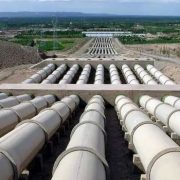
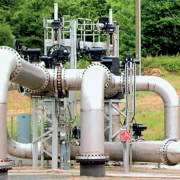
The carbon steel lining piping on the overground portion of the piping system conveying the supply water to the cooling tower of the main condenser was replaced with 2205 duplex stainless steel piping.

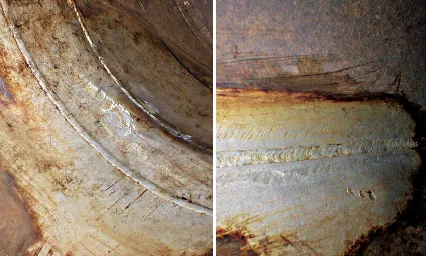
The new replacement 2205 duplex stainless steel pipe was installed in 2002. The pipe is 60 meters long, 76.2 cm and 91.4 cm in diameter, and the wall thickness of the pipe is 0.95 cm. The system specified in accordance with ASME B31.1 Power piping, which is one of the management codes for the safe use of power plant piping systems and is widely used in the world. After 500 days of service, the system was thoroughly inspected. No scaling or corrosion was found during the inspection. 2205 duplex stainless steel performed very well. 2205 stainless steel piping has been performing well for more than a decade since its installation. Based on this experience, Duke Power has used 2205 duplex stainless steel pipes in other parts of its system.

Internal of 2205 pipe after 500 days use.


Designers of nuclear power plant water systems now have one more option when it comes to choosing piping materials for corrosion-resistant cooling water. The successful application of 2205 duplex stainless steel can reduce maintenance costs, reduce downtime and ensure the operation safety of nuclear power plants.