La tolleranza di spessore della piastra in acciaio inox

Di solito chiamiamo spessore di 4-25,0 mm per la piastra in acciaio inox al centro, spessore di 25,0-100,0 mm per la piastra spessa in acciaio inox, spessore superiore a 100,0 mm è la piastra extra spessa. Quando si cerca una piastra in acciaio inox adatta, sono disponibili diversi gradi in base alla resistenza del metallo e alla sua composizione chimica. Esiste un grado di elevata qualità realizzato con leghe Cr-Ni che vengono generalmente utilizzate in applicazioni commerciali come imbarcazioni a pressione, gusci di caldaie, ponti, automobili, cantieri navali, costruzioni e altri utilizzi industriali.

È importante considerare il tipo di utilizzo che la piastra in acciaio inossidabile dovrà avere in una determinata applicazione industriale. Alcune applicazioni richiedono una piastra rinforzata e temprata in grado di resistere a colpi di martello, abrasioni e impatti. Altre potrebbero richiedere un materiale più fragile e morbido in grado di sopportare piegature e deformazioni. Gli altri criteri da osservare sono la resistenza alla corrosione e questo determinerà quale tipo di piastra in acciaio inossidabile sia più adatto all’applicazione. I gradi più comunemente utilizzati sono: 304, 316LPlacca in acciaio inossidabile tipo 310S e 904L. Qui sono riportati i valori di tolleranza per lo spessore consentito della placca in acciaio inossidabile secondo le specifiche ASTM, JIS e GB.


Placca in acciaio inossidabile JIS

Spessore Larghezza
<1250 ≥1250<1600
≥0.30~<0.60 S 0,05 S 0,06
≥0.60~<0.80 S 0,07 S 0,09
≥0.80~<1.00 S 0,09 S 0,10
≥1.00~<1.25 S 0,10 S 0,12
≥1.25~<1.60 S 0,12 S 0,15
≥1.60~<2.00 S 0,15 S 0,17
≥2.00~<2.50 S 0,17 S 0,20
≥2.50~<3.15 S 0,22 S 0,25
≥3.15~<4.00 S 0,25 S 0,30
≥4.00~<5.00 S 0,35 S 0,40
≥5.00~<6.00 S 0,40 S 0,45
≥6.00~<7.00 S 0,50 S 0,50


Placca in acciaio inox ASTM

Spessore Tolleranza consentita Larghezza
In alto In basso ≤1000 >1000~≤1300
0.10 0.03 0.03
0.15 0.04 0.04
0.20 0.05 0.05
0.25 0.05 0.05
0.30 0.03 ——-
0.40 0.04 0.04
0.50 0.08 0.08
0.50 0.045 0.05
0.60 0.05 0.05
0.75 0.10 0.10
0.80 0.05 0.05
1.00 0.055 0.06
1.20 0.08 0.08
1.25 0.13 0.13
1.50 0.08 0.08
1.75 0.15 0.15
2.00 0.18 0.18
2.00 0.10 0.10
2.25 0.20 0.20
2.50 0.23 0.23
2.50 0.10 0.11
2.75 0.25 0.25
3.00 0.25 0.25
3.00 0.13 0.13
3.25 0.30 0.30
3.50 0.30 0.30
3.75 0.36 0.36
4.00 0.36 0.36
4.00 0.17 0.17
4.99 0.36 0.36
5.00 0.17 0.17
6.00 0.17 0.20
8.00 0.17 0.


Placca in acciaio inox GB

Spessore Tolleranza di spessore consentita
Alta precisione (A) Precisione standard (B)
>600~1000 >1000~1250 >600~1250
0.05~0.10 ——- ——- ——-
>0.10~0.15 ——- ——- ——-
>0.15~0.25 ——- ——- ——-
>0.25~0.45 S 0,040 S 0,040 S 0,040
>0.45~0.65 S 0,040 S 0,040 S 0,050
>0.65~0.90 S 0,050 S 0,050 S 0,060
>0.90~1.20 S 0,050 S 0,060 S 0,080
>1.20~1.50 S 0,060 S 0,070 S 0,110
>1.50~1.80 S 0,070 S 0,080 S 0,120
>1.50~2.00 S 0,090 S 0,100 S 0,130
>2.00~2.30 S 0,100 S 0,110 S 0,140
>2.30~2.50 S 0,100 S 0,110 S 0,140
>2.50~3.10 S 0,110 S 0,120 S 0,160
>3.10~4.00 S 0,120 S 0,130 S 0,180

Sono i tipi di acciaio inossidabile duplex 318LN?

318LN is Nitrogen-enhanced stainless steel commonly used to address corrosion failures in 300 series stainless steel. The structure of 318LN stainless steel is composed of Austenite surrounded by continuous Ferrite phases. 318LN contains about 40-50% Ferrite in the annealed state and can be considered duplex stainless steel. The duplex structure combines ferrite alloys (stress corrosion cracking resistance and high strength) with the superior qualities of Austenitic alloys (ease of manufacture and corrosion resistance). The 318LN is resistant to H2S uniform corrosion, sulfide stress cracking, hydrogen embrittability and pitting, and reducing media corrosion. It is commonly used to manufacture sulfur-resistant wellheads, valves, stems, and fasteners for use in mining environments where H2S partial pressures exceed 1MPa. However, the use of 318LN duplex stainless steel should be limited to less than 600°F because prolonged high temperatures can brittle the 318LN stainless steel.


The chemical composition of 318LN steel

Cr Ni Mo C N Mn Si P S
22.0-23.0 4.50-6.50 3.00-3.50 ≤0.030 0.14-0.20 ≤2.00 ≤1.00 ≤0.030 ≤0.020
Mechanical Property
Ys (Mpa) Ts (Mpa) Elongation (%) Hv
Norme ≥ 450 ≥ 620 ≥ 18
Physical property
Density (g/cm) Specific heat(J/g.C) Conductivita termica

100C(W/m.)

The coefficient of thermal expansion

20~100C (10/C)

7.8 0.45 19.0 13.7


Features of 318LNsteel

  • Excellent resistance to sulfide stress corrosion
  • Good resistance to chloride stress corrosion cracking, pitting and crevice corrosion
  • High strength,
  • Good weldability and workability


Applications of 318LNsteel

  • Chemical treatment containers, pipes and heat exchangers
  • Pulp mill digesters, bleach cleaners, chip presteam containers
  • Food processing equipment
  • Petrochemical pipelines and heat exchangers
  • Flue gas desulfurization equipment


318LN duplex stainless steel is an economical and effective solution for applications where 300 series stainless steel are susceptible to chloride stress corrosion cracking. When stainless steel is subjected to tensile stress, stress corrosion cracking will occur in contact with a solution containing chloride, and rising temperature will also increase the sensitivity of stainless steel to stress corrosion cracking. The combination of chromium, molybdenum, and nitrogen enhances the 318LN’s resistance to chloride pitting and crevice corrosion, which is critical for services such as marine environments, brackish water, bleaching operations, closed-loop water systems, and some food processing applications. In most environments, 318LN’s high chromium, molybdenum and nitrogen content provides superior corrosion resistance to ordinary stainless steels such as 316L and 317L.

Acciaio inossidabile ad alta resistenza utilizzato nelle applicazioni aeronautiche

We usually call tensile strength higher than 800MPa, yield strength higher than 500MPa stainless steel is high strength stainless steel, yield strength higher than 1380MPa stainless steel is called ultra high strength stainless steel. The development of the aviation industry has proved that the improvement of aircraft and aero-engine performance largely depends on metal materials. Due to the high strength, high toughness, high stress corrosion cracking resistance and good impact resistance of steel, some key structural components of aircraft such as landing gear, girder, high stress joints, fasteners and other high strength stainless steel are still used.

High strength stainless steel mainly includes Martensite precipitation hardening stainless steel and semi – Austenite precipitation hardening stainless steel. The strength of martensite precipitation hardening stainless steel is achieved by martensite transformation and precipitation hardening treatment, the advantage is high strength, at the same time due to low carbon, high chromium, high molybdenum and/or high copper, its corrosion resistance is generally not less than 18Cr-8Ni austenitic stainless steel; Free cutting, good welding ability, do not need local annealing after welding, heat treatment process is relatively simple. The main disadvantage is that even in annealed state, its structure is still low carbon martensite, so it is difficult to conduct deep deformation cold working. The typical steel grade is 17-4PH and PH13-8Mo, used for the manufacture of high strength corrosion resistant bearing components, such as engine bearing parts, fasteners, etc. working at 400℃. PH13-8Mo is widely used in aeronautical bearing corrosion resistant medium temperature structural parts.

The semi-Austenite precipitation hardened stainless steel can be machined, coldly deformed and welded in Austenite state, and then the martensite transformation and precipitation hardening can be controlled by adjusting aging to obtain different strengths and toughness coordination. The steel has good corrosion resistance and thermal strength, especially stress corrosion resistance, and is especially suitable for the manufacture of parts used below 540℃. The disadvantage is that the heat treatment process is complex, the heat treatment temperature control requirements are very accurate (±5℃); The work hardening tendency of steel is large, and many intermediate annealing times are often needed for deep deformation cold working. Typical grades are 17-7PH, PH15-7Mo, etc. This kind of steel is mainly used in the aviation industry to work at 400℃ below the corrosion bearing structure, such as all kinds of pipes, pipe joints, springs, fasteners, etc.


Aircraft landing gear

The materials used for the construction of aircraft landing gear are 30CrMnSiNi2A, 4340, 300M, Aermet100 and other aircraft landing gear and fasteners with higher requirements are mostly made of precipitation hardened stainless steel, such as 17-4PH for THE landing gear of F-15 aircraft, 15-5pH for the landing gear of B-767 aircraft. PH13-8mo steel has the potential to replace 17-4PH, 15-5PH, 17-7PH, PH15-7Mo and other steels due to its better stress corrosion resistance than precipitation hardened stainless steel of the same grade.

The plane bearing

German FAG company developed the nitrogen-added martensite stainless steel Cronidur30 (0.31%C-0.38%N-15% Cr-L %Mo), which is produced by PESR process of electroslag remelting under high pressure nitrogen atmosphere. It is a high temperature stainless steel with high nitrogen completely hardened, which is more resistant to corrosion than SUS440. It is not suitable for high DN value (D: bearing inner diameter/mm, N: shaft revolution/arin) because of its characteristics of full hardening type, the same Cronidur30 can satisfy the residual compressive stress and fracture toughness value of DN4 million at the same time through high-frequency quenching. But the tempering temperature is lower than 15O℃, it can not withstand the rise in bearing temperature caused by thermal shock after engine shutdown.

Aircraft bearing structural components

High-strength stainless steel in aircraft bearing structure is mainly 15-5PH, 17-4PH, PH13-8Mo, etc., including hatch cover latch, high-strength bolt, spring and other parts. Civil aircraft use such high-strength stainless steel for wing spars, such as 15-5PH steel for Boeing 737-600 wing spars; Type A340-300 wing SPAR PH13-8Mo steel. Ph13-8Mo is used for parts requiring high strength and toughness, especially for transverse performance, such as fuselage frames. More recently, Custom465 has been tested due to increased toughness and stress corrosion resistance. Custom465 was developed by Carpenter on the basis of Custom450 and Custom455 for the manufacture of aircraft flap guides, slat guides, transmissions, engine mounts, etc. The steel is currently included in the MMPDS-02, AMS5936 and ASTM A564 technical specifications. HSL180 high strength stainless steel (0.21C-12.5Cr-1.0Ni-15.5Co-2.0Mo) is used to manufacture the aircraft structure, which has the same strength of 1800MPa as low alloy steel such as 4340 and the same corrosion resistance and toughness as precipitation hardened stainless steel such as SUS630.


Vantaggi dell'attacco a gomito in acciaio inox

Gli accessori per tubi in acciaio inox, in particolare i tee, gli elbow e i reducers, sono sempre più comuni nell’utilizzo in ambito di ingegneria delle condotte a causa delle loro buone caratteristiche di modellazione, resistenza alla corrosione, resistenza alle alte temperature e alle alte pressioni, saldatura e altre. Rispetto agli accessori per tubi in acciaio al carbonio, gli accessori per tubi in acciaio inox sono spesso utilizzati nel trasporto di acqua potabile e nelle condotte petrolchimiche e altre con elevati requisiti ambientali. Per rendere più facile la comprensione di chi non ne conosce molto, questo articolo è pensato per illuminarvi su questa linea di prodotti e sulle sue diverse caratteristiche. Inoltre, discuteremo anche i vantaggi che potrete trarre dall’utilizzo di questi accessori. Quando avrete finito di leggere questo articolo, avrete sicuramente una buona idea di cosa siano questi prodotti e come potrete acquistarli.

Specifiche dell'anca in acciaio inox 304

DN NPS Serie A Serie B 45°Elbow 90°Elbow Orecchio 180°
DN NPS Serie A Serie B L.R L.R S.R L.R S.R L.R S.R
15 1/2 21.3 18 16 38 – 76 – 48 –
20 3/4 26.9 25 19 38 – 76 – 51 –
25 1 33.7 32 22 38 25 76 51 56 41
32 1.1/4 42.4 38 25 48 32 95 64 70 52
40 1.1/2 48.3 45 29 57 38 114 76 83 62
50 2 60.3 57 35 76 51 152 102 106 81
65 2.1/2 76.1(73) 76 44 95 64 190 127 132 100
80 3 88.9 89 51 114 76 229 152 159 121
90 3.1/2 101.6 – 57 133 89 267 178 184 140

Questi gradi comunemente utilizzati nella connessione dei tubi sono: 304Angoli in acciaio inossidabile tipo 316 e 316l. Sono ampiamente utilizzati nella produzione automobilistica, farmaceutica e alimentare. Infatti, non è raro trovare questi prodotti utilizzati nelle strutture di lavorazione alimentare. La ragione della loro ampia diffusione è molto semplice: forniscono un supporto efficace alle parti operative delle macchine, senza compromettere l’altrettanto importante qualità del lavoro. Come accennato in precedenza, utilizzano un processo di saldatura appositamente progettato, chiamato bending heat cure, per garantire che l’unione dell’angolino sia supportata da tubi in acciaio inossidabile ad alta resistenza. Ciò garantisce che i tubi possano essere sostituiti in qualsiasi momento necessario.

Un altro importante vantaggio dell'utilizzo di accessori in acciaio inox è la sua resistenza alla corrosione. Poiché l'acciaio inox è un acciaio legato con l'aggiunta di Cr e Mo, ha la possibilità di diventare parte integrante di molti processi industriali, dove la conduttività elettrica è fondamentale. Ciò significa che un guasto elettrico può compromettere il funzionamento di un impianto e potrebbe non essere sufficiente spegnere la corrente. Ad esempio, quando si verifica un guasto elettrico in un impianto chimico, il personale di emergenza deve accedere autonomamente alla zona, cosa che potrebbe rivelarsi molto difficile se i punti di distribuzione della corrente non sono adeguatamente posizionati.


WLD steel è un 304 Fornitore e produttore di gomiti a 90 gradi in acciaio inox. In primo luogo, vengono realizzati con l’obiettivo di garantire prestazioni di altissima qualità. Ciò significa che sono dotati di accessori per tubi in acciaio inox con il diametro e la lunghezza corretti per l’applicazione, indipendentemente dalla dimensione o dalla forma del tubo. Ad esempio, potrebbe essere necessario montare tubi di diverse larghezze, che variano da un incremento di due pollici a uno di quattro pollici. Un prodotto ben progettato sarà in grado di soddisfare queste esigenze senza alcun problema.


La prevenzione della corrosione delle condotte sotterranee

The corrosion of above-ground pipelines is caused by the combined action of corrosive ions (Cl-, S2-), CO2, bacteria and dissolved oxygen. Dissolved oxygen is a strong oxidant, it is easy to oxidize iron ions to form precipitation, and the relationship between dissolved oxygen and corrosion rate is linear. Sulfate-reducing bacteria will the existence of the sulfate-reducing hydrogen sulphide in the water, may lead to pipe hydrogen induced cracking and stress corrosion cracking, corrosion products generated ferrous sulfide and adhere on the surface of the steel is poor, easy to fall off, is potential, as the cathode constitute an active micro battery and steel matrix, and continue to produce corrosion to the steel substrate. Saprophytic bacteria adhere to the pipeline and cause fouling blockage, and also produce oxygen concentration cells and cause pipeline corrosion. The oil-water mixture in the surface pipeline may enter the sewage tank after separation. Therefore, when choosing anti-corrosion measures for the above-ground pipelines in the oil fields, the protection effect, construction difficulty, cost and other factors should be considered. Some commonly used anti-corrosion measures are for oil field above-ground pipelines:


Coating

There are many anticorrosive coatings on pipelines, and their performance is different. Choosing appropriate coatings can greatly extend the service life of pipelines. According to the corrosive environment, transport media and other conditions to choose the appropriate coating. The outer protective coating is the first and most important barrier of the above-ground steel pipe, mainly organic coating and metal coating (or coating). Organic coatings can be divided into epoxy resin, modified phenolic epoxy, asphalt, coal tar and other coatings. The experimental results show that the surface of the coating does not bubble when soaked in brine and oil, and the coating meets the requirements of API RP 5L2 adhesion and peel test, indicating that the coating has good adhesion. The coating is heated at 250℃ for 30min and then cooled by water at room temperature. The coating surface has no peeling, no cracking, no bubble, no adhesion loss, etc., that is, the coating has good heat resistance. According to ASTM D522, ASTM D968 and other standards to carry out bending and wear tests, the coating also has good bending and wear resistance.


Cathodic protection

It is not easy to coat the internal surface for small diameter pipelines (pipe diameter less than 60mm), even if the coating is completed indoors, it is difficult to achieve 100% pinhole free. In addition, the inner wall coating is often subjected to wear in the process of use, so the use of cathodic protection can effectively reduce corrosion perforation. Sacrificial anode protection is the earliest cathodic protection method, which is simple to operate and does not require power supply. The sacrificial anode materials commonly used in China include magnesium, zinc, aluminum and their alloys.

The output current of the sacrificial anode depends on its shape and size. In the laboratory test of magnesium, zinc, an aluminum alloy of cathodic protection potential (relative to the copper/copper sulfate reference electrode), three types of alloy are accord with the requirement of oil and gas station cathodic protection specification (cathodic protective potential is 0.85 V or more), including aluminum alloy anode protective effect is best, magnesium anode and zinc alloy anode is poorer.


Special joint

The special joint is designed to solve the damage to the interface coating caused by pipe welding after coating. Methods include: using refractory insulation material and high-temperature coating; Or use a new type of high temperature heat insulation ceramic joint, which has good heat insulation performance and corrosion resistance, as well as in the temperature of drastic changes in the performance of the burst and permeability resistance, but the disadvantage is that the strength and toughness is poor. Laboratory tests show that under the conditions of drastic changes in temperature, the crack resistance and penetration resistance of the joint can meet the requirements. However, under the premise of ensuring the strength and toughness, the joint wall thickness is too thick, and the change of inner diameter will affect the normal construction of the pipeline. The use of refractory insulation materials and high-temperature coating joints can fully meet the requirements of use.


Why is duplex stainless steel used in nuclear power plant cooling water systems?

As a clean energy source, nuclear power is a major contributor to reducing carbon emissions worldwide. The cooling water piping system is the key to the safe operation of a nuclear power plant. It consists of thousands of feet of pipes of various diameters and sizes. It provides a reliable water supply for the cooling of plant equipment. The non-safety piping system must provide enough cooling water to cool the plant, while the safety system must provide enough cooling water to bring the reactor under control and safely shut it down in case of an emergency.

These pipe materials must be resistant to cooling water corrosion throughout the service life of the equipment. Depending on the plant’s location, the type of cooling water can range from relatively clean fresh water to contaminated seawater. Experience has shown that as systems age, a variety of corrosion problems and varying degrees of corrosion can occur, damaging the system and preventing it from providing the required cooling water.

Problems with cooling water piping often involve materials and their interactions with cooling water. Leakage from fouling (plugging) and corrosion of the system are the most common problems, including sediment accumulation, Marine biological attachment (biofouling), accumulation of corrosion products, and blockage of foreign matter. Leakage is usually caused by microbial corrosion (MIC), which is very corrosive corrosion caused by certain microorganisms in water. This form of corrosion occurs frequently in carbon steel and low-alloyed stainless steel.

Stainless steel has long been considered a viable option for building new water supply piping systems and for repairing or replacing existing carbon steel systems. The stainless steel commonly used in piping upgrade solutions is 304L, 316L, or 6%-Mo stainless steel. 316L and 6% Mo stainless steel yo big differences in performance and price. If the cooling medium is untreated water, which is highly corrosive and carries a risk of microbial corrosion, 304L and 316L are not suitable choices. As a result, nuclear plants have had to upgrade to 6%-Mo stainless steel or accept the high maintenance costs of carbon steel systems. Some nuclear power plants still use carbon steel lining pipes because of the lower initial cost. According to ASTM A240,Industrial water supply piping systems are often made of stainless steel below:

Valutazioni UNS C N Cr Ni Mo Cu
304L S30403 0.03 / 18.0-20.0 8.0-12.0 / /
316L S31603 0.03 / 16.0-18.0 10.0-14.0 2.0-3.0 /
6%Mo N08367 0.03 0.18-0.25 20.0-22.0 23.0-25.0 6.0-7.0 0.75
2205 S32205 0.03 0.14-0.2 22.0-23.0 4.5-6.5 3.0-3.5 /

The 2205 duplex stainless steel proved to be an excellent choice. Duke Power’s Catawba nuclear power plant in South Carolina is the first nuclear power plant to use 2205 (UNS S32205) dual-phase stainless steel in its systems. This grade contains approximately 3.2% molybdenum and has improved corrosion resistance and significantly better microbial corrosion resistance than 304L and 316L stainless steels.

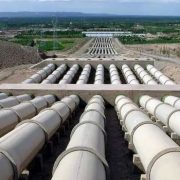
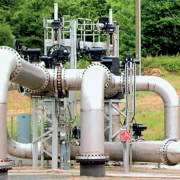
The carbon steel lining piping on the overground portion of the piping system conveying the supply water to the cooling tower of the main condenser was replaced with 2205 duplex stainless steel piping.

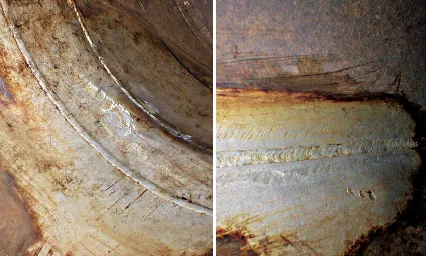
The new replacement 2205 duplex stainless steel pipe was installed in 2002. The pipe is 60 meters long, 76.2 cm and 91.4 cm in diameter, and the wall thickness of the pipe is 0.95 cm. The system specified in accordance with ASME B31.1 Power piping, which is one of the management codes for the safe use of power plant piping systems and is widely used in the world. After 500 days of service, the system was thoroughly inspected. No scaling or corrosion was found during the inspection. 2205 duplex stainless steel performed very well. 2205 stainless steel piping has been performing well for more than a decade since its installation. Based on this experience, Duke Power has used 2205 duplex stainless steel pipes in other parts of its system.

Internal of 2205 pipe after 500 days use.


Designers of nuclear power plant water systems now have one more option when it comes to choosing piping materials for corrosion-resistant cooling water. The successful application of 2205 duplex stainless steel can reduce maintenance costs, reduce downtime and ensure the operation safety of nuclear power plants.