ความทนทานของความหนาของแผ่นสแตนเลส

We usually call the thickness of 4-25.0 mm stainless steel plate in the middle plate, the thickness of 25.0-100.0mm stainless steel thick plate, thickness of more than 100.0mm is extra thick plate.When looking for a suitable stainless steel plate, there are several different grades available based on the strength of the metal and its chemical composition. There is a high grade that is made from Cr-Ni alloys which are generally used in commercial applications such as Pressure vessels, boiler shells, bridges, automobiles, shipbuilding, construction and other industrial purposes.

It is important to note what type of use the stainless steel plate is going to have in any given industrial application. Some applications require a hardened, reinforced plate that is able to withstand hammer blows, abrasions and impact. Others may require a more brittle, softer material that is able to cope with bending and deformation. The other criteria that need to be observed is the degree of corrosion resistance and this will dictate what grade of stainless steel plate is best for the application. The conmmonly used grades are 304, 316L, 310S, and 904L stainless steel plate. Here is the allowable thickness tolerance of stainless steel plate from ASTM, JIS and GB specification.


JIS Stainless steel plate

Thickness Width
<1250 ≥1250<1600
≥0.30~<0.60 士0.05 士0.06
≥0.60~<0.80 士0.07 士0.09
≥0.80~<1.00 士0.09 士0.10
≥1.00~<1.25 士0.10 士0.12
≥1.25~<1.60 士0.12 士0.15
≥1.60~<2.00 士0.15 士0.17
≥2.00~<2.50 士0.17 士0.20
≥2.50~<3.15 士0.22 士0.25
≥3.15~<4.00 士0.25 士0.30
≥4.00~<5.00 士0.35 士0.40
≥5.00~<6.00 士0.40 士0.45
≥6.00~<7.00 士0.50 士0.50


ASTM Stainless steel plate

Thickness Allowable tolerance Width
上 下 ≤1000 >1000~≤1300
0.10 0.03 0.03
0.15 0.04 0.04
0.20 0.05 0.05
0.25 0.05 0.05
0.30 0.03 ——-
0.40 0.04 0.04
0.50 0.08 0.08
0.50 0.045 0.05
0.60 0.05 0.05
0.75 0.10 0.10
0.80 0.05 0.05
1.00 0.055 0.06
1.20 0.08 0.08
1.25 0.13 0.13
1.50 0.08 0.08
1.75 0.15 0.15
2.00 0.18 0.18
2.00 0.10 0.10
2.25 0.20 0.20
2.50 0.23 0.23
2.50 0.10 0.11
2.75 0.25 0.25
3.00 0.25 0.25
3.00 0.13 0.13
3.25 0.30 0.30
3.50 0.30 0.30
3.75 0.36 0.36
4.00 0.36 0.36
4.00 0.17 0.17
4.99 0.36 0.36
5.00 0.17 0.17
6.00 0.17 0.20
8.00 0.17 0.


GB Stainless Steel Plate

Thickness Allowable thickness tolerance
High precision(A) Standard precision(B)
>600~1000 >1000~1250 >600~1250
0.05~0.10 ——- ——- ——-
>0.10~0.15 ——- ——- ——-
>0.15~0.25 ——- ——- ——-
>0.25~0.45 士0.040 士0.040 士0.040
>0.45~0.65 士0.040 士0.040 士0.050
>0.65~0.90 士0.050 士0.050 士0.060
>0.90~1.20 士0.050 士0.060 士0.080
>1.20~1.50 士0.060 士0.070 士0.110
>1.50~1.80 士0.070 士0.080 士0.120
>1.50~2.00 士0.090 士0.100 士0.130
>2.00~2.30 士0.100 士0.110 士0.140
>2.30~2.50 士0.100 士0.110 士0.140
>2.50~3.10 士0.110 士0.120 士0.160
>3.10~4.00 士0.120 士0.130 士0.180

318LN เป็นเกรดเหล็กสเตนเลสแบบสองชั้นหรือไม่?

318LN เป็นเหล็กสแตนเลสที่เสริมไนโตรเจน ซึ่งมักใช้ในการแก้ไขปัญหาการกัดกร่อนในเหล็กสแตนเลสซีรีย์ 300 โดยโครงสร้างของ 318LN ประกอบด้วย Austenite ที่ถูกปกคลุมด้วยเฟอร์ไรต์แบบต่อเนื่อง 318LN มีเฟอร์ไรต์ประมาณ 40-50% ในสภาพที่ยังไม่ผ่านการอบขึ้นรูป และสามารถถือได้ว่าเป็นเหล็กสแตนเลสแบบสองชั้น โดยโครงสร้างแบบสองชั้นนี้รวมเอาโลหะผสมเฟอร์ไรต์ (ทนต่อการกัดกร่อนจากการบิดเบือนและมีความแข็งแรงสูง) เข้ากับคุณสมบัติที่เหนือกว่าของเหล็กสแตนเลสแบบออสเทนติค (ความง่ายในการผลิตและความทนต่อการกัดกร่อน) 318LN ทนต่อการกัดกร่อนแบบสม่ำเสมอของ H2S, การแตกร้าวจากการปะทะของซัลไฟด์, ความเปราะของไฮโดรเจน และการกัดกร่อนของสื่อลดความต้านทานการกัดกร่อน โดยทั่วไปจะใช้ในการผลิตหัวเจาะน้ำมันที่ทนต่อซัลเฟอร์ วาล์ว และตัวยึดสำหรับใช้ในสภาพแวดล้อมการทำเหมืองแร่ ซึ่งความดัน H2S ส่วนหนึ่งเกิน 1MPa อย่างไรก็ตาม การใช้เหล็กกล้าสเตนเลสแบบสองชั้น 318LN ควรจำกัดไว้ที่อุณหภูมิไม่เกิน 600°F เนื่องจากอุณหภูมิที่สูงเป็นเวลานานอาจทำให้เหล็กกล้าสเตนเลสแบบ 318LN แตกหักได้


องค์ประกอบทางเคมีของเหล็ก 318LN

Cr นิว โม C N มิน Si P S
22.0-23.0 4.50-6.50 3.00-3.50 ≤0.030 0.14-0.20 ≤2.00 ≤1.00 ≤0.030 ≤0.020
คุณสมบัติทางกล
Ys (Mpa) TS (Mpa) การยืดตัว (%) Hv
มาตรฐาน ≥ 450 ≥ 620 ≥ 18
คุณสมบัติทางกายภาพ
ความหนาแน่น (กรัม/เซนติเมตร) ความร้อนเฉพาะ (J/g.C) การนำความร้อน

100C (W/m.)

ค่าสัมประสิทธิ์การขยายตัวทางความร้อน

20~100C (10/C)

7.8 0.45 19.0 13.7


คุณสมบัติของเหล็ก 318LN

  • ทนต่อการกัดกร่อนจากสารซัลไฟด์ได้ดีเยี่ยม
  • ทนต่อการกัดกร่อนจากคลอไรด์ได้ดี ทนต่อการกัดกร่อนจากความเครียดและการกัดกร่อนของรูพรุน
  • ความแข็งแรงสูง
  • ทนการเชื่อมและทนต่อการใช้งานได้ดี


การใช้งานของเหล็ก 318LN

  • ภาชนะบรรจุสารเคมี ท่อ และตัวแลกเปลี่ยนความร้อน
  • เครื่องบำบัดน้ำเสียของโรงงานเยื่อกระดาษ เครื่องทำความสะอาดด้วยสารฟอกขาว ถังเก็บน้ำร้อนก่อนอบชิ้นงาน
  • อุปกรณ์การแปรรูปอาหาร
  • ท่อส่งน้ำมันเคมีและตัวแลกเปลี่ยนความร้อน
  • อุปกรณ์บำบัดก๊าซคาร์บอนไดออกไซด์


เหล็กกล้าไร้สนิมแบบสองชั้น 318LN เป็นทางเลือกที่ประหยัดและมีประสิทธิภาพสำหรับงานที่เหล็กกล้าไร้สนิมซีรีย์ 300 มีแนวโน้มที่จะเกิดการแตกร้าวจากการกัดกร่อนด้วยคลอไรด์ เมื่อเหล็กกล้าไร้สนิมถูกนำมาสัมผัสกับความตึงตัวของแรงดึง การกัดกร่อนด้วยความตึงตัวจะเกิดขึ้นเมื่อสัมผัสกับสารละลายที่มีคลอไรด์ และอุณหภูมิที่สูงขึ้นจะเพิ่มความไวของเหล็กกล้าไร้สนิมต่อการกัดกร่อนด้วยความตึงตัว การรวมกันของโครเมียม โมลิบดีนัม และไนโตรเจนจะช่วยเพิ่มความทนทานต่อการกัดกร่อนด้วยคลอไรด์ของ 318LN ซึ่งเป็นสิ่งสำคัญสำหรับงานบริการต่างๆ เช่น สภาพแวดล้อมทางทะเล น้ำเค็ม การทำสีขาว การใช้ระบบน้ำแบบวงปิด และบางงานการแปรรูปอาหาร ในสภาพแวดล้อมส่วนใหญ่ 318LN ที่มีปริมาณโครเมียม โมลิบดีนัม และไนโตรเจนสูงจะให้ความทนทานต่อการกัดกร่อนที่เหนือกว่าเหล็กกล้าไร้สนิมทั่วไป เช่น 316L และ 317L

เหล็กกล้าไร้สนิมที่มีความแข็งแรงสูงที่ใช้ในงานเครื่องบิน

We usually call tensile strength higher than 800MPa, yield strength higher than 500MPa stainless steel is high strength stainless steel, yield strength higher than 1380MPa stainless steel is called ultra high strength stainless steel. The development of the aviation industry has proved that the improvement of aircraft and aero-engine performance largely depends on metal materials. Due to the high strength, high toughness, high stress corrosion cracking resistance and good impact resistance of steel, some key structural components of aircraft such as landing gear, girder, high stress joints, fasteners and other high strength stainless steel are still used.

High strength stainless steel mainly includes Martensite precipitation hardening stainless steel and semi – Austenite precipitation hardening stainless steel. The strength of martensite precipitation hardening stainless steel is achieved by martensite transformation and precipitation hardening treatment, the advantage is high strength, at the same time due to low carbon, high chromium, high molybdenum and/or high copper, its corrosion resistance is generally not less than 18Cr-8Ni austenitic stainless steel; Free cutting, good welding ability, do not need local annealing after welding, heat treatment process is relatively simple. The main disadvantage is that even in annealed state, its structure is still low carbon martensite, so it is difficult to conduct deep deformation cold working. The typical steel grade is 17-4PH and PH13-8Mo, used for the manufacture of high strength corrosion resistant bearing components, such as engine bearing parts, fasteners, etc. working at 400℃. PH13-8Mo is widely used in aeronautical bearing corrosion resistant medium temperature structural parts.

The semi-Austenite precipitation hardened stainless steel can be machined, coldly deformed and welded in Austenite state, and then the martensite transformation and precipitation hardening can be controlled by adjusting aging to obtain different strengths and toughness coordination. The steel has good corrosion resistance and thermal strength, especially stress corrosion resistance, and is especially suitable for the manufacture of parts used below 540℃. The disadvantage is that the heat treatment process is complex, the heat treatment temperature control requirements are very accurate (±5℃); The work hardening tendency of steel is large, and many intermediate annealing times are often needed for deep deformation cold working. Typical grades are 17-7PH, PH15-7Mo, etc. This kind of steel is mainly used in the aviation industry to work at 400℃ below the corrosion bearing structure, such as all kinds of pipes, pipe joints, springs, fasteners, etc.


Aircraft landing gear

The materials used for the construction of aircraft landing gear are 30CrMnSiNi2A, 4340, 300M, Aermet100 and other aircraft landing gear and fasteners with higher requirements are mostly made of precipitation hardened stainless steel, such as 17-4PH for THE landing gear of F-15 aircraft, 15-5pH for the landing gear of B-767 aircraft. PH13-8mo steel has the potential to replace 17-4PH, 15-5PH, 17-7PH, PH15-7Mo and other steels due to its better stress corrosion resistance than precipitation hardened stainless steel of the same grade.

The plane bearing

German FAG company developed the nitrogen-added martensite stainless steel Cronidur30 (0.31%C-0.38%N-15% Cr-L %Mo), which is produced by PESR process of electroslag remelting under high pressure nitrogen atmosphere. It is a high temperature stainless steel with high nitrogen completely hardened, which is more resistant to corrosion than SUS440. It is not suitable for high DN value (D: bearing inner diameter/mm, N: shaft revolution/arin) because of its characteristics of full hardening type, the same Cronidur30 can satisfy the residual compressive stress and fracture toughness value of DN4 million at the same time through high-frequency quenching. But the tempering temperature is lower than 15O℃, it can not withstand the rise in bearing temperature caused by thermal shock after engine shutdown.

Aircraft bearing structural components

High-strength stainless steel in aircraft bearing structure is mainly 15-5PH, 17-4PH, PH13-8Mo, etc., including hatch cover latch, high-strength bolt, spring and other parts. Civil aircraft use such high-strength stainless steel for wing spars, such as 15-5PH steel for Boeing 737-600 wing spars; Type A340-300 wing SPAR PH13-8Mo steel. Ph13-8Mo is used for parts requiring high strength and toughness, especially for transverse performance, such as fuselage frames. More recently, Custom465 has been tested due to increased toughness and stress corrosion resistance. Custom465 was developed by Carpenter on the basis of Custom450 and Custom455 for the manufacture of aircraft flap guides, slat guides, transmissions, engine mounts, etc. The steel is currently included in the MMPDS-02, AMS5936 and ASTM A564 technical specifications. HSL180 high strength stainless steel (0.21C-12.5Cr-1.0Ni-15.5Co-2.0Mo) is used to manufacture the aircraft structure, which has the same strength of 1800MPa as low alloy steel such as 4340 and the same corrosion resistance and toughness as precipitation hardened stainless steel such as SUS630.


Advantages Of Stainless Steel elbow fitting

Stainless steel pipe fittings, especially tee, elbow and the reducer is more and more common in pipeline engineering use because of their good shaping, corrosion resistance, high temperature and high-pressure resistance, welding, and other characteristics. Compared with the carbon steel pipe fittings, stainless steel pipe fittings has been often used in drinking water transportation, petrochemical and other pipelines with high requirements for the environment. To make things easy for those who don’t know much about them, this article is meant to enlighten you about this product line and its various features. What’s more, we would also discuss the benefits that you can expect from using them. By the time you’ve finished reading through this article, you would definitely have a good idea about what these products are and how you can get your hands on them.

304 stainless steel elbow specifications

DN NPS Series A Series B 45°Elbow 90°Elbow 180°Elbow
DN NPS Series A Series B L.R L.R S.R L.R S.R L.R S.R
15 1/2 21.3 18 16 38 – 76 – 48 –
20 3/4 26.9 25 19 38 – 76 – 51 –
25 1 33.7 32 22 38 25 76 51 56 41
32 1.1/4 42.4 38 25 48 32 95 64 70 52
40 1.1/2 48.3 45 29 57 38 114 76 83 62
50 2 60.3 57 35 76 51 152 102 106 81
65 2.1/2 76.1(73) 76 44 95 64 190 127 132 100
80 3 88.9 89 51 114 76 229 152 159 121
90 3.1/2 101.6 – 57 133 89 267 178 184 140

These commonly used grades in the pipe connection are 304, 316, and 316l stainless steel elbow. They are often widely used in the manufacturing and automotive, pharmaceutical and food industries. In fact, it’s not uncommon to find these products being used in food processing plants. The reason behind their wide usage is quite straightforward – they provide effective support to the working parts of the machinery, without hampering the other quality of work. As mentioned above, they use a specially designed welding process called bending heat cure to ensure that the elbow joint is supported by high-strength stainless steel pipe fittings. This in turn ensures that the pipe fittings can be replaced whenever needed.

Another major advantage of using stainless steel fitting is its corrosion resistance;. Since stainless steel is alloy steel with the Cr and Mo added, it has the potential to become an integral part of many industrial processes, where conductivity is crucial. This means that an electrical fault can affect the functioning of a facility, and it may not just be a matter of switching off the supply. For instance, when a power failure occurs in a chemical manufacturing plant, emergency personnel have to access the area on their own, which could prove very difficult for them to do if the power distribution points are not properly located.


WLD steel is a 304 stainless steel 90-degree elbow supplier and manufacturer. To begin with, they are manufactured to ensure top-quality performance. This means that they are fitted with stainless steel pipe fittings of the right diameter and length for the job, irrespective of the pipe size or shape. For instance, there may be a need to fit pipes of different widths, varying from two-inch increments to four-inch increments. A well-designed product will be able to accommodate these demands without any hassle.


The corrosion prevention of above-ground pipeline

The corrosion of above-ground pipelines is caused by the combined action of corrosive ions (Cl-, S2-), CO2, bacteria and dissolved oxygen. Dissolved oxygen is a strong oxidant, it is easy to oxidize iron ions to form precipitation, and the relationship between dissolved oxygen and corrosion rate is linear. Sulfate-reducing bacteria will the existence of the sulfate-reducing hydrogen sulphide in the water, may lead to pipe hydrogen induced cracking and stress corrosion cracking, corrosion products generated ferrous sulfide and adhere on the surface of the steel is poor, easy to fall off, is potential, as the cathode constitute an active micro battery and steel matrix, and continue to produce corrosion to the steel substrate. Saprophytic bacteria adhere to the pipeline and cause fouling blockage, and also produce oxygen concentration cells and cause pipeline corrosion. The oil-water mixture in the surface pipeline may enter the sewage tank after separation. Therefore, when choosing anti-corrosion measures for the above-ground pipelines in the oil fields, the protection effect, construction difficulty, cost and other factors should be considered. Some commonly used anti-corrosion measures are for oil field above-ground pipelines:


Coating

There are many anticorrosive coatings on pipelines, and their performance is different. Choosing appropriate coatings can greatly extend the service life of pipelines. According to the corrosive environment, transport media and other conditions to choose the appropriate coating. The outer protective coating is the first and most important barrier of the above-ground steel pipe, mainly organic coating and metal coating (or coating). Organic coatings can be divided into epoxy resin, modified phenolic epoxy, asphalt, coal tar and other coatings. The experimental results show that the surface of the coating does not bubble when soaked in brine and oil, and the coating meets the requirements of API RP 5L2 adhesion and peel test, indicating that the coating has good adhesion. The coating is heated at 250℃ for 30min and then cooled by water at room temperature. The coating surface has no peeling, no cracking, no bubble, no adhesion loss, etc., that is, the coating has good heat resistance. According to ASTM D522, ASTM D968 and other standards to carry out bending and wear tests, the coating also has good bending and wear resistance.


Cathodic protection

It is not easy to coat the internal surface for small diameter pipelines (pipe diameter less than 60mm), even if the coating is completed indoors, it is difficult to achieve 100% pinhole free. In addition, the inner wall coating is often subjected to wear in the process of use, so the use of cathodic protection can effectively reduce corrosion perforation. Sacrificial anode protection is the earliest cathodic protection method, which is simple to operate and does not require power supply. The sacrificial anode materials commonly used in China include magnesium, zinc, aluminum and their alloys.

The output current of the sacrificial anode depends on its shape and size. In the laboratory test of magnesium, zinc, an aluminum alloy of cathodic protection potential (relative to the copper/copper sulfate reference electrode), three types of alloy are accord with the requirement of oil and gas station cathodic protection specification (cathodic protective potential is 0.85 V or more), including aluminum alloy anode protective effect is best, magnesium anode and zinc alloy anode is poorer.


Special joint

The special joint is designed to solve the damage to the interface coating caused by pipe welding after coating. Methods include: using refractory insulation material and high-temperature coating; Or use a new type of high temperature heat insulation ceramic joint, which has good heat insulation performance and corrosion resistance, as well as in the temperature of drastic changes in the performance of the burst and permeability resistance, but the disadvantage is that the strength and toughness is poor. Laboratory tests show that under the conditions of drastic changes in temperature, the crack resistance and penetration resistance of the joint can meet the requirements. However, under the premise of ensuring the strength and toughness, the joint wall thickness is too thick, and the change of inner diameter will affect the normal construction of the pipeline. The use of refractory insulation materials and high-temperature coating joints can fully meet the requirements of use.


Why is duplex stainless steel used in nuclear power plant cooling water systems?

As a clean energy source, nuclear power is a major contributor to reducing carbon emissions worldwide. The cooling water piping system is the key to the safe operation of a nuclear power plant. It consists of thousands of feet of pipes of various diameters and sizes. It provides a reliable water supply for the cooling of plant equipment. The non-safety piping system must provide enough cooling water to cool the plant, while the safety system must provide enough cooling water to bring the reactor under control and safely shut it down in case of an emergency.

These pipe materials must be resistant to cooling water corrosion throughout the service life of the equipment. Depending on the plant’s location, the type of cooling water can range from relatively clean fresh water to contaminated seawater. Experience has shown that as systems age, a variety of corrosion problems and varying degrees of corrosion can occur, damaging the system and preventing it from providing the required cooling water.

Problems with cooling water piping often involve materials and their interactions with cooling water. Leakage from fouling (plugging) and corrosion of the system are the most common problems, including sediment accumulation, Marine biological attachment (biofouling), accumulation of corrosion products, and blockage of foreign matter. Leakage is usually caused by microbial corrosion (MIC), which is very corrosive corrosion caused by certain microorganisms in water. This form of corrosion occurs frequently in carbon steel and low-alloyed stainless steel.

Stainless steel has long been considered a viable option for building new water supply piping systems and for repairing or replacing existing carbon steel systems. The stainless steel commonly used in piping upgrade solutions is 304L, 316L, or 6%-Mo stainless steel. 316L and 6% Mo stainless steel yo big differences in performance and price. If the cooling medium is untreated water, which is highly corrosive and carries a risk of microbial corrosion, 304L and 316L are not suitable choices. As a result, nuclear plants have had to upgrade to 6%-Mo stainless steel or accept the high maintenance costs of carbon steel systems. Some nuclear power plants still use carbon steel lining pipes because of the lower initial cost. According to ASTM A240,Industrial water supply piping systems are often made of stainless steel below:

คะแนน UNS C N Cr นิว โม Cu
304L S30403 0.03 / 18.0-20.0 8.0-12.0 / /
316L S31603 0.03 / 16.0-18.0 10.0-14.0 2.0-3.0 /
6%Mo N08367 0.03 0.18-0.25 20.0-22.0 23.0-25.0 6.0-7.0 0.75
2205 S32205 0.03 0.14-0.2 22.0-23.0 4.5-6.5 3.0-3.5 /

The 2205 duplex stainless steel proved to be an excellent choice. Duke Power’s Catawba nuclear power plant in South Carolina is the first nuclear power plant to use 2205 (UNS S32205) dual-phase stainless steel in its systems. This grade contains approximately 3.2% molybdenum and has improved corrosion resistance and significantly better microbial corrosion resistance than 304L and 316L stainless steels.

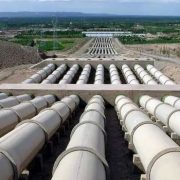
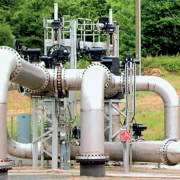
The carbon steel lining piping on the overground portion of the piping system conveying the supply water to the cooling tower of the main condenser was replaced with 2205 duplex stainless steel piping.

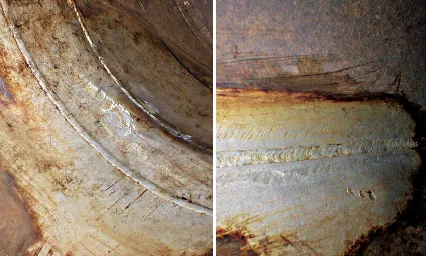
The new replacement 2205 duplex stainless steel pipe was installed in 2002. The pipe is 60 meters long, 76.2 cm and 91.4 cm in diameter, and the wall thickness of the pipe is 0.95 cm. The system specified in accordance with ASME B31.1 Power piping, which is one of the management codes for the safe use of power plant piping systems and is widely used in the world. After 500 days of service, the system was thoroughly inspected. No scaling or corrosion was found during the inspection. 2205 duplex stainless steel performed very well. 2205 stainless steel piping has been performing well for more than a decade since its installation. Based on this experience, Duke Power has used 2205 duplex stainless steel pipes in other parts of its system.

Internal of 2205 pipe after 500 days use.


Designers of nuclear power plant water systems now have one more option when it comes to choosing piping materials for corrosion-resistant cooling water. The successful application of 2205 duplex stainless steel can reduce maintenance costs, reduce downtime and ensure the operation safety of nuclear power plants.