302HQ VS 304 Stainless Steel

302HQ stainless steel is a standard material specifically used in the manufacture of self-tapping screws and light mechanical screws. It is also used in bolts, setting screws, rivets, and special fasteners. The name 302HQ is not standardized. The ASTM lists it as UNS S30430, which also includes “XM-7”, “304CU”, and “304HQ”. It has now completely replaced 384 and 305 steel for cold heading purpose. ISO 3506, Standard specification for stainless steel fasteners, 302HQ as an eligible component for class “A2” fasteners; It is commonly used to manufacture fasteners in the A2-70 and A2-80 strength. The stable austenitic structure enables 302HQ to be non-magnetic even after extensive cold working and to maintain excellent toughness at temperatures as low as freezing. Compared with 304 stainless steel, the addition of 3% copper in 302HQ can significantly reduce the cold work hardening rate. The chemical composition and physical properties are shown below:


Equivalent Material

成績 UNS No DIN EN JIS
302HQ S30430 1.4567 X3CrNiCu18-9-4 SUSXM7


Chemical Composition (ASTM A493 S30430)

成績 C Mn シィ P S Cr モ ニ Cu
302HQ 0.03 2.00 1.00 0.045 0.03 17.0-19.0 / 8.0-10.0 3.0-4.0


Mechanical Property

302HQ tensile strength: Annealing: 605, Mild drawing: 660

Density: 7900kg/㎡

Elasticity modulus:193Gpa

Average coefficient of thermal expansion: 0-100℃ (um/m/℃) 17.2; 0-315℃ (um/m/℃); 0-538 ℃ (18.8)

Thermal conductivity: 100℃ (W/ M. K) 16.3; 500℃ (W/ M. K) 21.5

Specific heat: 0-100℃ (J/ kg.K) 500;

Resistance: 720


Corrosion resistance

Its corrosion resistance is equivalent to or superior to 304 stainless steel. Pitting and crevice corrosion is easy to occur in the warm chloride environment, and stress corrosion cracking is sensitive when the temperature is higher than about 50°C. 302HQ can withstand about 200mg/L chloride in drinking water at room temperature and 150mg/L at 60℃.


Heat Resistant Performance

Good oxidation resistance, intermittent use temperature up to 870°C, continuous use temperature up to 925°C. Because of the low carbon content of 302HQ, it is safe for continuous use (no carbide precipitation) ranges from 425 to 860°C.


Heat Treatment

Solution treatment (annealing) is heated to 1010-1120°C and rapidly cooled. Heat treatment will not harden it.


Weldability

Excellent weldability, all standard fusion welding methods (whether or not they contain filler metal) can be used. Use a 308L electrode. Welding is generally not required except in the manufacture of stud welded fasteners, where resistance butt welding is used to join wires together.


Processing 

The 302HQ is rarely machined. The grade has a very low sulfur content, which helps its formability but reduces its machinability. The Improved 302HQ (UGIMA 4567) has very high machinability, slightly higher sulfur content, and is also calcium treated for use requiring extensive cold forming and machining operations on the 18/8 steel.


Cold Work Hardening

302HQ is the lowest work hardening rate among the common grades of austenitic stainless steels. According to the wire drawing data, the tensile strength increases by 8MPa when the cold-working area decreases by 1%). Even after extensive cold work, the brand remains essentially unresponsive to magnets. Some high strength cold heading fasteners require a slightly higher work hardening rate, so 304 or 304L (or special grade 304M) should be used instead of 302HQ; The work hardening rate of these grades is about 10-12.5MPa.


Typical Applications

All harsh cold heading applications, including self-tapping screws, roof bolts, mechanical screws, bolts, set screws, blind rivets, etc.

Stainless steel 321 VS 347

The property of 321 stainless steel and 347 stainless steel is similar in most cases, the 321 stainless steel is a kind of titanium – stabilization of 18/8 austenitic stainless steel (304), a small amount of titanium makes it in carbide precipitation temperature range, that’s 425-850℃, not appear intergranular corrosion after heating, with good strength, resistance to oxidation peeling and aqueous corrosion resistance.

The 321H is a high-carbon version of the 321 with higher high-temperature strength and is primarily used for high-temperature applications around 900°C. The disadvantage of 321 is that titanium has poor welding arc transition, so it cannot be used as welding material, while 347 containing niobium also plays the role of carbide stabilization, and can also be transferred through welding arc. 347 is standard welding material for 321 stainless steel welding and occasionally used as the base metal. Let’s see their chemical and mechanical comparison below:


Chemical composition comparison

成績 C Mn シィ P S Cr ニ モ N Other
321 0.08 2.00 0.75 0.045 0.03 17.0-19.0 9.0-12.0 / 0.1 Ti=5(C+N)0.7
347 0.08 2.00 0.75 0.045 0.03 17.0-19.0 9.0-13.0 / / Nb=10(C+N)1.0

We can see that the difference between them is the addition of  Ti and Nb. Due to the addition of stabilized element titanium, 321 can resist the formation of chromium carbide at 426℃~815℃, so it has excellent intergranular corrosion resistance and high-temperature performance and has higher creep and stress fracture properties than 304 and 304L. In addition, 321 also has good low-temperature toughness and excellent formability and welding characteristics, without annealing after welding.

347 Stainless steel is a niobium-containing Austenitic stainless steel and 347H is its high carbon version. 347 can be seen as a niobium-adding version based on 304. Nb, a rare earth element, has a similar effect to titanium in refining grains,  can resist intergranular corrosion and promoting aging hardening.


Physical property comparison

成績 Tensile strength, Mpa Yield strength, Mpa Elongation(50mm) Hardness, HB
321 515 205 40 217
347 515 205 40 201


Typical applications

347&347H stainless steel has better high-temperature performance than 304 and 321. It is widely used in aviation, petrochemical, food, papermaking and other industries, such as exhaust pipe and branch pipe of aero engine, hot gas pipe of turbine compressor and parts working under low load and temperature not exceeding 850℃.

The addition of titanium to the 321 makes it more suitable for where need high temperature and good corrosion resisting applications. It is suitable for 304 sensitized and 304L applications with insufficient high-temperature strength. Typical applications include thermal expansion joints, bellows, aircraft exhaust system components, heating element sleeves, furnace components, and heat exchangers.

316Lと904Lの鋼鉄の違いは何ですか?

Commonly known as “medical-grade steel”, 316L stainless steel is not only used to make jewelry and medical scalpels due to its low allergenic properties but also used by watch manufacturing companies to make watchbands. 904L stainless steel is Austenitic stainless steel made by Outokumpu Company in Finland based on 316L stainless steel, is a super Austenite with low carbon content and high alloying designed for corrosive environments such as dilute sulfuric acid.

904L stainless steel increases the content of chromium, nickel and molybdenum and adds a certain amount of copper, which will bring about a change in performance, making 904L stainless steel more wear-resistant and corrosion-resistant, but at the same time, there is not much difference between the two in hardness, let’s show their difference with the table below:

成績 C シィ Mn Cr ニ モ P S Cu
316L ≤0.03 ≤0.1 ≤0.2 16-18 10-14 2-3 ≤0.04 ≤0.03 /
904L ≤0.02 ≤0.1 ≤0.2 19-23 23-28 4-5 ≤0.04 ≤0.03 1-2


It is not difficult to see that 904L alloy elements chromium, nickel, molybdenum is more than 1.6 times of 316L stainless steel, 1%-2% copper makes 904L stainless steel has stronger corrosion resistance and wear resistance than 316L stainless steel. The 904 has a lower carbon content (C), so the polished 904L steel pipe or sheet steel has a better surface, and the same volume of 904L stainless steel is much heavier than the 316L stainless steel. Their Rockwell strength (HRB) is less than 95, and the strength is almost 490MPa. So it is completely wrong to say that 904L stainless steel is harder than 316L stainless steel.

Rolex was the first company to put 904L into watch manufacturing. In 1985, Rolex produced the watch case made of 904L steel replaced 316L steel. 904L steel contains more chromium, which helps to form a corrosion-resistant coating on the surface of metal materials. And “anti-corrosion” is also the benefit of the Rolex watches we often mention, but here “anti-corrosion” does not have any practical significance, because 316L steel has been completely enough daily corrosion. 904L steel is indeed better in corrosion resistance than 316L steel, but it does not mean that 316L steel is not good. For consumers, as a watch case material,  904L steel’s “propaganda” effect is better than the actual role of “anti-corrosion” itself.

Not just in the watch industry, chemical fields shows more advantages., 904L offers better corrosion resistance than 316L and even 317L. The addition of 1.5% copper has excellent corrosion resistance to reducing acids such as sulfuric acid and phosphoric acid, and also has excellent intergranular corrosion resistance to stress corrosion, pitting corrosion and crevice corrosion caused by chloride ion. In the concentration range of 0-98% pure sulfuric acid, 904L can be used at temperatures up to 40 ℃. Of all the phosphoric acids, 904L is more resistant to corrosion than ordinary stainless steel. Ordinary Austenitic stainless steels may be sensitive to stress corrosion at temperatures above 60℃ in a chloride-rich environment, and this sensitivity can be reduced by increasing the nickel content of the stainless steels. Due to its high nickel content, 904L is highly resistant to stress corrosion cracking in chloride solutions, concentrated hydroxide solutions, and hydrogen sulfide-rich environments.

ステンレス鋼の熱間圧延プレートと冷間圧延プレートの違い

ステンレス鋼は優れた耐食性、加工性、生物適合性、および広い温度範囲での高い靭性を備えており、石油化学産業、原子エネルギー、軽工業、繊維、食品、家電製品などの分野で広く使用されています。ステンレス鋼板の形成には、熱間圧延と冷間圧延が不可欠なプロセスです。熱間圧延された板は冷間圧延された板の原料であり、両者はステンレス鋼板の微細構造に影響を与えます。

ステンレス鋼の熱間圧延加工は、スラブ(主に連続鋳造スラブ)から行われます。このスラブは加熱され、粗加工ミルおよび仕上げミルグループで加工されます。最後の仕上げミルからの熱鋼は、ラミナリーフローで指定温度まで冷却され、コイル状に圧延されます。冷却後の鋼は酸化された表面を持ち、黒色で一般的に「ステンレス鋼ブラックコイル」として知られています。アニールおよびピッキング後、酸化された表面が除去され、「ステンレス鋼ホワイトロール」となります。一部の熱間圧延ステンレス鋼製品は直接使用でき、一部は使用前に冷間圧延製品に加工する必要があります。

ステンレス鋼冷延板は、一般的にステンレス鋼の熱延板を冷延装置(単立式冷延/多筋冷延)で圧延加工した製品です。異なる加工方法と再加工工程により、ステンレス鋼板の表面には、異なる表面仕上げ、粒状構造、色合いが与えられます。ステンレス鋼板の表面加工には、2D、2B、No.3、No.4、No.4、HL、BA、TR、エンボス加工などがあります。冷延ステンレス鋼板の表面加工には、電気めっき、電解研磨、方向性パターン、エッチング、ショットペインティング、着色、コーティングなど、さまざまな深加工加工が可能です。また、熱延加工後のNo.1表面およびパターンプレートも追加で導入できます。ステンレス鋼板の冷延と冷延とはどのような違いがありますか?


異なる表面品質

ステンレス鋼冷延板は表面品質が良く、酸化物層がなく、様々な表面処理が可能です。ステンレス鋼熱延板は通常、No 1処理で、酸化物層、グレーホワイト(ピクルス)、またはブラックブラウン(電気めっきされていない)があります。電気めっき後の冷延板の平滑度は、熱延板のものよりも高いです。

 

価格が異なる

ステンレス鋼冷延板の靭性と表面品質は熱延板よりも高いですが、価格は熱延板よりも高いです。


異なる用途

ステンレス鋼冷延板は、建築装飾、製品、家電製品、鉄道輸送、自動車、エレベーター、コンテナ、太陽エネルギー、精密電子機器など、様々な民生および産業分野で広く使用されています。2D、2B、BA、および研磨面は、建築装飾、エレベーター、コンテナなどのほとんどの製品に使用できます。成形または再加工後の冷延板は、家電製品、鉄道輸送、自動車、太陽エネルギー、精密電子機器などの表面品質の要求が高い場所で使用できます。

フェリチックステンレス鋼は何に使用されますか?

Ferrite stainless steel refers to the stainless steel with 11%~30%Cr and cubic crystal ferrite structure. Its high chromium content is the main element that affects its performance. The advantages of Ferritic stainless steel include low cost (without nickel), good magnetic conductivity, excellent stress corrosion resistance; Small working hardening tendency, easy to cold heading and cutting; High thermal conductivity (1.5 times that of Austenitic steel), low linear expansion coefficient (60% of Austenitic steel), but also obvious disadvantages such as poor plasticity and low strength in post-processing, easy welding cracking. Ferritic stainless steel is mainly used in oxidizing medium and nitride medium, suitable for heat exchange and heat circulation purposes, provides a wide range of applications.


Architecture and structure applications

Ferritic stainless steel is used as the roof and curtain wall of buildings because of its good resistance to atmospheric corrosion. High-chromium ferritic stainless steels used in coastal areas have been developed, and atmospheric corrosion-resistant stainless steels contain high levels of chromium and molybdenum and are supplemented with small amounts of niobium and titanium. The steel actually contains 22% chromium and 1.2% molybdenum. Sufficient chromium and molybdenum are necessary to improve the pitting resistance of stainless steel. The rusting area of type 304 and Type 316 austenitic stainless steel increased significantly with the increase of the number of periodic corrosion test cycles. On the contrary, the rust area of type 444 ferritic stainless steel increased slightly during the first 600 test cycles and was saturated after longer tests.


Automobile industry

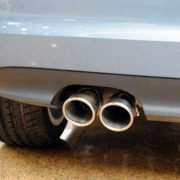
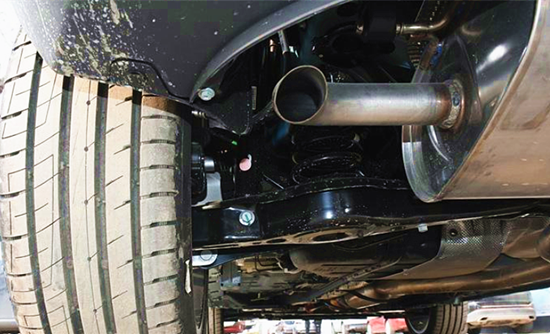
Type 409 or 410L stainless steel is used as a vehicle exhaust emission control system material such as front pipe, center pipe and muffler due to its excellent intergranular corrosion resistance, formability and heat resistance. In recent years, the design temperature of vehicle exhaust has increased because of the catalytic conversion rate and reduction of harmful gases such as NOx, SOx and hydrocarbon (HC) emissions. However, the increased temperature of chromium carbide will produce deposits on the silencer, i.e., temperatures of 400 ~ 500℃will lead to grain boundary corrosion. Because the weld area is particularly sensitive to intercrystalline corrosion, it is necessary to improve the corrosion resistance of Ferritic stainless steel containing 12% Cr. Therefore, a new Ferritic stainless steel was developed by adding niobium to steel containing 12% Cr. It is well known that reducing carbon and nitrogen content in steel is quite effective in preventing intercrystalline corrosion. In this way, the intercrystalline corrosion resistance can be further improved by adding niobium and titanium to steel. 409L stainless steel is used as the material for the exhaust manifold of automobiles, and the exhaust temperature is designed to be about 800℃. 430J1L stainless steel is recommended when the exhaust temperature is approximately 900℃.


Home appliances and kitchenware

400 series ferrite stainless steel has been widely accepted in the field of household appliances and kitchenware because of its unique aesthetic properties, corrosion resistance to cleaners and disinfectants, low thermal expansion coefficient and magnetism (suitable for electromagnetic cookers). Ferritic stainless steel greatly reduces weight compared with carbon steel. Ferritic stainless steels do not contain nickel and are far more price stable than Austenitic steels, making it easier for manufacturers to manage costs, purchase and sell. The use of ferritic stainless steel is so wide, each use of the required ferrite stainless steel performance is different. Typical applications include dishwashers, electric kettles, washing machines, dustbins, kitchen drains, ovens, gas appliances, coffee makers, microwave ovens, gas stoves, cold storage, restaurant trolleys.


Ferritic stainless steel is also used in transportation and other industrial applications. Because it has so many advantages over carbon steel and Austenitic stainless steel, it’s excellent formability like bending, cutting and drilling making it has a wide applications. Because there are many ferritic stainless steel grades, in order to obtain good corrosion resistance, good strength and lower price, you need to choose the right grade to meet customer requirements.

成績 Chemical composition Characterize Applications
409L 11.3Cr-0.17Ti

Low C and N

The added Ti making it has good high-temperature corrosion resistance and strength. Automobile exhaust pipes, heat exchangers, containers and other products without heat treatment after welding.
410L 13Cr

Low C

Reduce the C based on 410, has good processing, welding deformation resistance, high-temperature oxidation resistance. Parts for mechanical construction, engine exhaust pipes, boiler combustor, burner.
430 16Cr Typical grades of ferrite steel, it has a low thermal expansion rate, excellent formability and oxidation resistance. Heat resistant appliances, burners, home appliances, tableware, kitchen sinks, external decorative materials, bolts, nuts, screen
430J1L 18-Cr0.5Cu-Nb

Low C&N

Addition of Cu, Nb based on 430, good corrosion resistance, formability, weldability and high-temperature oxidation resistance. Building exterior decoration materials, auto parts, hot and cold water supply equipment.
436L 18Cr-1Mo-Ti、Nb、Zr

Low C&N

Added Nb, Zr, excellent heat resistance and abrasion resistance, good processing and weldability. Washing machines, car exhausts, electronics, cooking POTS.