302HQ contro 304 acciaio inox

302HQ stainless steel is a standard material specifically used in the manufacture of self-tapping screws and light mechanical screws. It is also used in bolts, setting screws, rivets, and special fasteners. The name 302HQ is not standardized. The ASTM lists it as UNS S30430, which also includes “XM-7”, “304CU”, and “304HQ”. It has now completely replaced 384 and 305 steel for cold heading purpose. ISO 3506, Standard specification for stainless steel fasteners, 302HQ as an eligible component for class “A2” fasteners; It is commonly used to manufacture fasteners in the A2-70 and A2-80 strength. The stable austenitic structure enables 302HQ to be non-magnetic even after extensive cold working and to maintain excellent toughness at temperatures as low as freezing. Compared with 304 stainless steel, the addition of 3% copper in 302HQ can significantly reduce the cold work hardening rate. The chemical composition and physical properties are shown below:


Equivalent Material

Valutazioni UNS No DIN EN JIS
302HQ S30430 1.4567 X3CrNiCu18-9-4 SUSXM7


Chemical Composition (ASTM A493 S30430)

Valutazioni C Mn Si P S Cr Mo Ni Cu
302HQ 0.03 2.00 1.00 0.045 0.03 17.0-19.0 / 8.0-10.0 3.0-4.0


Mechanical Property

302HQ tensile strength: Annealing: 605, Mild drawing: 660

Density: 7900kg/㎡

Elasticity modulus:193Gpa

Average coefficient of thermal expansion: 0-100℃ (um/m/℃) 17.2; 0-315℃ (um/m/℃); 0-538 ℃ (18.8)

Thermal conductivity: 100℃ (W/ M. K) 16.3; 500℃ (W/ M. K) 21.5

Specific heat: 0-100℃ (J/ kg.K) 500;

Resistance: 720


Resistenza alla corrosione

Its corrosion resistance is equivalent to or superior to 304 stainless steel. Pitting and crevice corrosion is easy to occur in the warm chloride environment, and stress corrosion cracking is sensitive when the temperature is higher than about 50°C. 302HQ can withstand about 200mg/L chloride in drinking water at room temperature and 150mg/L at 60℃.


Heat Resistant Performance

Good oxidation resistance, intermittent use temperature up to 870°C, continuous use temperature up to 925°C. Because of the low carbon content of 302HQ, it is safe for continuous use (no carbide precipitation) ranges from 425 to 860°C.


Heat Treatment

Solution treatment (annealing) is heated to 1010-1120°C and rapidly cooled. Heat treatment will not harden it.


Weldability

Excellent weldability, all standard fusion welding methods (whether or not they contain filler metal) can be used. Use a 308L electrode. Welding is generally not required except in the manufacture of stud welded fasteners, where resistance butt welding is used to join wires together.


Processing 

The 302HQ is rarely machined. The grade has a very low sulfur content, which helps its formability but reduces its machinability. The Improved 302HQ (UGIMA 4567) has very high machinability, slightly higher sulfur content, and is also calcium treated for use requiring extensive cold forming and machining operations on the 18/8 steel.


Cold Work Hardening

302HQ is the lowest work hardening rate among the common grades of austenitic stainless steels. According to the wire drawing data, the tensile strength increases by 8MPa when the cold-working area decreases by 1%). Even after extensive cold work, the brand remains essentially unresponsive to magnets. Some high strength cold heading fasteners require a slightly higher work hardening rate, so 304 or 304L (or special grade 304M) should be used instead of 302HQ; The work hardening rate of these grades is about 10-12.5MPa.


Typical Applications

All harsh cold heading applications, including self-tapping screws, roof bolts, mechanical screws, bolts, set screws, blind rivets, etc.

Acciaio inox 321 VS 347

The property of 321 stainless steel and 347 stainless steel is similar in most cases, the 321 stainless steel is a kind of titanium – stabilization of 18/8 austenitic stainless steel (304), a small amount of titanium makes it in carbide precipitation temperature range, that’s 425-850℃, not appear intergranular corrosion after heating, with good strength, resistance to oxidation peeling and aqueous corrosion resistance.

The 321H is a high-carbon version of the 321 with higher high-temperature strength and is primarily used for high-temperature applications around 900°C. The disadvantage of 321 is that titanium has poor welding arc transition, so it cannot be used as welding material, while 347 containing niobium also plays the role of carbide stabilization, and can also be transferred through welding arc. 347 is standard welding material for 321 stainless steel welding and occasionally used as the base metal. Let’s see their chemical and mechanical comparison below:


Confronto della composizione chimica

Valutazioni C Mn Si P S Cr Ni Mo N Other
321 0.08 2.00 0.75 0.045 0.03 17.0-19.0 9.0-12.0 / 0.1 Ti=5(C+N)0.7
347 0.08 2.00 0.75 0.045 0.03 17.0-19.0 9.0-13.0 / / Nb=10(C+N)1.0

We can see that the difference between them is the addition of  Ti and Nb. Due to the addition of stabilized element titanium, 321 can resist the formation of chromium carbide at 426℃~815℃, so it has excellent intergranular corrosion resistance and high-temperature performance and has higher creep and stress fracture properties than 304 and 304L. In addition, 321 also has good low-temperature toughness and excellent formability and welding characteristics, without annealing after welding.

347 Stainless steel is a niobium-containing Austenitic stainless steel and 347H is its high carbon version. 347 can be seen as a niobium-adding version based on 304. Nb, a rare earth element, has a similar effect to titanium in refining grains,  can resist intergranular corrosion and promoting aging hardening.


Physical property comparison

Valutazioni Resistenza alla trazione, Mpa Resistenza alla trazione, Mpa Elongation(50mm) Hardness, HB
321 515 205 40 217
347 515 205 40 201


Typical applications

347&347H stainless steel has better high-temperature performance than 304 and 321. It is widely used in aviation, petrochemical, food, papermaking and other industries, such as exhaust pipe and branch pipe of aero engine, hot gas pipe of turbine compressor and parts working under low load and temperature not exceeding 850℃.

The addition of titanium to the 321 makes it more suitable for where need high temperature and good corrosion resisting applications. It is suitable for 304 sensitized and 304L applications with insufficient high-temperature strength. Typical applications include thermal expansion joints, bellows, aircraft exhaust system components, heating element sleeves, furnace components, and heat exchangers.

Qual è la differenza tra l'acciaio 316L e l'acciaio 904L?

Commonly known as “medical-grade steel”, 316L stainless steel is not only used to make jewelry and medical scalpels due to its low allergenic properties but also used by watch manufacturing companies to make watchbands. 904L stainless steel is Austenitic stainless steel made by Outokumpu Company in Finland based on 316L stainless steel, is a super Austenite with low carbon content and high alloying designed for corrosive environments such as dilute sulfuric acid.

904L stainless steel increases the content of chromium, nickel and molybdenum and adds a certain amount of copper, which will bring about a change in performance, making 904L stainless steel more wear-resistant and corrosion-resistant, but at the same time, there is not much difference between the two in hardness, let’s show their difference with the table below:

Valutazioni C Si Mn Cr Ni Mo P S Cu
316L ≤0.03 ≤0.1 ≤0.2 16-18 10-14 2-3 ≤0.04 ≤0.03 /
904L ≤0.02 ≤0.1 ≤0.2 19-23 23-28 4-5 ≤0.04 ≤0.03 1-2


It is not difficult to see that 904L alloy elements chromium, nickel, molybdenum is more than 1.6 times of 316L stainless steel, 1%-2% copper makes 904L stainless steel has stronger corrosion resistance and wear resistance than 316L stainless steel. The 904 has a lower carbon content (C), so the polished 904L steel pipe or sheet steel has a better surface, and the same volume of 904L stainless steel is much heavier than the 316L stainless steel. Their Rockwell strength (HRB) is less than 95, and the strength is almost 490MPa. So it is completely wrong to say that 904L stainless steel is harder than 316L stainless steel.

Rolex was the first company to put 904L into watch manufacturing. In 1985, Rolex produced the watch case made of 904L steel replaced 316L steel. 904L steel contains more chromium, which helps to form a corrosion-resistant coating on the surface of metal materials. And “anti-corrosion” is also the benefit of the Rolex watches we often mention, but here “anti-corrosion” does not have any practical significance, because 316L steel has been completely enough daily corrosion. 904L steel is indeed better in corrosion resistance than Acciaio 316L, but it does not mean that 316L steel is not good. For consumers, as a watch case material,  904L steel’s “propaganda” effect is better than the actual role of “anti-corrosion” itself.

Not just in the watch industry, chemical fields shows more advantages., 904L offers better corrosion resistance than 316L and even 317L. The addition of 1.5% copper has excellent corrosion resistance to reducing acids such as sulfuric acid and phosphoric acid, and also has excellent intergranular corrosion resistance to stress corrosion, pitting corrosion and crevice corrosion caused by chloride ion. In the concentration range of 0-98% pure sulfuric acid, 904L can be used at temperatures up to 40 ℃. Of all the phosphoric acids, 904L is more resistant to corrosion than ordinary stainless steel. Ordinary Austenitic stainless steels may be sensitive to stress corrosion at temperatures above 60℃ in a chloride-rich environment, and this sensitivity can be reduced by increasing the nickel content of the stainless steels. Due to its high nickel content, 904L is highly resistant to stress corrosion cracking in chloride solutions, concentrated hydroxide solutions, and hydrogen sulfide-rich environments.

The difference between Stainless steel hot rolled plate and cold rolled plate

Stainless steel has excellent corrosion resistance, processing, biocompatibility and strong toughness within a wide range of temperatures, has been widely used in the petrochemical industry, atomic energy, light industry, textile, food, household appliances and other fields. Hot rolling and cold rolling are the necessary processes for stainless steel plate forming. The hot rolled plate is the raw material of cold-rolled plate, both of them will affect the microstructure of the stainless steel plate.

The hot rolling process of stainless steel is made from the slab (mainly continuous casting slab), which is heated and made from a roughing mill and finishing mill group. The hot steel from the last finishing mill is cooled by laminar flow to the specified temperature and is rolled into coils by the coiler. The steel after cooling has an oxide surface, with a black color, commonly known as “stainless steel black coil”. After annealing and pickling, the oxidized surface is removed, that is, “stainless steel white roll”. Some hot rolled stainless steel products can be used directly and some need to be processed into cold-rolled products before being used.

Stainless steel cold-rolled plate is generally the product of stainless steel hot-rolled plate with a thickness of 3.0-5.5mm after being rolled and processed by cold rolling equipment (single stand cold rolling/multi-strand cold rolling). Different processing methods and reprocessing after cold rolling can make the surface of stainless steel plate have different grades of surface finish, grain and color. There are 2D, 2B, No.3, No.4, No.4, HL, BA, TR, embossing and other surface grades in the surface processing of cold-rolled stainless steel plates. A variety of deeply processed surfaces such as electroplating, electropolishing, directional pattern, etching, shot peening, coloring, coating and its combination can be further implemented on the basis of cold rolling, in addition, the no.1 surface and pattern plate after hot rolling pickling are also included. what’s the difference between of hot rolled and cold rolled stainless steel plate?


Different surface qualities

Stainless steel cold-rolled plate has good surface quality, no oxide scale, a variety of surface treatments are available. Stainless steel hot rolled plate is generally No 1 treatment, with oxide skin, gray-white (pickling) or black-brown (not electroplated). The smoothness of the cold-rolled plate after electroplating is higher than that of a hot rolled plate.


 

Different prices

The toughness and surface quality of the stainless steel cold-rolled plate is higher than the hot-rolled plate, and the price is higher than the hot-rolled plate.


Different applications

Stainless steel cold-rolled sheet is widely used in various civil and industrial fields, including architectural decoration, products, home appliances, rail transit transportation, automobiles, elevators, containers, solar energy, precision electronics, etc. 2D, 2B, BA and grinding surface can be directly used for most products in architectural decoration, elevator, container and other industries. The cold-rolled sheet after forming or re-processing can be used in places with higher surface quality requirements, such as home appliances, rail transportation, automobiles, solar energy, precision electronics, etc.

Per cosa viene utilizzato l'acciaio inossidabile ferritico?

L’acciaio inossidabile ferritico si riferisce all’acciaio inossidabile con 11% struttura a ferrite 30%crisotilla e cristalli cubici. Il suo alto contenuto di cromo è l’elemento principale che influisce sulle sue prestazioni. I vantaggi dell’acciaio inossidabile ferritico includono costi contenuti (senza nichel), buona conduttività magnetica, eccellente resistenza alla corrosione da stress; bassa tendenza all’indurimento durante il lavoro, facile lavorazione a freddo e taglio; elevata conducibilità termica (1,5 volte quella dell’acciaio austenitico), basso coefficiente di espansione lineare (60% di acciaio austenitico), ma anche svantaggi evidenti come scarsa plasticità e bassa resistenza in post-elaborazione, facile cracking durante la saldatura. L’acciaio inossidabile ferritico è utilizzato principalmente in ambienti ossidanti e in ambienti a nitrure, adatto per scambiatori di calore e scambiatori di calore, offrendo una vasta gamma di applicazioni.


Applicazioni nell'architettura e nella struttura

L’acciaio inossidabile ferritico viene utilizzato come tetto e parete divisoria degli edifici grazie alla sua buona resistenza alla corrosione atmosferica. Sono stati sviluppati acciai inossidabili ferritici ad alto contenuto di cromo utilizzati nelle zone costiere, mentre gli acciai inossidabili resistenti alla corrosione atmosferica contengono alti livelli di cromo e molibdeno e sono completati da piccole quantità di niobio e titanio. L’acciaio contiene in realtà 22 percento di cromo e 1,2 percento di molibdeno. È necessario un apporto sufficiente di cromo e molibdeno per migliorare la resistenza agli attacchi di corrosione dell’acciaio inossidabile. La zona di ruggine dell’acciaio inossidabile tipo 304 e del tipo 316 è aumentata significativamente con l’aumento del numero di cicli di prova di corrosione periodica. Al contrario, la zona di ruggine dell’acciaio inossidabile tipo 444 è aumentata leggermente durante i primi 600 cicli di prova e si è assorbita dopo test più lunghi.


Industria automobilistica

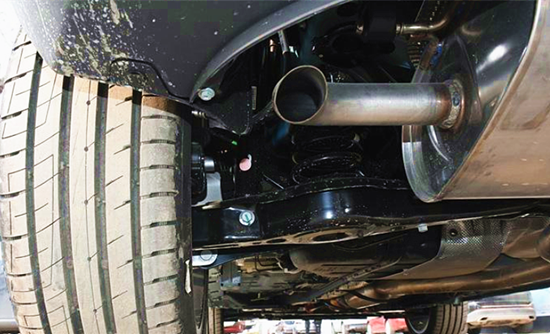
L’acciaio inossidabile tipo 409 o 410L viene utilizzato come materiale per i sistemi di controllo delle emissioni dei gas di scarico dei veicoli, come tubi anteriori, centrali e silenziatori, grazie alla sua eccellente resistenza alla corrosione intergranulare, alla malleabilità e alla resistenza al calore. Negli ultimi anni, la temperatura di progetto dei gas di scarico dei veicoli è aumentata a causa del tasso di conversione catalitica e della riduzione delle emissioni di gas nocivi come NOx, SOx e idrocarburi (HC). Tuttavia, l’aumento della temperatura del carburo di cromo produrrà depositi sul silenziatore, ovvero temperature di 400 ~ 500 °C porteranno a corrosione a livello di contorno di grano. Poiché l’area di saldatura è particolarmente sensibile alla corrosione intergranulare, è necessario migliorare la resistenza alla corrosione dell’acciaio inossidabile ferritico contenente il 12% di Cr. Pertanto, è stato sviluppato un nuovo acciaio inossidabile ferritico aggiungendo il niobio all’acciaio contenente il 12% di Cr. È noto che la riduzione del contenuto di carbonio e di azoto nell’acciaio è molto efficace nel prevenire la corrosione intercristallina. In questo modo, la resistenza alla corrosione intercristallina può essere ulteriormente migliorata aggiungendo il niobio e il titanio all’acciaio. L’acciaio inossidabile 409L viene utilizzato come materiale per i collettori di scarico delle automobili, e la temperatura di scarico è progettata per essere di circa 800 °C. L’acciaio inossidabile 430J1L è consigliato quando la temperatura di scarico è di circa 900 °C.


Elettrodomestici e utensili da cucina

L’acciaio inossidabile ferritico della serie 400 è stato ampiamente accettato nel settore degli elettrodomestici e degli utensili da cucina grazie alle sue proprietà estetiche uniche, alla resistenza alla corrosione da parte di detergenti e disinfettanti, al basso coefficiente di dilatazione termica e al magnetismo (adatto per i fornelli elettrici). L’acciaio inossidabile ferritico riduce notevolmente il peso rispetto all’acciaio al carbonio. Gli acciai inossidabili ferritici non contengono nichel e sono molto più stabili dal punto di vista dei prezzi rispetto agli acciai austenitici, facilitando così ai produttori la gestione dei costi, l’acquisto e la vendita. L’utilizzo di acciaio inossidabile ferritico è così ampio che ogni utilizzo delle prestazioni richieste varia a seconda del tipo di applicazione. Le applicazioni tipiche includono lavastoviglie, bollitori elettrici, lavatrici, bidoni della spazzatura, scarichi della cucina, forni, apparecchi a gas, macchine da caffè, forni a microonde, fornelli a gas, armadi frigoriferi, carrelli per il ristorante.


L’acciaio inossidabile ferritico viene anche utilizzato nei trasporti e in altre applicazioni industriali. Grazie alle sue molteplici vantaggi rispetto all’acciaio al carbonio e all’acciaio inossidabile austenitico, è estremamente duttile, consentendo lavorazioni come piegatura, taglio e perforazione. Per ottenere buone prestazioni in termini di resistenza alla corrosione e di resistenza alla fatica, è necessario scegliere la qualità corretta per soddisfare le esigenze del cliente.

Valutazioni Composizione chimica Caratterizzare Richieste
409L 11.3Cr-0.17Ti

Basso C e N

L'aggiunta di Ti gli conferisce buone proprietà di resistenza alla corrosione a temperature elevate e resistenza alla trazione. Raccordi di scarico delle automobili, scambiatori di calore, contenitori e altri prodotti senza trattamento termico dopo la saldatura.
410L 13Cr

Basso C

La lega C, basata sul 410, presenta buone proprietà di lavorazione e resistenza alla deformazione durante la saldatura, oltre che alta resistenza all'ossidazione a temperature elevate. Parti per la costruzione meccanica, tubazioni di scarico del motore, combustore della caldaia, bruciatore.
430 16Cr È un tipo di acciaio ferritico tipico, caratterizzato da una bassa espansione termica, un'eccellente malleabilità e una buona resistenza all'ossidazione. Apparecchiature resistenti alla temperatura, bruciatori, elettrodomestici, stoviglie, lavelli da cucina, materiali decorativi esterni, bulloni, dadi, schermo
430J1L 18-Cr0.5Cu-Nb

Basso C&N

Aggiunta di Cu e Nb, sulla base del 430, con buone proprietà di resistenza alla corrosione, malleabilità, saldabilità e resistenza all'ossidazione a temperature elevate. Materiali per la decorazione esterna degli edifici, componenti per automobili, attrezzature per l’approvvigionamento di acqua calda e fredda.
436L 18Cr-1Mo-Ti, Nb, Zr

Basso C&N

Aggiunte Nb, Zr, eccellente resistenza al calore e all'abrasione, buona lavorabilità e saldabilità. Lavatrici, scarichi dei veicoli, elettronica, pentole per cucinare.