
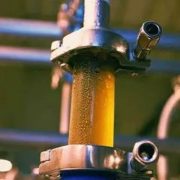
The choice of Stainless steel material for brewery

Stainless steel is widely used in the food and beverage industry due to its high temperature resistance, corrosion resistance and hygienic properties. Compared to other areas such as oil and gas production, beer brewing vessels and pipes are regularly cleaned using CIP (site cleaning). In order to obtain the best cleaning results, good surface treatment of containers and pipes is critical. Since the 1960s, industrial beer brewing processes used to manufacture containers and tanks have often used stainless steel AISI 304, or AISI 316, and duplex stainless steel 2205. The corrosion resistance of 2205 stainless steel is comparable to that of AISI 304 while strength is higher, and it is not easy to produce chloride cracking when the temperature is higher than 60℃. Mashed malt, wort, and beer do not corrode stainless steel, even at boiling point. However, the cold-worked stainless steel is prone to chloride cracking when used above 60℃. In general, the brewing solution also does not corrode AISI 304 stainless steel. Only in beer brewing using soft water, AISI 316 stainless steel can be chosen due to the high chloride content.

Chloride cracking may occur in thin-walled tubes and vessels due to their susceptibility to tensile stress. If the vessel leaks, it is often due to substandard welding quality or high fatigue load. CIP (field cleaning) does not corrode stainless steel, but under extreme conditions may cause chloride cracking on stainless steel with a high degree of cold forming. Fatigue corrosion and stress corrosion cracking failure mechanisms are similar. An example of fatigue corrosion in a saccharifying tank is the opening of a grain bin. After mashing and heating, the grains are separated from the wort and discharged through the opening of the grain barn. The impact and high load from the discharged grain produce fatigue corrosion cracks along the weld edge in the area directly opposite the mouth of the warehouse. The leakage in some places is due to poor quality. The wort container may crack from the outside to the inside due to chloride cracking and heat fatigue. If there is a high welding internal stress during steam-heated spiral pipe welding, cracking may occur throughout the stainless steel vessel wall.
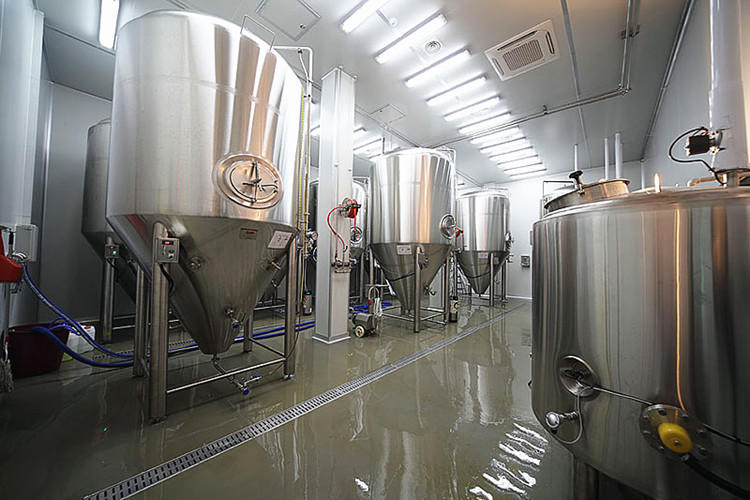
Sensitivity of stainless steel

AISI 304 or 316 stainless steel has a carbon content of < 0.08% and can be sensitized if exposed to 500 ~ 800 ℃ for a given period of time, which may occur during welding. Therefore, welding causes sensitization of the “heat-affected zone” along the weld.

Sensitization will lead to the formation of chromium carbide at grain boundaries, resulting in poor chromium at grain boundaries, easy to cause intergranular corrosion of stainless steel in the case of thick tube wall (BBB 0 2 ~ 3mm). In order to avoid this situation, often choose “weldable steel”: such as L-grade steel, such as 304L, 316L, which carbon content is less than 0.03%; Titanium stabilized steel: 321,316 Ti.


Surface treatment

For the corrosion resistance of stainless steel, the weld quality and heat affected zone, surface roughness and the condition of the protective oxide layer are important. The surface condition of stainless steel is particularly important for the food and beverage industry and pharmaceutical industry. Corrosion problems in breweries are often caused by uneven surface conditions. During fabrication (welding, heat treatment, grinding, etc.), the passivated chromium oxide layer is damaged, thus reducing the corrosion resistance. Insufficient protective gas used in stainless steel welding will lead to the formation of a hot tempering color. These porous thermal tempering colors are composed of various oxides that tend to absorb ions such as chloride ions, reducing corrosion resistance and failing to protect the base metal.

If thermals or other types of contaminants are unacceptable, some kind of metal finish must be used to address them. Pickling or passivation can remove the old oxide layer, heat back color and other contaminants, thus allowing the passivated chromium oxide film to completely recover. The most common pickling process is to immerse stainless steel tubes in a mixed acid solution of nitric acid and hydrofluoric acid, which can also be accomplished by a spray or piping rinse system. Although the surface of the stainless steel is active after pickling, a passivation film can be formed within 24 hours due to the reaction of chromium with oxygen in the air, but in some cases, passivation is chemically facilitated by the use of nitric acid.


Welding

Welds and heat-affected zones are often the cause of corrosion. For breweries and other food industries, defects in welds, such as lack of penetration, are of Paramount importance, causing hygiene and sterilization problems. Engineers and buyers often identify inappropriate welding conditions and welding procedures that cannot be performed correctly. The result is poor quality welds and surface conditions in the construction that must be completed.

Thermal reheating is caused by light being absorbed into a transparent oxide layer, due to the different thicknesses of the oxide layer. Because the colors have different refraction coefficients, the blue-looking oxide layer can only reflect blue light and absorb other light. Thicker oxide layers have more holes than fully transparent thin oxide layers, therefore, thicker oxide layers will reduce the corrosion resistance and non-adhesion of stainless steel. For most standards, a light straw color of heat back is acceptable; All other heat-back colors such as red and blue are unacceptable. The pharmaceutical industry does not allow hot tempering.

The geometry of the weld shall be as regular as possible. Qualified welds will not damage the metal surface of the substrate. Corrosion often begins inside a tiny pinhole at the beginning/end of a weld.

Theoretically, there are no tiny pinholes, looseness, or other bumps at the start/end. Good weld penetration is very important. Piping must be well symmetrical and the width of the weld shall be fixed.


Surface roughness

Surface roughness affects the hygiene and corrosion properties of stainless steel. The corrosion resistance of the electropolished surface is the best, followed by the mechanically polished surface. In general, the beer industry and the food industry do not force the use of electropolished surfaces, however such surfaces, thus achieving excellent sanitary conditions and easy cleaning. Most pipes are bright annealed during manufacturing. Because the bright annealing process greatly improves the quality, pickling inside such pipes is often not performed unless the material surface has a severe heat back color or is contaminated with iron. Stainless steel sheet often has 2B surface, they have good surface performance. In breweries, thin-walled, straight-welded stainless steel pipes are most commonly used, with 2B finishes and sometimes another finish (brush or polish) on the exterior. Stainless steel extruded tubes are not commonly used in breweries; they are used for high-pressure purposes.
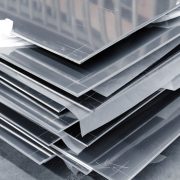
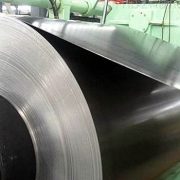
Comparison of 301, 301L, 301LN steel plate

301 stainless steel is a type of austenitic stainless steel with a high work hardening rate. Its tensile strength can be up to 1300MPa or more. 1/16 hard to full hardening cold-rolled 301 plates are available and maintain sufficient ductility under 1/2 hardening conditions. It can be used for aircraft components, structural components of buildings, especially railway carriage components after rolling or bending. The 3/4 hardening to full hardening cold-rolled sheets should be used for simple component designs that require high wear resistance and elasticity. The 301L and 301LN are low carbon versions and high nitrogen versions of the 301. If better ductility is required or thick section profiles are to be welded, the low carbon 301L is preferred. The higher nitrogen content of 301Ln can compensate for the lower carbon content. They are specified in ASTM A666, JIS G4305, and EN 10088-2.


Chemical composition of 301, 301L, 301LN

Valutazione C Mn Si P S Cr Ni N
301 ≤0.15 2.0 1.0 0.045 0.03 16.0-18.0 6.0-8.0 0.1
301L ≤0.03 2.0 1.0 0.045 0.03 16.0-18.0 6.0-8.0 0.2
201LN ≤0.03 2.0 1.0 0.045 0.03 16.5-18.5 6.0-8.0 0.07-0.2


Mechanical property of 301, 301L, 301LN

301 Tempering

ASTM A666

Resistenza alla trazione, Mpa Yield strength 0.2%, Mpa Elongation (in 50mm)thick>0.76mm Hardness, Rockwell
Annealed 515 205 40 /
1/16 hard 620 310 40 /
1/8 hard 690 380 40 /
1/4 hard 860 515 25 25-32
1/2 hard 1035 760 18 32-37
3/4 hard 1205 930 12 37-41
Full hard 1275 965 9 41+


Specification of 301, 301L, 301LN

Valutazione UNS No Euronorm JIS
No Name
301 S30100 1.4319 X5CrNi17-7 SUS 301
301L S30103 / / SUS 301L
201LN S30153 1.4318 X2CrNiN18-7 /

Resistenza alla corrosione

Similar to 304 stainless steel, it has good corrosion resistance in normal temperature and mild corrosion applications.

Heat resistance

Good oxidation resistance to temperatures up to 840°C (intermittent use) and 900°C (continuous use). Exposure above 400°C causes gradual loss of work hardening effect, and the strength at 800°C is equivalent to 301 of annealing. Under creep conditions, the strength of work-hardened 301 even decreases to lower than that of annealed 301.

Solution (annealing) treatment

Heated to 1010-1120°C and rapidly cooled and annealed at approximately 1020°C. Heat treatment will not harden it.

Cold working

301 stainless steel and its low carbon version 301L for the need of high strength occasions. It has a very high work hardening rate of about 14MPa/%Ra (for each 1% of cold working surface reduction, tensile strength increases by 14MPa), cold rolling and cold forming can achieve very high strength, a portion of the strain hardening austenite converted to martensite. 301 is not magnetic under annealing conditions, but strong magnetic after cold working.

Welding

301 can be used for all standard welding methods and mostly 308L filler metal can be used for 301 weldings. 301 stainless steel welds must be annealed for optimal corrosion resistance, whereas 301L or 301Ln welds do not require annealing. Welding and post-weld annealing both reduce the high strength caused by cold rolling, so spot welding is often used to assemble cold-rolled 301 parts which has a small heat-affected zone and the strength of the whole part is almost not reduced.

Typical applications

Rail vehicle structural parts-roll forming, bending forming, or stretch forming into profiles, also in sheet. Aircraft fuselage, road trailer, car hub cap, wiper holder, toaster spring, stove fixture, screen frame, curtain wall, etc.


Acciaio inossidabile a doppio strato 304/304L, 316/316L

Austenitic stainless steels are the most widely used stainless steels, accounting for about 75% of the total stainless steel consumption. The rapid development of the chemical industry and petrochemical industry has put forward higher requirements for the corrosion resistance and strength of stainless steel. For example, the 304/304L dual grades stainless steel means it has lower carbon content, that’s less than 0.03%, meeting the 304L grades, while its yield and tensile strength are higher than the lower limit of 304 stainless steel, the stainless steel can be defined as 304/304L dual grades stainless steel, that is, its chemical composition meets that of 304L, and mechanical properties to meet the requirements of 304 stainless steel. Similarly, a stainless steel sheet can be 304/304H dual certified because it has enough carbon content to meet the 304H (minimum 0.040%) requirement and also meets the 304H grain size and strength requirements, there are 316/316L and other dual grades of stainless steel.

The most important is the difference in carbon and the resulting strength. Carbon is an effective austenitic stabilizing element and can be considered as an impurity or an alloying element that improves the strength of stainless steel, especially at high temperatures. The carbon content in most austenitic stainless steels is below 0.02% ~ 0.04%. In order to have good corrosion resistance after welding, the carbon content of low carbon grade stainless steel is controlled below 0.030%. In order to improve the high-temperature strength, the high carbon or “H” grade carbon content is maintained at 0.04% or slightly higher.

The smaller carbon atoms in the face-centered cubic structure are in the lattice gaps between the larger Cr, Ni and Mo atoms, which limit the dislocation motion, hinder the ductility deformation and strengthen the stainless steel. Under the condition of rising temperature such as in the welding process, carbon has a strong tendency to precipitate chromium in stainless steel matrix with chrome-rich carbide, and the second phase tends to precipitate at grain boundary rather than grain center, so chromium carbide is easy to form at the grain boundary.

Chromium is a necessary element for enhancing the corrosion resistance of stainless steel, but chromium carbide is removed from the stainless steel matrix, so the corrosion resistance here is worse than the rest of the stainless steel matrix. Increasing the carbon content can extend the temperature range, so that the time of sensitization or corrosion resistance loss is shortened, reducing the carbon content can delay or completely avoid the formation of carbide in welding. Low carbon grades such as 304L and 316L carbon content less than 0.030%, most of the higher alloyed Austenite grades such as 6%Mo stainless steel carbon content is less than 0.020%. To compensate for the decrease in strength due to the decrease in carbon content, another interstitial element nitrogen is sometimes added to strengthen the stainless steel.

Dual-grade stainless steel has both the high strength of conventional stainless steel and the corrosion resistance of ultra-low carbon stainless steel. It can solve the problem of weak welding joint performance of most Austenitic stainless steel, has been widely used in low-temperature LNG receiving station equipment and large diameter pipeline. The price of dual-grade stainless steel is basically the same as ultra-low carbon stainless steel. Now several Chinese steel mills can supply the grades for mature market, any interested, please contact us.


Che cos’è l’acciaio Super 304H?

Con lo sviluppo delle unità ultra-supercritiche, la resistenza alle alte temperature degli acciai inossidabili austenitici tradizionali (come l'acciaio TP304H) non è stata in grado di soddisfare le esigenze con parametri di vapore a 600 °C. Per questo motivo, la Japan Sumitomo Metal Corporation ha sviluppato nuovi materiali per il tubo di riscaldamento della superficie della caldaia dell'unità, come l'acciaio TP347HFG, l'acciaio SUPER304H e l'acciaio HR3C. L'acciaio Super 304H è un nuovo tipo di acciaio Acciaio 18-8Utilizzato principalmente nella produzione di supercaldaie e riscaldatore di caldaie ultra-supercritiche, la cui temperatura della parete metallica non supera i 700 °C. Attualmente, anche la società Shasqida Mannesmann (ex DMV Company) in Germania produce tubi in acciaio simili, con la qualità DMV 304HCU.

L'acciaio Super304H è l'acciaio ottenuto riducendo il contenuto di Mn, Si, Cr e Ni rispetto all'acciaio TP304H, aggiungendo 2,5% ~ 3,5% Cu e 0,30% ~ 0,60% di Nb e 0,05% ~ 0,12% di N, in modo da ottenere la fase di precipitazione per diffusione e la fase rinforzata ricca di rame in servizio; si verifica una rafforzazione della fase per precipitazione con NbC(N), NbCrN e M23C6, che aumenta notevolmente la tensione di servizio ammissibile e la tensione di servizio ammissibile a 600 ~ 650 °C è superiore di 30% rispetto a quella dell'acciaio TP347H. La resistenza all'ossidazione a vapore dell'acciaio è paragonabile a quella dell'acciaio TP347HFG e significativamente superiore a quella dell'acciaio TP321H. È stato classificato nel codice ASME Case 2328-1, nella norma ASTM A-213, il numero è S30432.


La composizione chimica del Super 304H

C Si Mn P S Cr Ni N Al B Nb Cu V Mo
0.08 0.21 0.79 0.03 0.001 18.42 8.66 0.11 0.007 0.004 0.5 2.77 0.04 0.35


Le proprietà meccaniche del Super 304H

Resistenza alla trazione, Mpa Resistenza alla trazione, Mpa Allungamento, %
360/350 640/645 58/60


A causa dei parametri di vapore elevati delle unità ultra-supercritiche, la resistenza all’ossidazione dell’acciaio utilizzato nelle parti a pressione ad alta temperatura delle centrali elettriche diventa molto importante. In genere, la parete interna del tubo in acciaio super 304H viene pulita con la sabbiatura per migliorare le prestazioni antiossidanti contro il vapore. È stata formata una striscia sabbiata con uno spessore di 30 μm sulla superficie interna del tubo in acciaio e la sua microstruttura è stata perfezionata rispetto a quella del tubo in acciaio senza sabbiatura. Dopo il test di ossidazione a vapore a 650 °C e 600 h, lo spessore dello strato di ossido del tubo in acciaio trattato con la sabbiatura è più sottile e più denso e la resistenza all’ossidazione a vapore del tubo in acciaio è migliorata. Attualmente, diverse importanti aziende siderurgiche cinesi hanno prodotto un acciaio di qualità simile a 10CrL8Ni9NbCu3Bn, specificato nel GB 5310-2008, che è attualmente utilizzato in diversi progetti di unità ultra-supercritiche in Cina.

L'acciaio inossidabile 304 è magnetico?

Ordinary consumers have some misunderstandings about stainless steel, they think that the magnetic stainless steel is not qualified 304 stainless steel. As we know, according to the structure under room temperature,stainless steel can be divided into Austenite such as 201, 304, 321, 316, 310, Martensite or Ferric such as 430, 420, 410. Austenites are non-magnetic or weakly magnetic and Martensite or ferrite are magnetic. 304 is a representative grade of the austenitic stainless steel, it has excellent workability, weldability and corrosion resistance, account for 60% of the world consumption of stainless steel, generally, it is no magnetic, but sometimes it is magnetic or weak magnetism caused by smelting chemical composition fluctuations or processing, but we cannot think this is fake or substandard, what reason is this?

304 is metastable stainless steel, is a single austenite structure after annealing state, with no magnetic. Smelting composition segregation or improper heat treatment will produce a small amount of martensite or ferrite structure, so with a weak magnetic. In addition, after the cold processing deformation (such as stamping, stretching, rolling, etc.), part of the austenite structure also underwent phase change (general mutagenesis into martensite) and with magnetic.

For example, in the same batch of steel strips, the outer diameter of 76mm steel pipe has no obvious magnetic while the outer diameter of 9.5mm steel pipe has obvious magnetic. The magnetic properties of the square rectangular tube are more obvious because the cold bending deformation is greater than that of the round tube, especially in the bending part.

Most of the water sink is made of 304 stainless steel. Many consumers judge it is made of 304-grade stainless steel according to whether the water tank is magnetic or not. At present, there are many kinds of processing technology for the sink, such as welding forming, integral tensile forming, etc., if used 304 material welding forming, is generally annealed after the plate processing, will not be magnetic or weakly magnetic (because of the surface treatment of the sink); One of the water tank drawing molding needs to go through several stretching, general annealing and then stretching (annealing increases the cost, and 304 is not necessary to anneal again), it will be magnetic, that is a very normal phenomenon.

Acciaio inossidabile 304 vs acciaio inossidabile 403

I materiali in acciaio inox più comunemente utilizzati sono i gradi 304 e 430. L’acciaio inox 304 è un tipo generale di acciaio austenitico cromato-nichel, con una densità di 7,93 g/cm3 e conosciuto anche come acciaio inox 18/8. La serie 300 di acciaio inox è l’acciaio più comunemente utilizzato. Può resistere a temperature elevate di 800 °C, presenta buone prestazioni di lavorazione e una buona resistenza alla trazione, ed è ampiamente utilizzato nelle applicazioni che richiedono prestazioni complete (resistenza alla corrosione e lavorabilità). L’acciaio inox 304L è una versione a basso tenore di carbonio dell’acciaio inox 304, che non richiede accoppiamento post-fusione, quindi è ampiamente utilizzato per componenti di spessore maggiore (circa 5 mm e oltre). Il tenore più elevato di carbonio dell’acciaio inox 304H consente di utilizzarlo a temperature elevate. La struttura austenitica accoppiata conferisce a questi gradi una buona resistenza alla trazione anche a basse temperature di congelamento.

L’acciaio inossidabile a basso tenore di carbonio e ad alto contenuto di cromo 430 è uno degli acciai inossidabili ferritici più comuni; ha una buona resistenza alla corrosione ed è noto anche come 18/0 o 18-0; è uno degli acciai della serie 400. Può essere leggermente rinforzato lavorandolo a freddo, ma la sua resistenza alla corrosione a basse temperature è scarsa e, in genere, non può essere temprato mediante trattamento termico. La sua conduttività termica è migliore rispetto all’acacetato; il coefficiente di dilatazione termica è inferiore a quello dell’acacetato; la resistenza alla fatica termica, l’aggiunta di un elemento stabilizzante come il titanio migliora le proprietà meccaniche della zona di saldatura, consentendo l’utilizzo per la decorazione degli edifici, le parti dei bruciatori di combustibile, gli elettrodomestici e le parti degli elettrodomestici. L’acciaio 430F è un tipo di acciaio con prestazioni di taglio libere su acciaio 430; viene utilizzato principalmente per torni automatici, bulloni e dadi, ecc. L’acciaio 430LX aggiunge Ti o Nb all’acciaio 430, riducendo il contenuto di C e migliorando le prestazioni di lavorazione e di saldatura. È utilizzato principalmente per serbatoi per acqua calda, sistemi di riscaldamento dell'acqua, apparecchi sanitari, elettrodomestici duraturi per uso domestico, volani delle biciclette, ecc.


Secondo la norma ASTM A240: Specifiche per le piastre, i listelli e le strisce in acciaio inossidabile crômico e nichelico per recipienti a pressione e per usi generali, l’acciaio inossidabile 430 deve contenere meno di 0,12% di carbonio, tra 16-18% di cromo e meno di 0,75% di nichel, la differenza tra 304 e 430 come indicato nella tabella seguente:

Confronto della composizione chimica 

UNS C Mn P S Si Cr Ni Mo
S30400 0.07 2.00 0.045 0.03 0.75 17.5-19.5 8.0-10.5 /
S43000 0.12 1,00 0.04 0.03 1.00 16.0-18.0 0.75 /


Confronto delle proprietà meccaniche

Valutazioni Resistenza alla trazione, Mpa Resistenza alla trazione, Mpa Allungamento in 2/50mm, min, % Durezza, HBW
304 205 515 40 183
403 205 450 22 201


Riassumendo, differiscono principalmente nei seguenti aspetti:

  • Resistenza alla corrosioneLa resistenza alla corrosione dell'acciaio inossidabile 304 è migliore rispetto a quella dell'acciaio inossidabile 430. Poiché l'acciaio inossidabile 430 contiene tra il 16,00 e il 18,00% di cromo, in sostanza non contiene nichel, l'acciaio inossidabile 304 contiene più cromo e più nichel;
  • StabilitàL'acciaio inossidabile 430 è formato da ferrite, l'acciaio inossidabile 304 è formato da austenita, più stabile dell'acciaio inossidabile 430;
  • ResistenzaLa durezza del 304 è superiore a quella dell’acciaio inossidabile 430;
  • Conductivita termicaLa conducibilità termica dell'acciaio inossidabile 430 è simile a quella dell'acciaio inossidabile 304;
  • Proprietà meccanicheLe proprietà meccaniche delle cuciture di saldatura in acciaio inox 430 sono migliori rispetto a quelle dell’acciaio inox 304 grazie all’aggiunta dell’elemento chimico stabile del titanio.