302HQ VS 304 stal nierdzewna

302HQ stainless steel is a standard material specifically used in the manufacture of self-tapping screws and light mechanical screws. It is also used in bolts, setting screws, rivets, and special fasteners. The name 302HQ is not standardized. The ASTM lists it as UNS S30430, which also includes “XM-7”, “304CU”, and “304HQ”. It has now completely replaced 384 and 305 steel for cold heading purpose. ISO 3506, Standard specification for stainless steel fasteners, 302HQ as an eligible component for class “A2” fasteners; It is commonly used to manufacture fasteners in the A2-70 and A2-80 strength. The stable austenitic structure enables 302HQ to be non-magnetic even after extensive cold working and to maintain excellent toughness at temperatures as low as freezing. Compared with 304 stainless steel, the addition of 3% copper in 302HQ can significantly reduce the cold work hardening rate. The chemical composition and physical properties are shown below:


Equivalent Material

Oceny UNS No DIN EN JIS
302HQ S30430 1.4567 X3CrNiCu18-9-4 SUSXM7


Chemical Composition (ASTM A493 S30430)

Oceny C Mn Si P S Cr Mo Ni Cu
302HQ 0.03 2.00 1.00 0.045 0.03 17.0-19.0 / 8.0-10.0 3.0-4.0


Właściwości mechaniczne

302HQ tensile strength: Annealing: 605, Mild drawing: 660

Density: 7900kg/㎡

Elasticity modulus:193Gpa

Average coefficient of thermal expansion: 0-100℃ (um/m/℃) 17.2; 0-315℃ (um/m/℃); 0-538 ℃ (18.8)

Thermal conductivity: 100℃ (W/ M. K) 16.3; 500℃ (W/ M. K) 21.5

Specific heat: 0-100℃ (J/ kg.K) 500;

Resistance: 720


Odporność na korozję

Its corrosion resistance is equivalent to or superior to 304 stainless steel. Pitting and crevice corrosion is easy to occur in the warm chloride environment, and stress corrosion cracking is sensitive when the temperature is higher than about 50°C. 302HQ can withstand about 200mg/L chloride in drinking water at room temperature and 150mg/L at 60℃.


Heat Resistant Performance

Good oxidation resistance, intermittent use temperature up to 870°C, continuous use temperature up to 925°C. Because of the low carbon content of 302HQ, it is safe for continuous use (no carbide precipitation) ranges from 425 to 860°C.


Heat Treatment

Solution treatment (annealing) is heated to 1010-1120°C and rapidly cooled. Heat treatment will not harden it.


Weldability

Excellent weldability, all standard fusion welding methods (whether or not they contain filler metal) can be used. Use a 308L electrode. Welding is generally not required except in the manufacture of stud welded fasteners, where resistance butt welding is used to join wires together.


Processing 

The 302HQ is rarely machined. The grade has a very low sulfur content, which helps its formability but reduces its machinability. The Improved 302HQ (UGIMA 4567) has very high machinability, slightly higher sulfur content, and is also calcium treated for use requiring extensive cold forming and machining operations on the 18/8 steel.


Cold Work Hardening

302HQ is the lowest work hardening rate among the common grades of austenitic stainless steels. According to the wire drawing data, the tensile strength increases by 8MPa when the cold-working area decreases by 1%). Even after extensive cold work, the brand remains essentially unresponsive to magnets. Some high strength cold heading fasteners require a slightly higher work hardening rate, so 304 or 304L (or special grade 304M) should be used instead of 302HQ; The work hardening rate of these grades is about 10-12.5MPa.


Typical Applications

All harsh cold heading applications, including self-tapping screws, roof bolts, mechanical screws, bolts, set screws, blind rivets, etc.

Stal nierdzewna 321 VS 347

Właściwości stali nierdzewnej 321 i stali nierdzewnej 347 są w większości przypadków podobne: stal nierdzewna 321 jest rodzajem tytanu – stabilizacja stali nierdzewnej austenitowej 18/8 (304), niewielka ilość tytanu sprawia, że temperatura utleniania przekracza 425–850 °C, po podgrzaniu nie pojawia się korozja międzykrystaliczna, charakteryzuje się dobrą wytrzymałością, odpornością na pękanie w warstwach i odpornością na korozję wodną.

321H to wersja stali wysokowęglowej stali 321 o wyższej wytrzymałości w wysokich temperaturach i jest stosowana głównie w zastosowaniach wysokotemperaturowych powyżej 900°C. Wady stali 321 to słaba przejrzystość łuku spawalniczego, dlatego nie może być stosowana jako materiał spawalniczy, podczas gdy stal 347 zawierająca niob odgrywa rolę stabilizacji węglika i może być również przenoszona przez łuk spawalniczy. 347 jest standardowym materiałem spawalniczym do spawania stali nierdzewnej 321 i czasami jest używany jako metal bazowy. Zapraszamy do zapoznania się z ich porównaniem chemicznym i mechanicznym poniżej:


Porównanie składu chemicznego

Oceny C Mn Si P S Cr Ni Mo N Inne
321 0.08 2.00 0.75 0.045 0.03 17.0-19.0 9.0-12.0 / 0.1 Ti = 5(C + N)0,7
347 0.08 2.00 0.75 0.045 0.03 17.0-19.0 9.0-13.0 / / Nb=10(C+N)1.0

Widać, że różnica między nimi wynika z dodania tytanu i niób. Dzięki dodaniu stabilizowanego pierwiastka tytanu, 321 może wytrzymać tworzenie się węglika chromowego w temperaturach od 426 do 815 stopni Celsjusza, dzięki czemu charakteryzuje się doskonałą odpornością na korozję międzykrystaliczną oraz wysoką temperaturą pracy, a ponadto ma wyższą wytrzymałość na ścieranie i odporność na pęknięcia w wysokich temperaturach niż 304 i 304L. Ponadto 321 charakteryzuje się dobrą wytrzymałością w niskich temperaturach oraz doskonałymi właściwościami formowalnymi i spawalnymi, bez konieczności odżelowania po spawaniu.

347 Stainless Steel to stal nierdzewna o zawartości niobu i jest to jej wersja o wysokiej zawartości węgla. 347H jest wersją z dodatkiem niobu w porównaniu do stali 304. 347 może być postrzegana jako wersja z dodatkiem niobu w oparciu o stal 304. Niobium, pierwiastek ziemi ziemi, ma podobny wpływ na utwardzenie ziaren w procesie rafinacji jak tytan, jest odporny na korozję międzycząsteczkową oraz wspomaga starzenie się stali.


Porównanie właściwości fizycznych

Oceny Siła rozciągająca, MPa Siła plastyczności, MPa Prężność (50 mm) Twardość, HB
321 515 205 40 217
347 515 205 40 201


Typowe zastosowania

Stal nierdzewna 347&347H charakteryzuje się lepszymi właściwościami w wysokich temperaturach niż 304 i 321. Służy ona szeroko w przemyśle lotniczym, petrochemicznym, spożywczym, papierniczym oraz innych gałęziach przemysłu, takich jak rury wydechowe i rury wtórne silników lotniczych, rury gazowe gorącego powietrza turbinowych sprężarek oraz elementy pracujące przy niskich obciążeniach i temperaturach nieprzekraczających 850°C.

Dodanie tytanu do stali 321 sprawia, że nadaje się ona do zastosowań wymagających wysokiej temperatury i dobrej odporności na korozję. Nadaje się do zastosowań ze stali 304 z niedostateczną odpornością na wysokie temperatury. Typowe zastosowania obejmują połączenia termiczne, błony, elementy układu wydechowego samolotów, tuleje elementów grzejnych, komponenty pieców oraz wymienniki ciepła.

What’s the difference between 316L and 904L steel?

Commonly known as “medical-grade steel”, 316L stainless steel is not only used to make jewelry and medical scalpels due to its low allergenic properties but also used by watch manufacturing companies to make watchbands. 904L stainless steel is Austenitic stainless steel made by Outokumpu Company in Finland based on 316L stainless steel, is a super Austenite with low carbon content and high alloying designed for corrosive environments such as dilute sulfuric acid.

904L stainless steel increases the content of chromium, nickel and molybdenum and adds a certain amount of copper, which will bring about a change in performance, making 904L stainless steel more wear-resistant and corrosion-resistant, but at the same time, there is not much difference between the two in hardness, let’s show their difference with the table below:

Oceny C Si Mn Cr Ni Mo P S Cu
316L ≤0.03 ≤0.1 ≤0.2 16-18 10-14 2-3 ≤0.04 ≤0.03 /
904L ≤0.02 ≤0.1 ≤0.2 19-23 23-28 4-5 ≤0.04 ≤0.03 1-2


It is not difficult to see that 904L alloy elements chromium, nickel, molybdenum is more than 1.6 times of 316L stainless steel, 1%-2% copper makes 904L stainless steel has stronger corrosion resistance and wear resistance than 316L stainless steel. The 904 has a lower carbon content (C), so the polished 904L steel pipe or sheet steel has a better surface, and the same volume of 904L stainless steel is much heavier than the 316L stainless steel. Their Rockwell strength (HRB) is less than 95, and the strength is almost 490MPa. So it is completely wrong to say that 904L stainless steel is harder than 316L stainless steel.

Rolex was the first company to put 904L into watch manufacturing. In 1985, Rolex produced the watch case made of 904L steel replaced 316L steel. 904L steel contains more chromium, which helps to form a corrosion-resistant coating on the surface of metal materials. And “anti-corrosion” is also the benefit of the Rolex watches we often mention, but here “anti-corrosion” does not have any practical significance, because 316L steel has been completely enough daily corrosion. 904L steel is indeed better in corrosion resistance than 316L steel, but it does not mean that 316L steel is not good. For consumers, as a watch case material,  904L steel’s “propaganda” effect is better than the actual role of “anti-corrosion” itself.

Not just in the watch industry, chemical fields shows more advantages., 904L offers better corrosion resistance than 316L and even 317L. The addition of 1.5% copper has excellent corrosion resistance to reducing acids such as sulfuric acid and phosphoric acid, and also has excellent intergranular corrosion resistance to stress corrosion, pitting corrosion and crevice corrosion caused by chloride ion. In the concentration range of 0-98% pure sulfuric acid, 904L can be used at temperatures up to 40 ℃. Of all the phosphoric acids, 904L is more resistant to corrosion than ordinary stainless steel. Ordinary Austenitic stainless steels may be sensitive to stress corrosion at temperatures above 60℃ in a chloride-rich environment, and this sensitivity can be reduced by increasing the nickel content of the stainless steels. Due to its high nickel content, 904L is highly resistant to stress corrosion cracking in chloride solutions, concentrated hydroxide solutions, and hydrogen sulfide-rich environments.

The difference between Stainless steel hot rolled plate and cold rolled plate

Stainless steel has excellent corrosion resistance, processing, biocompatibility and strong toughness within a wide range of temperatures, has been widely used in the petrochemical industry, atomic energy, light industry, textile, food, household appliances and other fields. Hot rolling and cold rolling are the necessary processes for stainless steel plate forming. The hot rolled plate is the raw material of cold-rolled plate, both of them will affect the microstructure of the stainless steel plate.

The hot rolling process of stainless steel is made from the slab (mainly continuous casting slab), which is heated and made from a roughing mill and finishing mill group. The hot steel from the last finishing mill is cooled by laminar flow to the specified temperature and is rolled into coils by the coiler. The steel after cooling has an oxide surface, with a black color, commonly known as “stainless steel black coil”. After annealing and pickling, the oxidized surface is removed, that is, “stainless steel white roll”. Some hot rolled stainless steel products can be used directly and some need to be processed into cold-rolled products before being used.

Stainless steel cold-rolled plate is generally the product of stainless steel hot-rolled plate with a thickness of 3.0-5.5mm after being rolled and processed by cold rolling equipment (single stand cold rolling/multi-strand cold rolling). Different processing methods and reprocessing after cold rolling can make the surface of stainless steel plate have different grades of surface finish, grain and color. There are 2D, 2B, No.3, No.4, No.4, HL, BA, TR, embossing and other surface grades in the surface processing of cold-rolled stainless steel plates. A variety of deeply processed surfaces such as electroplating, electropolishing, directional pattern, etching, shot peening, coloring, coating and its combination can be further implemented on the basis of cold rolling, in addition, the no.1 surface and pattern plate after hot rolling pickling are also included. what’s the difference between of hot rolled and cold rolled stainless steel plate?


Different surface qualities

Stainless steel cold-rolled plate has good surface quality, no oxide scale, a variety of surface treatments are available. Stainless steel hot rolled plate is generally No 1 treatment, with oxide skin, gray-white (pickling) or black-brown (not electroplated). The smoothness of the cold-rolled plate after electroplating is higher than that of a hot rolled plate.

 

Different prices

The toughness and surface quality of the stainless steel cold-rolled plate is higher than the hot-rolled plate, and the price is higher than the hot-rolled plate.


Different applications

Stainless steel cold-rolled sheet is widely used in various civil and industrial fields, including architectural decoration, products, home appliances, rail transit transportation, automobiles, elevators, containers, solar energy, precision electronics, etc. 2D, 2B, BA and grinding surface can be directly used for most products in architectural decoration, elevator, container and other industries. The cold-rolled sheet after forming or re-processing can be used in places with higher surface quality requirements, such as home appliances, rail transportation, automobiles, solar energy, precision electronics, etc.

What is Ferritic stainless steel used for?

Ferrite stainless steel refers to the stainless steel with 11%~30%Cr and cubic crystal ferrite structure. Its high chromium content is the main element that affects its performance. The advantages of Ferritic stainless steel include low cost (without nickel), good magnetic conductivity, excellent stress corrosion resistance; Small working hardening tendency, easy to cold heading and cutting; High thermal conductivity (1.5 times that of Austenitic steel), low linear expansion coefficient (60% of Austenitic steel), but also obvious disadvantages such as poor plasticity and low strength in post-processing, easy welding cracking. Ferritic stainless steel is mainly used in oxidizing medium and nitride medium, suitable for heat exchange and heat circulation purposes, provides a wide range of applications.


Architecture and structure applications

Ferritic stainless steel is used as the roof and curtain wall of buildings because of its good resistance to atmospheric corrosion. High-chromium ferritic stainless steels used in coastal areas have been developed, and atmospheric corrosion-resistant stainless steels contain high levels of chromium and molybdenum and are supplemented with small amounts of niobium and titanium. The steel actually contains 22% chromium and 1.2% molybdenum. Sufficient chromium and molybdenum are necessary to improve the pitting resistance of stainless steel. The rusting area of type 304 and Type 316 austenitic stainless steel increased significantly with the increase of the number of periodic corrosion test cycles. On the contrary, the rust area of type 444 ferritic stainless steel increased slightly during the first 600 test cycles and was saturated after longer tests.


Automobile industry

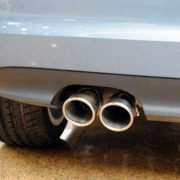
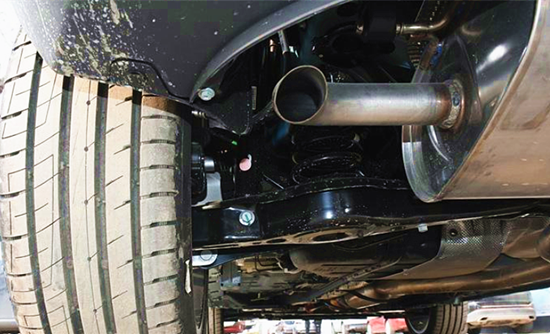
Type 409 or 410L stainless steel is used as a vehicle exhaust emission control system material such as front pipe, center pipe and muffler due to its excellent intergranular corrosion resistance, formability and heat resistance. In recent years, the design temperature of vehicle exhaust has increased because of the catalytic conversion rate and reduction of harmful gases such as NOx, SOx and hydrocarbon (HC) emissions. However, the increased temperature of chromium carbide will produce deposits on the silencer, i.e., temperatures of 400 ~ 500℃will lead to grain boundary corrosion. Because the weld area is particularly sensitive to intercrystalline corrosion, it is necessary to improve the corrosion resistance of Ferritic stainless steel containing 12% Cr. Therefore, a new Ferritic stainless steel was developed by adding niobium to steel containing 12% Cr. It is well known that reducing carbon and nitrogen content in steel is quite effective in preventing intercrystalline corrosion. In this way, the intercrystalline corrosion resistance can be further improved by adding niobium and titanium to steel. 409L stainless steel is used as the material for the exhaust manifold of automobiles, and the exhaust temperature is designed to be about 800℃. 430J1L stainless steel is recommended when the exhaust temperature is approximately 900℃.


Home appliances and kitchenware

400 series ferrite stainless steel has been widely accepted in the field of household appliances and kitchenware because of its unique aesthetic properties, corrosion resistance to cleaners and disinfectants, low thermal expansion coefficient and magnetism (suitable for electromagnetic cookers). Ferritic stainless steel greatly reduces weight compared with carbon steel. Ferritic stainless steels do not contain nickel and are far more price stable than Austenitic steels, making it easier for manufacturers to manage costs, purchase and sell. The use of ferritic stainless steel is so wide, each use of the required ferrite stainless steel performance is different. Typical applications include dishwashers, electric kettles, washing machines, dustbins, kitchen drains, ovens, gas appliances, coffee makers, microwave ovens, gas stoves, cold storage, restaurant trolleys.


Ferritic stainless steel is also used in transportation and other industrial applications. Because it has so many advantages over carbon steel and Austenitic stainless steel, it’s excellent formability like bending, cutting and drilling making it has a wide applications. Because there are many ferritic stainless steel grades, in order to obtain good corrosion resistance, good strength and lower price, you need to choose the right grade to meet customer requirements.

Oceny Chemical composition Characterize Aplikacje
409L 11.3Cr-0.17Ti

Low C and N

The added Ti making it has good high-temperature corrosion resistance and strength. Automobile exhaust pipes, heat exchangers, containers and other products without heat treatment after welding.
410L 13Cr

Low C

Reduce the C based on 410, has good processing, welding deformation resistance, high-temperature oxidation resistance. Parts for mechanical construction, engine exhaust pipes, boiler combustor, burner.
430 16Cr Typical grades of ferrite steel, it has a low thermal expansion rate, excellent formability and oxidation resistance. Heat resistant appliances, burners, home appliances, tableware, kitchen sinks, external decorative materials, bolts, nuts, screen
430J1L 18-Cr0.5Cu-Nb

Low C&N

Addition of Cu, Nb based on 430, good corrosion resistance, formability, weldability and high-temperature oxidation resistance. Building exterior decoration materials, auto parts, hot and cold water supply equipment.
436L 18Cr-1Mo-Ti、Nb、Zr

Low C&N

Added Nb, Zr, excellent heat resistance and abrasion resistance, good processing and weldability. Washing machines, car exhausts, electronics, cooking POTS.