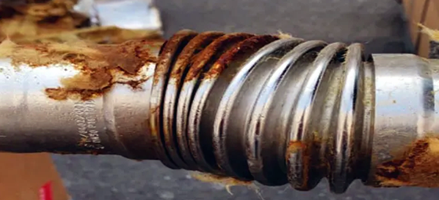

Wytrzymały stal nierdzewna stosowana w aplikacjach lotniczych

Zwykle określamy wytrzymałość na rozciąganie wyższą niż 800 MPa, wytrzymałość plastyczną wyższą niż 500 MPa – to stal nierdzewna o wysokiej wytrzymałości, a wytrzymałość plastyczna wyższą niż 1380 MPa – to stal nierdzewna o wysokiej wytrzymałości. Rozwój przemysłu lotniczego wykazał, że poprawa parametrów statków powietrznych i silników lotniczych w dużej mierze zależy od materiałów metalowych. Ze względu na wysoką wytrzymałość, wysoką twardość, wysoką odporność na korozję w wysokim stresie oraz dobrą odporność na uderzenia stal jest nadal stosowana w niektórych kluczowych elementach konstrukcyjnych samolotów, takich jak skrzydła lądowania, belki, połączenia o wysokim naprężeniu, elementy mocujące i inne elementy ze stali nierdzewnej o wysokiej wytrzymałości.

Wysokowydajny stal nierdzewna obejmuje głównie stal nierdzewną twardą utlenianiem Martensita oraz stal nierdzewną twardą utlenianiem pół-Austenitowego. Siła stali twardej utlenianiem Martensita osiąga się poprzez transformację Martensitu i proces utwardzania utlenianiem, przewaga polega na wysokiej wytrzymałości, przy tym ze względu na niską zawartość węgla, wysoką zawartość chromu, wysoką zawartość molibdenu oraz/lub wysoką zawartość miedzi, jej odporność na korozję jest zazwyczaj nie mniejsza niż stal nierdzewna austenityczna o wzorze 18Cr-8Ni; odporność na cięcie, dobra zdolność spawalnicza, nie wymaga lokalnego odżelowania po spawaniu, proces obróbki cieplnej jest stosunkowo prosty. Główną wadą jest to, że nawet w stanie odżelowanym struktura stalowej powłoki nadal jest twarda martensyt, co utrudnia głębokie obróbkę w postaci formowania w zimnej postaci. Typowym gatunkiem stali jest 17-4PH a PH13-8Mo, stosowana do produkcji wysokowydajnych odpornych na korozję elementów łożysk, takich jak części łożysk silników, elementy mocujące itp., działających w temperaturze 400 °C. PH13-8Mo jest szeroko stosowana w konstrukcyjnych elementach łożyskach lotniczych o wysokiej odporności na korozję w temperaturze średniej.

Półaustenityczna stali nierdzewna utwardzona przez obróbkę płaską może być obrabiana, deformowana w chłodzie i spawana w stanie austenitycznym, a następnie transformacja martensitu i utwardzenie przez obróbkę płaską można kontrolować poprzez dostosowanie warunków starzenia w celu uzyskania różnych właściwości wytrzymałościowych i koordynacji wytrzymałości na rozciąganie. Stal ta charakteryzuje się dobrą odpornością na korozję i wytrzymałością termiczną, zwłaszcza odpornością na korozję naprężeniową, a jest szczególnie odpowiednia do produkcji części o temperaturze pracy poniżej 540 °C. Wady to złożony proces obróbki cieplnej, bardzo precyzyjne wymagania dotyczące kontroli temperatury obróbki cieplnej (±5 °C); tendencja utwardzania w pracy jest duża, a do głębokiego obróbki w warunkach chłodzenia często wymagane jest wiele przeróbek międzyoperacyjnych. Typowe gatunki to: 17-7PHPH15-7Mo itp. Ten rodzaj stali jest stosowany głównie w przemyśle lotniczym do pracy w temperaturze poniżej 400°C w środowisku korozyjnym, np. w wszelkiego rodzaju rurach, połączeniach rurowych, sprężynach, elementach mocujących itp.


Zawieszenie samolotu

Materiały użyte do produkcji skrzynki startowej samolotu to 30CrMnSiNi2A, 4340, 300M, Aermet100 oraz inne skrzynki startowe i elementy mocujące dla samolotów, których wymagania są wyższe, są w większości wykonane ze stali nierdzewnej hartowanej przez obróbkę cieplną, np.: 17-4PH do układu prowadzenia samolotów F-15 – 15-5pH, do układu prowadzenia samolotów B-767 – PH13-8mo stal ma potencjał zastąpić 17-4PH 15-5PH, 17-7PH, PH15-7Mo oraz inne stopy ze względu na lepszą odporność na korozję naprężeniową niż stali nierdzewnej hartowana przez utwardzenie opadowe o tej samej klasie.

Samolot niosący

Niemiecka firma FAG opracowała stal nierdzewną z dodatkiem azotu Cronidur30 (0,C-0,N-15% Cr-L %Mo), produkowaną metodą PESR (elektrożarzeniowe odbarwianie) w atmosferze wysokiego ciśnienia azotu. Jest to stal nierdzewna o wysokiej temperaturze, całkowicie hartowana azotem, co czyni ją bardziej odporną na korozję niż stal SS440. Nie nadaje się do zastosowań o dużym współczynniku rozszerzalności cieplnej (D: średnica wewnętrzna wału/mm, N: liczba obrotów wału/min/rozmiar wału) ze względu na jej charakterystyczny typ pełnego hartowania; ta sama stal Cronidur30 może jednocześnie spełniać wymagania dotyczące pozostałego naprężenia ściskającego i wytrzymałości na pęknięcia w zakresie DN4 milionów przy zastosowaniu wysokiej częstotliwości hartowania. Temperatura temperowania jest jednak niższa niż 150°C, co uniemożliwia utrzymanie wysokiej temperatury wału po wyłączeniu silnika.

Samoloty z elementami konstrukcyjnymi

Wysokowydajna stal nierdzewna w konstrukcji łożysków samolotów jest głównie 15-5PH, 17-4PH, PH13-8Mo itp., w tym zamek pokrywy pokładu pasażerskiego, śruby o wysokiej wytrzymałości, sprężyny i inne części. Samoloty cywilne używają takiego wysokowydajnego stali nierdzewnej do konstrukcji skrzydła, np. stali 15-5PH do konstrukcji skrzydła Boeinga 737-600; stal typu A340-300 z serii PH13-8Mo. Stali Ph13-8Mo stosowana jest w częściach wymagających wysokiej wytrzymałości i odporności na ściskanie, zwłaszcza w przypadku siłowych właściwości poprzecznych, takich jak ramy kadłuba. W ostatnim czasie stal Custom465 została przetestowana ze względu na zwiększoną wytrzymałość i odporność na korozję naprężeńową. Stali Custom465 opracowano przez Carpenter na podstawie stalów Custom450 i Custom455 do produkcji prowadnic klap, prowadnic płatów, przekładni, wsporników silników itp. Obecnie stal ta jest uwzględniona w specyfikacjach technicznych MMPDS-02, AMS5936 i ASTM A564. HSL180 – stal nierdzewna o wysokiej wytrzymałości (0.21C-12.5Cr-1.0Ni-15.5Co-2.0Mo) jest używana do produkcji konstrukcji samolotu, która ma taką samą wytrzymałość 1800 MPa jak stal niskooklejniana, taka jak 4340, oraz taką samą odporność na korozję i wytrzymałość jak stal nierdzewna hartowana przez utwardzenie opadowe, taka jak SUS630.
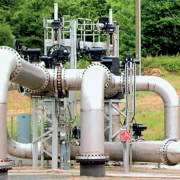
 

Dlaczego dwustronny stal nierdzewna jest używana w systemach chłodzenia wody w elektrowniach jądrowych?

Jako źródło energii czystej energia jądrowa jest kluczowym czynnikiem w zmniejszaniu emisji dwutlenku węgla na całym świecie. System rurociągów chłodzących jest kluczem do bezpiecznej pracy elektrowni jądrowej. Składa się z tysięcy metrów rur o różnych średnicach i rozmiarach. Dostarcza on niezawodne źródło wody do chłodzenia urządzeń elektrowni. Niezawodny system rurociągów musi zapewnić wystarczającą ilość wody chłodzącej, aby chłodzić instalację, podczas gdy system bezpieczeństwa musi zapewnić wystarczającą ilość wody chłodzącej, aby utrzymywać reaktor pod kontrolą i bezpiecznie go wyłączyć w przypadku awarii.

Materiały rur muszą być odporne na korozję wody chłodzącej przez cały okres eksploatacji urządzenia. W zależności od lokalizacji zakładu typ wody chłodzącej może się różnić od względnie czystej wody słodkiej po zanieczyszczoną wodę morską. Doświadczenie pokazuje, że wraz z wiekiem instalacji mogą wystąpić różnorodne problemy z korozją oraz różny stopień jej zaawansowania, co może szkodzić systemowi i uniemożliwiać dostarczanie wymaganej wody chłodzącej.

Problemy z rurociągami chłodzącej wody często wiążą się z materiałami i ich interakcjami z wodą chłodzącą. Najczęstszymi problemami są przecieki spowodowane zanieczyszczeniem (zablokowaniem) i korozją systemu, w tym nagromadzeniem osadów, przyczepnością biologiczną (biofouling) oraz nagromadzeniem produktów korozji oraz zablokowaniem substancji obcych. Przecieki są zwykle spowodowane korozją mikrobiologiczną (MIC), która jest bardzo korozyjną formą korozji wywołaną przez pewne mikroorganizmy zawarte w wodzie. Ta forma korozji występuje często w stali węglowej i niskowęglowej stali nierdzewnej.

Stal nierdzewna od dawna uważana jest za opłacalną opcję do budowy nowych systemów rurociągów wodnych oraz do naprawy lub wymiany istniejących systemów stalowych. Stali nierdzewnego, który jest powszechnie stosowany w rozwiązaniach modernizacyjnych rurociągów, to stal nierdzewna 304L, 316L lub 6% -Mo. 316L i 6%-Mo stanowią duże różnice pod względem wydajności i ceny. Jeśli medium chłodzące nie jest uzdatnione do użytku, co jest substancją korozyjną o wysokim stopniu korozji i stanowi ryzyko mikrobicznej korozji, stal nierdzewna 304L i 316L nie są odpowiednimi rozwiązaniami. W rezultacie elektrownie jądrowe musiały modernizować się na stal nierdzewną o stopniu 6%-Mo lub akceptować wysokie koszty konserwacji systemów stalowych. Niektóre elektrownie jądrowe nadal używają rur o pokryciu stalowym z węgla drzewnego ze względu na niższe początkowe koszty. Zgodnie z normą ASTM A240 systemy rurociągów do zaopatrzenia w wodę przemysłową najczęściej składają się z stali nierdzewnej:

Oceny UNS C N Cr Ni Mo Cu
304L S30403 0.03 / 18.0-20.0 8.0-12.0 / /
316L S31603 0.03 / 16.0-18.0 10.0-14.0 2.0-3.0 /
6%Mo N08367 0.03 0.18-0.25 20.0-22.0 23.0-25.0 6.0-7.0 0.75
2205 S32205 0.03 0.14-0.2 22.0-23.0 4.5-6.5 3.0-3.5 /

Stal nierdzewna dwuwarstwowa 2205 okazała się doskonałym rozwiązaniem. Elektrownia jądrowa Duke Power w Catawba w Karolinie Południowej jest pierwszą elektrownią jądrową, która wykorzystuje w swoich systemach stal nierdzewną dwufazową 2205 (UNS S32205). Ta klasa zawiera około 3,2% molibdenu i charakteryzuje się lepszą odpornością na korozję oraz znacznie lepszą odpornością na korozję mikrobiologiczną niż stal nierdzewna 304L i 316L.

Rury stalowe z powłoką węglową w części na wysokości nad ziemią systemu przewozu wody dostarczanej do wieży chłodniczej głównego kondensatora zostały zastąpione rurami ze stali nierdzewnej typu 2205.

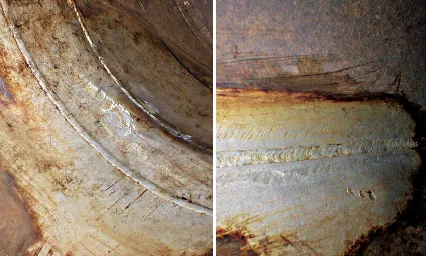
Nowy zastępca 2205 Rurę ze stali nierdzewnej dwustronnie zintegrowaną zainstalowano w 2002 roku. Długość rury wynosi 60 metrów, średnica wynosi 76,2 cm i 91,4 cm, a grubość ścianki rury wynosi 0,95 cm. System ten został opracowany zgodnie z normą ASME B31.1 Power Piping, która jest jednym z kodeksów zarządzania bezpiecznym użytkowaniem systemów rurociągów elektrowni i jest powszechnie stosowana na całym świecie. Po 500 dniach użytkowania system został dokładnie zbadany. Podczas badania nie stwierdzono żadnych osadzów ani korozji. Rura ze stali nierdzewnej 2205 wykazała się bardzo dobrą wydajnością. Rury ze stali nierdzewnej 2205 funkcjonują już od ponad dekady od momentu ich zainstalowania. Na podstawie tego doświadczenia firma Duke Power stosuje Rury ze stali nierdzewnej typu duplex 2205 w innych częściach swojego systemu.

Wnętrze rury 2205 po 500 dniach użytkowania.


Projektanci systemów wodnych w elektrowniach jądrowych mają teraz jeszcze jedną opcję przy wyborze materiałów rur do chłodzącej wody odpornej na korozję. Pomyślne zastosowanie stali nierdzewnej dwutlenkowej 2205 może obniżyć koszty konserwacji, skracać czas przestoju i zapewniać bezpieczeństwo eksploatacji elektrowni jądrowych.

What’s DSS?

DSS, the abbreviation of Duplex stainless steel, is a classification of stainless steels composed of two steel with the center one composed of either austenitize or ferric. These are also known as duplex steels since their chemical structure features two distinct phases, both of which are usually represented by martensite respectively. These steels are very useful in applications requiring extreme toughness since the two phases can be applied together at high temperatures and pressures. The duplex stainless steel is able to obtain sufficient hardness in both its austenitic and martensite phases due to the presence of significant amounts of residual austenite. The commonly used DSS grades are S31803, S32750 and SS32550.

The duplex stainless steel grades

Type UNS Szwecja German France Japan
Low alloy UN23(SAF2304) SS232(SAF2304) W.Nr.1.4362 UR35N DP11
Medium alloy UNS S31500

UNS S31803

SS2376(3RE60)

SS2377(SAF2205)

W.Nr.1.4417

W.Nr.1.4462

UR45N DP1

DP8

High alloy UNS S32900

UNS S31260

SS2324(10RE51) W.Nr.1.4460

W.Nr.1.4501

  329J1

329J2L

Super duplex UNS S32750

UNS S32550

SS2328(SAF2507) W.Nr.1.4410

W.Nr.1.4507

UR47N+

UR52N+


Apart from the alloy itself, another important factor that contributes to its corrosion resistance is the nickel content. Nickel is commonly found in higher percentages in most alloys, which makes it an extremely useful component. In comparison to nickel, which is often used in high-performance alloys for its electrical conductivity and ability to form good-quality alloys, nickel is not as frequently used in making high-quality duplex stainless steel. One of the most interesting aspects of nickel alloys is its corrosion resistance ability, which makes it the best alternative for high-performance materials. When mixed with the steel, nickel produces a more stable alloy, which can increase the alloy’s wear-ability and mechanical strength.

Another significant property of this alloy is its high resistance to thermal expansion. It exhibits a high level of thermal expansion resistance despite the expansion resistance ability of austenitic stainless steels, due to its superior mechanical properties. This property gives it an excellent corrosion protection capability, especially during the tempering/stain removal cycle. The excellent corrosion resistance feature of duplex stainless steel enables it to stand up against a wide range of chemicals. It also has high levels of resistance towards oil, grease and other liquids with a high viscosity level.

Apart from the above features, duplex stainless steel is also popular because of its high strength and durability. Its high strength rating of up to 300Kg is made possible through its ability to make use of two-directional mandrel rolls. It is comprised of a hard carbon fiber rolled into strips that are interlaced on both sides and formed into a bar with a mandrel. A further feature that makes it an excellent alloy is that its surface is completely smooth with no ridges.

One of the most important factors that contribute to the durability of duplex stainless steels is their low rate of pitting corrosion resistance. These steels exhibit a low rate of formation of crystalline grains inside the hot alloy. They can be used to build both large and small structures in different industries. Due to their resistance to crystalline grains, they are highly valued by the construction industry.

The mechanical properties of duplex stainless steel offer a number of benefits that make them an excellent choice for a wide range of applications. These properties allow these steels to be used for a variety of applications including precision engineering component building, heat exchangers and sheet metal fabrication. Some other important properties of this type of alloy include high heat tolerance, low density and excellent corrosion resistance. They also offer a number of mechanical properties that contribute to the overall properties of the alloy. These include extreme hardness, toughness, chemical resistance and creep resistance.

Nickel Austenitic stainless steel grades

Nickel is known to be an expensive alloying element and is essential in some applications where both stress corrosion resistance and austenite structure are required. For example, creep resistance is important in high temperature environments, where austenitic stainless steels are needed. Similar to the traditional austenitic stainless steels, the twin boundary is a significant feature of the nickel-rich austenitic stainless steels because of the lower stacking fault energy. Austenitic stainless steels are prone to stress corrosion cracking (SCC). However, the stress corrosion resistance is greatly improved when the nickel content exceeds 20%. The effect of nickel on the stress intensity of stress corrosion threshold (105℃, 22% NaCl aqueous solution) in Fe-Ni-Cr alloys containing 16%~21% chromium is studied. Nickel-rich austenitic stainless steel (NiASS) can be considered as a separate class of stainless steel. In fact, the stress corrosion resistance of biphasic and ferrite stainless steels is comparable to that of biphasic and ferrite stainless steels when the nickel content exceeds 30%. Several limited grades of nickel-rich austenitic stainless steels are listed in the table below. Super austenitic stainless steels 254SMO and 654SMO are designed specifically for the oil and gas industry. Typical applications are seawater cooling, pulp bleaching, and hydraulic and instrument piping equipment.


Ni-Austenitic stainless steels grades

Alloy C Si Mn Cr Ni Mo W Co Cu Nb N
254SMo 0.01 0.8 1.0 20 18 6.1 0.7 0.2
654SMo 0.01 3.5 24 22 7.3 0.5 0.5
Sanicro 25 0.1 0.2 0.5 22.5 25 3.6 3.5 3.0 0.5 0.23
Sanicro 28 0.02 0.6 2.0 27 31 3.5 1.0
Alloy 800 0.07 0.6 0.6 20.5 30.5
353MA 0.05 1.6 1.5 25 35 0.16
Alloy 825 0.03 0.5 0.8 20 38.5 2.6
Alloy 625 0.03 0.5 0.5 21 Bal 8.5
Alloy 690 0.02 0.5 0.5 30 60
Alloy 600 0.05 0.4 0.8 16.5 Bal 0.5

SANICRO 25, a 22Cr-25Ni alloy, is designed for use in boilers up to 700 °C. It is a material suitable for superheaters and reheaters due to its good creep fracture strength and high temperature corrosion resistance,. In fact, the creep fracture strength of SANICRO 25 is superior to that of most austenitic stainless steels in the range of 600~750℃. In a highly corrosive acidic environment, The Sanicro 28 is usually the best choice. It is used in high-intensity drilling Wells with tubing, casing and acid gas lining, and other applications include heaters, pump systems, and pumps and containers in wet phosphoric acid plants and super phosphoric acid plants.

Alloy 800 is often used in the environment range from 550 to 1100℃, which requires excellent creep resistance, good high-temperature corrosion resistance and high-temperature strength of materials. These alloys are also used in the inlet and outlet ports of the production of ammonia, methanol and civil gas, as well as in the furnace tubes used in the production of vinyl chloride and ethylene. Other applications include heat exchange tubes and radiation tubes for fluidized combustion beds and parts of heat treatment furnaces, such as muffler tubes and protective sleeves for thermocouples.

The 25Cr-35Ni alloy 353Ma is designed for use in cracking furnaces and reforming tubes where synthetic gases are treated in environments where carburizing and nitrogen absorption are potentially problematic. Although there are other alternatives that contain more chromium, 353 MA is the best choice. One reason is that it contains the element Ce, which helps form a very stable surface oxide layer.

Alloy 690 contains 60 percent nickel and is used mainly in the piping of steam generators in nuclear power plants. The operating temperature is 365℃, at which the stress corrosion crack between grains is a potential problem. Under given service conditions, alloy 690 is almost free from corrosion, making it the preferred alloy.

It is interesting to note that nickel-rich Austenitic stainless steel 254SMO is also used for art. “God, Over the Rainbow” sculpture by Carl Milles was installed in 1995 on the south coast of the Nak Strand in Stockholm. The sculpture is about 23m high and is a famous scenic spot where a large number of sailors pass by every day. The surrounding seawater contains salt, chloride is very easy to cause surface corrosion, high strength super austenitic stainless steel 254SMO is very suitable for this environment.

Kiedy używane są błotniki ze stali nierdzewnej w wymiennikach ciepła

The bellows tube heat exchanger is an upgrade based on a straight (bright) tube heat exchanger. The design of the crest and trough of the wave inherits the advantages of the tubular heat exchanger such as durability and safety, and at the same time overcomes the defects such as poor heat transfer capacity and easy scaling. The principle is to improve the total heat transfer coefficient so as to reduce the required heat transfer area, which can save materials and reduce weight under the same heat transfer effect.

Because the bellows body is processed by cold pressing of bright pipe billet, it is generally believed that the bellows body can be strengthened after forming. The external pressure stability experiment shows that the instability of the corrugated heat exchange tube under external pressure first occurs in the straight pipe section, and the corrugated tube will be unstable only if the external pressure continues to rise. This indicates that the stability of the corrugated section is better than that of the straight section and that the critical pressure of the corrugated section is higher than that of the straight section.

Experiments show that the ripple of buckling deformation occurred in the wave trough, especially local single wave trough, generally not more than two troughs instability at the same time, it shows that the stability of the wave crest is better than trough but sometimes also can appear the opposite, in the cold pressing mark process, both trough and the wall thickness of the straight section is constant, cold after the tube is actually shorter.

The existence of wave peaks and troughs in the bellows increases the effect of radial heat exchange convection in the tubes, as shown in Fig below:

Radial convection has a great influence on the total heat transfer coefficient, which is the fundamental reason for the low price and lightweight of the double tube plate bellows heat exchanger. The heat exchange area of the tube body surface of the bellows and the straight tube is large at the same length, but this change is far less than the contribution of changing the coefficient value. It can be clearly seen that the flow velocity of the straight (light) tube is significantly reduced when it is close to the tube wall.

The shell heat exchanger with bellows can make the fluid speed and direction of constant change to form turbulence compared with a straight tube exchanger, making exchange heat with the wall, the boundary effect that affects heat transfer will no longer exist. The total heat transfer coefficient can be increased by 2 ~ 3 times, and the actual operation can even reach 5 times, and the weight is light, which is the reason why the price of bellows heat exchanger is lower than that of the straight tube heat exchanger. According to calculation and practical experience, the total heat transfer coefficient of 1 mm thick bellows is 10% lower than that of 0.5 mm thick bellows. The operation data of hundreds of bellows heat exchangers show that the wall thickness (almost all 0.5 mm) is the main reason for the operation of 10 ~ 14 years without major repair or damage.

In addition, the bellows heat exchanger can effectively resist the impact of a water hammer. The shell of the double tube plate heat exchanger is connected with an expansion joint. If it suffers from the impact of water hammer, the expansion joint will be misplaced. This happens to both bellows and straight tube heat exchangers, and the deformation of the shell may cause the tube to twist. It is because the bellows have more expansion margin, the elastic margin of strain is large when undergoing deformation, that is to say, the ability to resist instability is strong in this case. But in any case, in the process of installation to avoid the occurrence of water hammer, can be taken through the use of Angle sitting valve, delay switch and other measures.

Advantages of stainless steel bellow shell heat exchanger

  • High heat transfer efficiency

The special crest and trough design of the bellows makes the fluid flow because of the continuous mutation of the inside and outside section of the tube to form a strong turbulence. Even in the case of a very small flow rate, the fluid can form a strong disturbance inside and outside the tube, which greatly improves the heat transfer coefficient of the heat exchange tube. The heat transfer coefficient is 2~3 times higher than that of the traditional tube heat exchanger.

  • No scaling and blocking

The medium inside and outside the bellows is always in a highly turbulent state, which makes the solid particles in the medium-difficult to deposit scale; On the other hand, affected by the temperature difference of the medium will produce a trace of axial expansion deformation, the curvature will change frequently, the dirt and heat exchange tube will produce a large pull force, even if there is scale calm will therefore break off automatically, so that the heat exchanger has always maintained a lasting, better heat transfer performance.

  • Automatic compensation

The special structure and shape of bellows can effectively reduce the thermal stress under the condition of being heated without adding expansion joints, thus simplifying the structure of products and improving the reliability of products.

  • Long service life

The axial expansion ability is enhanced, which effectively reduces the temperature difference stress and can adapt to the large temperature difference and pressure change, so there will be no leakage caused by pipe mouth rupture. The connection between the baffle plate and the bellows extends the service life of the heat exchanger.


Jak azot wpływa na stal nierdzewną 316LN?

316LN is the Nitrogen addition version based on 316L steel (0.06% ~ 0.08%), so that it has the same characteristics as 316L,  has been used in the manufacture of high-temperature structural components in fast breeder reactor (FBRS). Reducing the carbon content greatly reduces the susceptibility to stress corrosion cracking due to welding in subsequent corrosive environments. The creep, low cycle fatigue and creep-fatigue interaction are the most important considerations for FBRS components. The high-temperature strength of 316L stainless steel can be improved to 316 stainless steel by alloying 0.06% ~ 0.08% N. The influence of nitrogen content higher than 0.08% on mechanical properties of 316L stainless steel at high temperature will be discussed in this paper.


Chemical composition of 316LN stainless steel

Furnace N C Mn Cr Mo Ni Si S P Fe
Standardy 0.06-0.22 0.02-0.03 1.6-2.0 17-18 2.3-2.5 12.0-12.5 ≤0.5 ≤0.01 ≤0.03 –
1 0.07 0.027 1,7 17.53 2.49 12.2 0.22 0.0055 0.013 –
2 0.11 0.033 1.78 17.63 2.51 12.27 0.21 0.0055 0.015 –
3 0.14 0.025 1.74 17.57 2.53 12.15 0.20 0.0041 0.017 –
4 0.22 0.028 1.70 17.57 2.54 12.36 0.20 0.0055 0.018 –

Thses four batches of 316LN stainless steel with a nitrogen content of 0.07%, 0.11%, 0.14% and 0.22%, and carbon content of 0.03%, were tested to study the effects of nitrogen on tensile, creep, low-cycle fatigue and creep-fatigue properties of 316LN stainless steel. The aim of this experiment is to find the optimum nitrogen content to obtain the best combination of tensile, creep and low cycle fatigue properties. The experimental results show that nitrogen can improve the tensile strength, creep and fatigue strength of austenitic stainless steels. The reasons for the increase in strength include solution enhancement, reduced stacking fault energy (SFE), precipitation hardening, formation of composites (interstitial solutes), atomic segregation, and ordered hardening. Due to their different electron exchange properties, the dissolved nitrogen in austenitic stainless steel has a larger expansion volume than carbon.

In addition to the elastic interaction between nitrogen and dislocation, the electrostatic interstitial dislocation interaction also influences the strength. Dislocation nuclei are characterized by the lack of free electrons, which means they have a positive charge. The nitrogen atoms in austenitic stainless steels are negatively charged due to the position of free electrons near the nitrogen atoms and the electrostatic interaction between the dislocations and the nitrogen atoms.

The effective binding energy between the nitrogen atom and the dislocation increases with the increase of the nitrogen content in Austenitic steel, but the correlation is not obvious for carbon. In Austenitic steels, interstitial nitrogen interacts with substituent elements and tends to form interstitial substituent atomic compositions. The compound binds easily to elements to the left of Fe in the periodic table, such as Mn, Cr, Ti and V. There is a strong correlation between the properties of interatomic bonding (that is, orientation versus unorientation) and the proximity of adjacent atoms in a multicomponent alloy system. Bonding between metal atoms facilitates short-range ordering, which is the bonding of atoms of different elements. Interatomic polarization facilitates the exchange of covalent electrons, the bonding between atoms of the same element. Carbon promotes the aggregation of substitution atoms in the iron-based solid solution, while nitrogen facilitates short-range ordering.

In general, the yield strength(YS) and ultimate tensile strength(UTS) of 316L stainless steel are significantly improved by the alloying of 0.07% ~ 0.22% nitrogen. The increase in strength was observed in all tests in the temperature range of 300 ~ 1123K. Dynamic strain aging was observed within a limited temperature range. The temperature range of dynamic strain aging (DSA) decreases with the increase of nitrogen content.