
Uçak uygulamalarında kullanılan yüksek mukavemetli paslanmaz çelik

Genellikle 800 MPa'dan yüksek çekme mukavemeti, 500 MPa'dan yüksek sertlik değeri olan paslanmaz çelikleri yüksek sertlikli paslanmaz çelik olarak adlandırılır; sertlik değeri 1380 MPa'dan yüksek olan paslanmaz çelikleri ise ultra yüksek sertlikli paslanmaz çelik olarak adlandırılır. Havacılık endüstrisinin gelişimi, uçak ve havacılık motorunun performansının büyük ölçüde metal malzemelere bağlı olduğunu göstermiştir. Yüksek mukavemet, yüksek tokluk, yüksek gerilme korozyon çatlamasına karşı direnç ve çeliğin iyi darbe dayanımına sahip olması nedeniyle, iniş takımları, kirişler, yüksek gerilme bağlantıları, bağlantı elemanları ve diğer yüksek mukavemetli paslanmaz çelikler gibi uçakların bazı önemli yapısal bileşenleri hala kullanılmaktadır.

Yüksek dayanımlı paslanmaz çelikler esas olarak Martensit çökelme sertleştirme paslanmaz çelikler ve yarı-Austenit çökelme sertleştirme paslanmaz çelikler içerir. Martensit çökelme sertleştirme paslanmaz çeliğin dayanıklılığı, martensit dönüşümü ve çökelme sertleştirme işlemiyle elde edilir; avantajı yüksek dayanıklılıktır; aynı zamanda düşük karbon, yüksek krom, yüksek molibden ve/veya yüksek bakır nedeniyle korozyon direnci genellikle 18Cr-8Ni austenitik paslanmaz çelikten daha az değildir; Kesme özgürlüğü, iyi kaynak yapabilme özelliği ve kaynak sonrası yerel tavlama gerekmemesi nedeniyle kaynak sonrası ısı işleme işlemi nispeten basittir. Temel dezavantajı, tavlanmış halde bile yapının hala düşük karbonlu martensit olduğu ve bu nedenle derin deformasyonlu soğuk işleme yapılması zor olmasıdır. Tipik çelik sınıfı 17-4PH PH13-8Mo, motor yatak parçaları, bağlantı elemanları vb. gibi yüksek mukavemetli korozyona dayanıklı yatak bileşenlerinin üretiminde kullanılır. PH13-8Mo, 400°C'de çalışan havacılık yataklarında korozyona dayanıklı orta sıcaklıklı yapısal parçalarda yaygın olarak kullanılmaktadır.

Yarı-Austenitli çökeltme sertleşmiş paslanmaz çelik, Austenit durumunda işlenebilir, soğuk deforme edilebilir ve kaynaklanabilir; daha sonra martensitik dönüşüm ve çökeltme sertleşmesi, yaşlanmayı ayarlayarak farklı mukavemet ve tokluk koordinasyonları elde edilerek kontrol edilebilir. Çelik iyi korozyon direnci ve termal mukavemet, özellikle stres korozyon direnci özelliklerine sahiptir ve özellikle 540 °C'nin altındaki parçaların üretimi için uygundur. Dezavantajı, ısıl işlem sürecinin karmaşık olması, ısıl işlem sıcaklığı kontrol gereksinimlerinin çok hassas olması (±5 °C) ve çeliklerin işlenmesinde işlenebilirlik için genellikle çok sayıda ara tavlama süresi gerektirmesidir. Tipik dereceler şunlardır: 17-7PHPH15-7Mo vb. Bu çelik türü, 400°C'nin altında korozif ortamda çalışan uçak endüstrisinde yaygın olarak kullanılmaktadır; örneğin her türlü boru, boru bağlantısı, yay, bağlantı elemanı vb.


Uçak iniş tertibatı

Uçak iniş tertibatının yapımında kullanılan malzemeler 30CrMnSiNi2A, 4340, 300M, Aermet100 ve daha yüksek gereksinimlere sahip diğer uçak iniş tertibatları ve bağlantı elemanları çoğunlukla çökeltme sertleştirilmiş paslanmaz çelikten üretilmektedir; örneğin: 17-4PH F-15 uçaklarının iniş takımları için 15-5pH, B-767 uçaklarının iniş takımları için 15-5pH. PH13-8mo çeliği 17-4PH yerine geçme potansiyeline sahiptir. 15-5PH, 17-7PH, PH15-7Mo ve diğer çelikler, aynı kaliteye sahip çökeltme sertleştirilmiş paslanmaz çelikten daha iyi gerilme korozyon direnci nedeniyle.

Uçan uçak

Alman FAG şirketi, yüksek basınçlı azot atmosferinde elektrolag remelting yöntemiyle üretilen azotlu martensitli paslanmaz çelik Cronidur30 (0.31%C-0.38%N-15% Cr-L %Mo) adlı ürünü geliştirdi. Bu ürün, tamamen sertleşmiş azotlu yüksek sıcaklıklı paslanmaz çeliktir ve SUS440'a göre daha dayanıklıdır. Tam sertleşme tipi özellikleri nedeniyle DN değeri yüksek olan (D: yatak iç çapı/mm, N: mil devri/min) yüksek DN değerine sahip ekipmanlarda kullanılmamalıdır; aynı Cronidur30 yüksek frekanslı soğutma sayesinde DN4 milyon değerindeki geriye kalan basınç gerilimi ve kırılma tokluğu değerini aynı anda karşılayabilir. Ancak temperleme sıcaklığı 15O°C'den düşük olduğundan, motor çalıştırıldıktan sonra oluşan termal şok nedeniyle yatak sıcaklığının yükselmesine karşı dayanıklılık göstermez.

Yapısal parçaları bulunan uçaklar

Uçak yatak yapısında yüksek mukavemetli paslanmaz çelik ağırlıklı olarak kullanılır. 15-5PH, 17-4PH, PH13-8Mo vb. gibi kapak kilitleri, yüksek mukavemetli cıvata, yay ve diğer parçalar dahil olmak üzere sivil uçaklarda kullanılan yüksek mukavemetli paslanmaz çelikler, örneğin Boeing 737-600 kanat kollarında kullanılan 15-5PH çeliği; Type A340-300 kanat kollarında kullanılan PH13-8Mo çeliği. Ph13-8Mo, özellikle transvers performans gerektiren parçalar için, örneğin gövde çerçeveleri için yüksek mukavemet ve tokluk gerektiren malzemelerdir. Daha yakın zamanda, Carpenter tarafından Custom450 ve Custom455 bazında geliştirilen Ph13-8Mo, uçak kanat yönlendirme kolları, slat yönlendirme kolları, şanzımanlar, motor montajları vb. üretimi için kullanılmaktadır. Bu çelik şu anda MMPDS-02, AMS5936 ve ASTM A564 teknik spesifikasyonlarında yer almaktadır. HSL180 yüksek mukavemetli paslanmaz çelik (0.21C-12.5Cr-1.0Ni-15.5Co-2.0Mo) uçak yapısı üretimi için kullanılır; bu çelik, 4340 gibi düşük alaşımlı çeliklerin sahip olduğu 1800MPa dayanıklılığı ve SUS630 gibi çökeltme sertleştirilmiş paslanmaz çeliklerin sahip olduğu aynı korozyon direnci ve sertlik özelliğine sahiptir.
 

Why is duplex stainless steel used in nuclear power plant cooling water systems?

As a clean energy source, nuclear power is a major contributor to reducing carbon emissions worldwide. The cooling water piping system is the key to the safe operation of a nuclear power plant. It consists of thousands of feet of pipes of various diameters and sizes. It provides a reliable water supply for the cooling of plant equipment. The non-safety piping system must provide enough cooling water to cool the plant, while the safety system must provide enough cooling water to bring the reactor under control and safely shut it down in case of an emergency.

These pipe materials must be resistant to cooling water corrosion throughout the service life of the equipment. Depending on the plant’s location, the type of cooling water can range from relatively clean fresh water to contaminated seawater. Experience has shown that as systems age, a variety of corrosion problems and varying degrees of corrosion can occur, damaging the system and preventing it from providing the required cooling water.

Problems with cooling water piping often involve materials and their interactions with cooling water. Leakage from fouling (plugging) and corrosion of the system are the most common problems, including sediment accumulation, Marine biological attachment (biofouling), accumulation of corrosion products, and blockage of foreign matter. Leakage is usually caused by microbial corrosion (MIC), which is very corrosive corrosion caused by certain microorganisms in water. This form of corrosion occurs frequently in carbon steel and low-alloyed stainless steel.

Stainless steel has long been considered a viable option for building new water supply piping systems and for repairing or replacing existing carbon steel systems. The stainless steel commonly used in piping upgrade solutions is 304L, 316L, or 6%-Mo stainless steel. 316L and 6% Mo stainless steel yo big differences in performance and price. If the cooling medium is untreated water, which is highly corrosive and carries a risk of microbial corrosion, 304L and 316L are not suitable choices. As a result, nuclear plants have had to upgrade to 6%-Mo stainless steel or accept the high maintenance costs of carbon steel systems. Some nuclear power plants still use carbon steel lining pipes because of the lower initial cost. According to ASTM A240,Industrial water supply piping systems are often made of stainless steel below:

Notlar UNS C N Cr Ni Mo Cu
304L S30403 0.03 / 18.0-20.0 8.0-12.0 / /
316L S31603 0.03 / 16.0-18.0 10.0-14.0 2.0-3.0 /
6%Mo N08367 0.03 0.18-0.25 20.0-22.0 23.0-25.0 6.0-7.0 0.75
2205 S32205 0.03 0.14-0.2 22.0-23.0 4.5-6.5 3.0-3.5 /

The 2205 duplex stainless steel proved to be an excellent choice. Duke Power’s Catawba nuclear power plant in South Carolina is the first nuclear power plant to use 2205 (UNS S32205) dual-phase stainless steel in its systems. This grade contains approximately 3.2% molybdenum and has improved corrosion resistance and significantly better microbial corrosion resistance than 304L and 316L stainless steels.

The carbon steel lining piping on the overground portion of the piping system conveying the supply water to the cooling tower of the main condenser was replaced with 2205 duplex stainless steel piping.

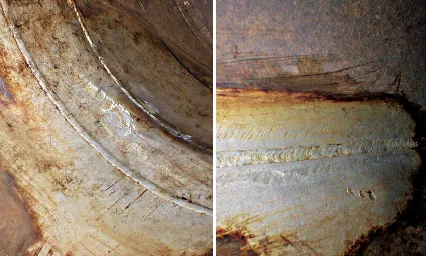
The new replacement 2205 duplex stainless steel pipe was installed in 2002. The pipe is 60 meters long, 76.2 cm and 91.4 cm in diameter, and the wall thickness of the pipe is 0.95 cm. The system specified in accordance with ASME B31.1 Power piping, which is one of the management codes for the safe use of power plant piping systems and is widely used in the world. After 500 days of service, the system was thoroughly inspected. No scaling or corrosion was found during the inspection. 2205 duplex stainless steel performed very well. 2205 stainless steel piping has been performing well for more than a decade since its installation. Based on this experience, Duke Power has used 2205 duplex stainless steel pipes in other parts of its system.

Internal of 2205 pipe after 500 days use.


Designers of nuclear power plant water systems now have one more option when it comes to choosing piping materials for corrosion-resistant cooling water. The successful application of 2205 duplex stainless steel can reduce maintenance costs, reduce downtime and ensure the operation safety of nuclear power plants.

What’s DSS?

DSS, the abbreviation of Duplex stainless steel, is a classification of stainless steels composed of two steel with the center one composed of either austenitize or ferric. These are also known as duplex steels since their chemical structure features two distinct phases, both of which are usually represented by martensite respectively. These steels are very useful in applications requiring extreme toughness since the two phases can be applied together at high temperatures and pressures. The duplex stainless steel is able to obtain sufficient hardness in both its austenitic and martensite phases due to the presence of significant amounts of residual austenite. The commonly used DSS grades are S31803, S32750 and SS32550.

The duplex stainless steel grades

Type UNS İsveç German France Japan
Low alloy UN23(SAF2304) SS232(SAF2304) W.Nr.1.4362 UR35N DP11
Medium alloy UNS S31500

UNS S31803

SS2376(3RE60)

SS2377(SAF2205)

W.Nr.1.4417

W.Nr.1.4462

UR45N DP1

DP8

High alloy UNS S32900

UNS S31260

SS2324(10RE51) W.Nr.1.4460

W.Nr.1.4501

  329J1

329J2L

Super duplex UNS S32750

UNS S32550

SS2328(SAF2507) W.Nr.1.4410

W.Nr.1.4507

UR47N+

UR52N+


Apart from the alloy itself, another important factor that contributes to its corrosion resistance is the nickel content. Nickel is commonly found in higher percentages in most alloys, which makes it an extremely useful component. In comparison to nickel, which is often used in high-performance alloys for its electrical conductivity and ability to form good-quality alloys, nickel is not as frequently used in making high-quality duplex stainless steel. One of the most interesting aspects of nickel alloys is its corrosion resistance ability, which makes it the best alternative for high-performance materials. When mixed with the steel, nickel produces a more stable alloy, which can increase the alloy’s wear-ability and mechanical strength.

Another significant property of this alloy is its high resistance to thermal expansion. It exhibits a high level of thermal expansion resistance despite the expansion resistance ability of austenitic stainless steels, due to its superior mechanical properties. This property gives it an excellent corrosion protection capability, especially during the tempering/stain removal cycle. The excellent corrosion resistance feature of duplex stainless steel enables it to stand up against a wide range of chemicals. It also has high levels of resistance towards oil, grease and other liquids with a high viscosity level.

Apart from the above features, duplex stainless steel is also popular because of its high strength and durability. Its high strength rating of up to 300Kg is made possible through its ability to make use of two-directional mandrel rolls. It is comprised of a hard carbon fiber rolled into strips that are interlaced on both sides and formed into a bar with a mandrel. A further feature that makes it an excellent alloy is that its surface is completely smooth with no ridges.

One of the most important factors that contribute to the durability of duplex stainless steels is their low rate of pitting corrosion resistance. These steels exhibit a low rate of formation of crystalline grains inside the hot alloy. They can be used to build both large and small structures in different industries. Due to their resistance to crystalline grains, they are highly valued by the construction industry.

The mechanical properties of duplex stainless steel offer a number of benefits that make them an excellent choice for a wide range of applications. These properties allow these steels to be used for a variety of applications including precision engineering component building, heat exchangers and sheet metal fabrication. Some other important properties of this type of alloy include high heat tolerance, low density and excellent corrosion resistance. They also offer a number of mechanical properties that contribute to the overall properties of the alloy. These include extreme hardness, toughness, chemical resistance and creep resistance.

Nikel Austenitik paslanmaz çelik çeşitleri

Nikel, pahalı bir alaşım elementi olduğu bilinmektedir ve aynı zamanda stres korozyon direnci ve austenite yapısı gerektiren bazı uygulamalarda vazgeçilmezdir. Örneğin, yüksek sıcaklık ortamlarında, austenitic yapıda olan çeliklerde esneklik direnci önemlidir. Paslanmaz çelikler Geleneksel austenitik paslanmaz çeliklere benzer şekilde, ikiz sınır, daha düşük yığılma hatası enerjisi nedeniyle nikel açısından zengin austenitik paslanmaz çeliklerin önemli bir özelliğidir. Austenitik paslanmaz çelikler stres korozyon çatlamasına (SCC) eğilimlidir. Bununla birlikte, nikel içeriği 20%'yi aştığında stres korozyon direnci büyük ölçüde artar. Fe-Ni-Cr alaşımlarında krom içeriği 16%-21% olanlarda stres korozyon eşiği (105°C, 22% NaCl sulu çözelti) üzerindeki stres yoğunluğu üzerindeki etkisi incelenmiştir. Nikel açısından zengin austenitik paslanmaz çelik (NiASS), paslanmaz çeliklerin ayrı bir sınıfı olarak düşünülebilir. Aslında, nikel içeriği 30'u aştığında biphasik ve ferritik paslanmaz çeliklerin stres korozyon direnci, biphasik ve ferritik paslanmaz çeliklerin direnciyle kıyaslanabilir%. Nikel açısından zengin austenitik paslanmaz çeliklerin birkaç sınırlı kalitesi, 30'u aştığında stres korozyon direnci, biphasik ve ferritik paslanmaz çeliklerin direnciyle kıyaslanabilir. Paslanmaz çelikler Aşağıdaki tabloda listelenmiştir. Süper austenitik paslanmaz çelikler 254SMO ve 654SMO, özellikle petrol ve gaz endüstrisi için tasarlanmıştır. Tipik uygulamalar arasında deniz suyu soğutma, hamuru beyazlatma ve hidrolik ve alet boru tesisatları yer alır.


Ni-Austenitik paslanmaz çelikler

Alüminyum alaşım C Si Mn Cr Ni Mo W Co Cu Nb N
254SMo 0.01 0.8 1.0 20 18 6.1 0.7 0.2
654SMo 0.01 3.5 24 22 7.3 0.5 0.5
Sanicro 25 0.1 0.2 0.5 22.5 25 3.6 3.5 3.0 0.5 0.23
Sanicro 28 0.02 0.6 2.0 27 31 3.5 1.0
Alüminyum alaşım 800 0.07 0.6 0.6 20.5 30.5
353MA 0.05 1.6 1.5 25 35 0.16
Alüminyum alaşım 825 0.03 0.5 0.8 20 38.5 2.6
Alüminyum alaşım 625 0.03 0.5 0.5 21 Bal 8.5
Alüminyum alaşım 690 0.02 0.5 0.5 30 60
Alüminyum alaşım 600 0.05 0.4 0.8 16.5 Bal 0.5

700 °C'ye kadar olan kazanlarda kullanılmak üzere tasarlanan SANICRO 25, 22Cr-25Ni alaşımlıdır. Bu alaşım, iyi gerilme kırılma dayanımı ve yüksek sıcaklık korozyon direncine sahip olduğu için süper ısıtıcılar ve yeniden ısıtıcılar için uygundur. Aslında, SANICRO 25'in gerilme kırılma dayanımı, 600~750 °C aralığında çoğu östenitik paslanmaz çelikten üstündür. Çok aşındırıcı asidik ortamlarda, Sanicro 28 genellikle en iyi seçenektir. Bu alaşım, boru, kovan ve asit gazı kaplamalı yüksek yoğunluklu sondaj kuyularında kullanılır; diğer uygulamalar arasında ise ısıtıcılar, pompa sistemleri ve fosforik asit tesislerinde kullanılan pompalar ve kaplar yer alır.

Alüminyum alaşım 800 genellikle 550 ile 1100°C arasındaki sıcaklık aralığında kullanılmaktadır. Bu sıcaklık aralığında mükemmel esneme direnci, iyi yüksek sıcaklık korozyon direnci ve yüksek sıcaklık dayanımı gerektiren malzemeler kullanılır. Bu alaşımlar ayrıca amonyak, metanol ve sivil gaz üretiminde giriş ve çıkış kapaklarında ve vinil klorür ve etilen üretiminde kullanılan fırın borularında da kullanılmaktadır. Diğer uygulamalar arasında, akışkan yakma yataklarında ve termokupllar için susturucu boruları ve koruyucu kılıflar gibi ısı değişim boruları ve radyasyon boruları yer alır.

25Cr-35Ni alaşımlı 353Ma, sentetik gazların karbürleşme ve azot emilimi potansiyel olarak sorunlu olduğu ortamlarda işlenen çatlama fırınlarında ve reformasyon tüplerinde kullanılmak üzere tasarlanmıştır. Krom içeriği daha yüksek olan diğer alternatifler olsa da, 353 MA en iyi seçimdir. Bunun bir nedeni, çok stabil bir yüzey oksit tabakası oluşturmasına yardımcı olan Ce elementini içeren olmasıdır.

Alüminyum alaşım 690 yüzde 60 nikel içerir ve esas olarak nükleer santrallerdeki buhar jeneratörlerinin boru hatlarında kullanılır. Çalışma sıcaklığı 365°C olup, bu sıcaklıkta tahriş-korozyon çatlaması (grain-to-grain stress corrosion crack) potansiyel bir sorun oluşturur. Belirli servis koşullarında, alüminyum alaşım 690 neredeyse korozyona karşı dayanıklıdır ve bu nedenle tercih edilen alaşım olarak kabul edilir.

Nikel açısından zengin Austenitik paslanmaz çelik 254SMO'nun sanat eserlerinde de kullanılması ilginçtir. Carl Milles'in "God, Over the Rainbow" adlı heykeli 1995 yılında Stockholm'ün Nak Plajı'nın güney kıyısında yerleştirildi. Heykel yaklaşık 23 metre yüksekliğindedir ve her gün çok sayıda denizci geçen ünlü bir manzaradır. Çevredeki deniz suyu tuz içerir; klorür yüzeyde korozyona neden olmakta çok kolaydır; yüksek mukavemetli süper Austenitik paslanmaz çelik 254SMO bu ortam için çok uygundur.

Kabuklu ısı eşanjörlerinde kullanılan paslanmaz çelik balatalar

The bellows tube heat exchanger is an upgrade based on a straight (bright) tube heat exchanger. The design of the crest and trough of the wave inherits the advantages of the tubular heat exchanger such as durability and safety, and at the same time overcomes the defects such as poor heat transfer capacity and easy scaling. The principle is to improve the total heat transfer coefficient so as to reduce the required heat transfer area, which can save materials and reduce weight under the same heat transfer effect.

Because the bellows body is processed by cold pressing of bright pipe billet, it is generally believed that the bellows body can be strengthened after forming. The external pressure stability experiment shows that the instability of the corrugated heat exchange tube under external pressure first occurs in the straight pipe section, and the corrugated tube will be unstable only if the external pressure continues to rise. This indicates that the stability of the corrugated section is better than that of the straight section and that the critical pressure of the corrugated section is higher than that of the straight section.

Experiments show that the ripple of buckling deformation occurred in the wave trough, especially local single wave trough, generally not more than two troughs instability at the same time, it shows that the stability of the wave crest is better than trough but sometimes also can appear the opposite, in the cold pressing mark process, both trough and the wall thickness of the straight section is constant, cold after the tube is actually shorter.

The existence of wave peaks and troughs in the bellows increases the effect of radial heat exchange convection in the tubes, as shown in Fig below:

Radial convection has a great influence on the total heat transfer coefficient, which is the fundamental reason for the low price and lightweight of the double tube plate bellows heat exchanger. The heat exchange area of the tube body surface of the bellows and the straight tube is large at the same length, but this change is far less than the contribution of changing the coefficient value. It can be clearly seen that the flow velocity of the straight (light) tube is significantly reduced when it is close to the tube wall.

The shell heat exchanger with bellows can make the fluid speed and direction of constant change to form turbulence compared with a straight tube exchanger, making exchange heat with the wall, the boundary effect that affects heat transfer will no longer exist. The total heat transfer coefficient can be increased by 2 ~ 3 times, and the actual operation can even reach 5 times, and the weight is light, which is the reason why the price of bellows heat exchanger is lower than that of the straight tube heat exchanger. According to calculation and practical experience, the total heat transfer coefficient of 1 mm thick bellows is 10% lower than that of 0.5 mm thick bellows. The operation data of hundreds of bellows heat exchangers show that the wall thickness (almost all 0.5 mm) is the main reason for the operation of 10 ~ 14 years without major repair or damage.

In addition, the bellows heat exchanger can effectively resist the impact of a water hammer. The shell of the double tube plate heat exchanger is connected with an expansion joint. If it suffers from the impact of water hammer, the expansion joint will be misplaced. This happens to both bellows and straight tube heat exchangers, and the deformation of the shell may cause the tube to twist. It is because the bellows have more expansion margin, the elastic margin of strain is large when undergoing deformation, that is to say, the ability to resist instability is strong in this case. But in any case, in the process of installation to avoid the occurrence of water hammer, can be taken through the use of Angle sitting valve, delay switch and other measures.

Advantages of stainless steel bellow shell heat exchanger

  • High heat transfer efficiency

The special crest and trough design of the bellows makes the fluid flow because of the continuous mutation of the inside and outside section of the tube to form a strong turbulence. Even in the case of a very small flow rate, the fluid can form a strong disturbance inside and outside the tube, which greatly improves the heat transfer coefficient of the heat exchange tube. The heat transfer coefficient is 2~3 times higher than that of the traditional tube heat exchanger.

  • No scaling and blocking

The medium inside and outside the bellows is always in a highly turbulent state, which makes the solid particles in the medium-difficult to deposit scale; On the other hand, affected by the temperature difference of the medium will produce a trace of axial expansion deformation, the curvature will change frequently, the dirt and heat exchange tube will produce a large pull force, even if there is scale calm will therefore break off automatically, so that the heat exchanger has always maintained a lasting, better heat transfer performance.

  • Automatic compensation

The special structure and shape of bellows can effectively reduce the thermal stress under the condition of being heated without adding expansion joints, thus simplifying the structure of products and improving the reliability of products.

  • Long service life

The axial expansion ability is enhanced, which effectively reduces the temperature difference stress and can adapt to the large temperature difference and pressure change, so there will be no leakage caused by pipe mouth rupture. The connection between the baffle plate and the bellows extends the service life of the heat exchanger.


Azotun 316LN paslanmaz çelik üzerindeki etkisi nasıl?

316LN is the Nitrogen addition version based on 316L steel (0.06% ~ 0.08%), so that it has the same characteristics as 316L,  has been used in the manufacture of high-temperature structural components in fast breeder reactor (FBRS). Reducing the carbon content greatly reduces the susceptibility to stress corrosion cracking due to welding in subsequent corrosive environments. The creep, low cycle fatigue and creep-fatigue interaction are the most important considerations for FBRS components. The high-temperature strength of 316L stainless steel can be improved to 316 stainless steel by alloying 0.06% ~ 0.08% N. The influence of nitrogen content higher than 0.08% on mechanical properties of 316L stainless steel at high temperature will be discussed in this paper.


Chemical composition of 316LN stainless steel

Furnace N C Mn Cr Mo Ni Si S P Fe
Standartlar 0.06-0.22 0.02-0.03 1.6-2.0 17-18 2.3-2.5 12.0-12.5 ≤0.5 ≤0.01 ≤0.03 –
1 0.07 0.027 1,7 17.53 2.49 12.2 0.22 0.0055 0.013 –
2 0.11 0.033 1.78 17.63 2.51 12.27 0.21 0.0055 0.015 –
3 0.14 0.025 1.74 17.57 2.53 12.15 0.20 0.0041 0.017 –
4 0.22 0.028 1.70 17.57 2.54 12.36 0.20 0.0055 0.018 –

Thses four batches of 316LN stainless steel with a nitrogen content of 0.07%, 0.11%, 0.14% and 0.22%, and carbon content of 0.03%, were tested to study the effects of nitrogen on tensile, creep, low-cycle fatigue and creep-fatigue properties of 316LN stainless steel. The aim of this experiment is to find the optimum nitrogen content to obtain the best combination of tensile, creep and low cycle fatigue properties. The experimental results show that nitrogen can improve the tensile strength, creep and fatigue strength of austenitic stainless steels. The reasons for the increase in strength include solution enhancement, reduced stacking fault energy (SFE), precipitation hardening, formation of composites (interstitial solutes), atomic segregation, and ordered hardening. Due to their different electron exchange properties, the dissolved nitrogen in austenitic stainless steel has a larger expansion volume than carbon.

In addition to the elastic interaction between nitrogen and dislocation, the electrostatic interstitial dislocation interaction also influences the strength. Dislocation nuclei are characterized by the lack of free electrons, which means they have a positive charge. The nitrogen atoms in austenitic stainless steels are negatively charged due to the position of free electrons near the nitrogen atoms and the electrostatic interaction between the dislocations and the nitrogen atoms.

The effective binding energy between the nitrogen atom and the dislocation increases with the increase of the nitrogen content in Austenitic steel, but the correlation is not obvious for carbon. In Austenitic steels, interstitial nitrogen interacts with substituent elements and tends to form interstitial substituent atomic compositions. The compound binds easily to elements to the left of Fe in the periodic table, such as Mn, Cr, Ti and V. There is a strong correlation between the properties of interatomic bonding (that is, orientation versus unorientation) and the proximity of adjacent atoms in a multicomponent alloy system. Bonding between metal atoms facilitates short-range ordering, which is the bonding of atoms of different elements. Interatomic polarization facilitates the exchange of covalent electrons, the bonding between atoms of the same element. Carbon promotes the aggregation of substitution atoms in the iron-based solid solution, while nitrogen facilitates short-range ordering.

In general, the yield strength(YS) and ultimate tensile strength(UTS) of 316L stainless steel are significantly improved by the alloying of 0.07% ~ 0.22% nitrogen. The increase in strength was observed in all tests in the temperature range of 300 ~ 1123K. Dynamic strain aging was observed within a limited temperature range. The temperature range of dynamic strain aging (DSA) decreases with the increase of nitrogen content.