302HQ VS 304 roestvrij staal

302HQ stainless steel is a standard material specifically used in the manufacture of self-tapping screws and light mechanical screws. It is also used in bolts, setting screws, rivets, and special fasteners. The name 302HQ is not standardized. The ASTM lists it as UNS S30430, which also includes “XM-7”, “304CU”, and “304HQ”. It has now completely replaced 384 and 305 steel for cold heading purpose. ISO 3506, Standard specification for stainless steel fasteners, 302HQ as an eligible component for class “A2” fasteners; It is commonly used to manufacture fasteners in the A2-70 and A2-80 strength. The stable austenitic structure enables 302HQ to be non-magnetic even after extensive cold working and to maintain excellent toughness at temperatures as low as freezing. Compared with 304 stainless steel, the addition of 3% copper in 302HQ can significantly reduce the cold work hardening rate. The chemical composition and physical properties are shown below:


Equivalent Material

Puntentelling UNS No DIN EN JIS
302HQ S30430 1.4567 X3CrNiCu18-9-4 SUSXM7


Chemical Composition (ASTM A493 S30430)

Puntentelling C Mn Si P S Cr Mo Ni Cu
302HQ 0.03 2.00 1.00 0.045 0.03 17.0-19.0 / 8.0-10.0 3.0-4.0


Mechanische eigenschappen

302HQ tensile strength: Annealing: 605, Mild drawing: 660

Density: 7900kg/㎡

Elasticity modulus:193Gpa

Average coefficient of thermal expansion: 0-100℃ (um/m/℃) 17.2; 0-315℃ (um/m/℃); 0-538 ℃ (18.8)

Thermal conductivity: 100℃ (W/ M. K) 16.3; 500℃ (W/ M. K) 21.5

Specific heat: 0-100℃ (J/ kg.K) 500;

Resistance: 720


Corrosion resistance

Its corrosion resistance is equivalent to or superior to 304 stainless steel. Pitting and crevice corrosion is easy to occur in the warm chloride environment, and stress corrosion cracking is sensitive when the temperature is higher than about 50°C. 302HQ can withstand about 200mg/L chloride in drinking water at room temperature and 150mg/L at 60℃.


Heat Resistant Performance

Good oxidation resistance, intermittent use temperature up to 870°C, continuous use temperature up to 925°C. Because of the low carbon content of 302HQ, it is safe for continuous use (no carbide precipitation) ranges from 425 to 860°C.


Heat Treatment

Solution treatment (annealing) is heated to 1010-1120°C and rapidly cooled. Heat treatment will not harden it.


Weldability

Excellent weldability, all standard fusion welding methods (whether or not they contain filler metal) can be used. Use a 308L electrode. Welding is generally not required except in the manufacture of stud welded fasteners, where resistance butt welding is used to join wires together.


Processing 

The 302HQ is rarely machined. The grade has a very low sulfur content, which helps its formability but reduces its machinability. The Improved 302HQ (UGIMA 4567) has very high machinability, slightly higher sulfur content, and is also calcium treated for use requiring extensive cold forming and machining operations on the 18/8 steel.


Cold Work Hardening

302HQ is the lowest work hardening rate among the common grades of austenitic stainless steels. According to the wire drawing data, the tensile strength increases by 8MPa when the cold-working area decreases by 1%). Even after extensive cold work, the brand remains essentially unresponsive to magnets. Some high strength cold heading fasteners require a slightly higher work hardening rate, so 304 or 304L (or special grade 304M) should be used instead of 302HQ; The work hardening rate of these grades is about 10-12.5MPa.


Typical Applications

All harsh cold heading applications, including self-tapping screws, roof bolts, mechanical screws, bolts, set screws, blind rivets, etc.

Roestvrij staal 321 VS 347

De eigenschappen van roestvrij staal 321 en 347 zijn in de meeste gevallen vergelijkbaar. Roestvrij staal 321 is een soort titanium – stabilisatie van 18/8 austenitisch roestvrij staal (304). Een kleine hoeveelheid titanium zorgt ervoor dat het in het temperatuurbereik van carbide-neerslag komt, namelijk 425-850 °C. Het vertoont geen intergranulaire corrosie na verhitting en heeft een goede sterkte, weerstand tegen oxidatie, schilfering en waterige corrosie.

De 321H is een hoog-koolstofversie van de 321 met een hogere sterkte bij hoge temperaturen en wordt voornamelijk gebruikt voor toepassingen bij hoge temperaturen rond 900°C. Het nadeel van 321 is dat titanium een slechte lasboogovergang heeft, waardoor het niet als lasmateriaal kan worden gebruikt. 347, dat niobium bevat, speelt ook een rol bij de stabilisatie van het carbide en kan ook via de lasboog worden overgedragen. 347 is standaard lasmateriaal voor het lassen van roestvrij staal 321 en wordt af en toe gebruikt als basismetaal. Laten we hieronder hun chemische en mechanische vergelijking bekijken:


Vergelijking van de chemische samenstelling

Puntentelling C Mn Si P S Cr Ni Mo N Andere
321 0.08 2.00 0.75 0.045 0.03 17.0-19.0 9.0-12.0 / 0.1 Ti=5(C+N)0,7
347 0.08 2.00 0.75 0.045 0.03 17.0-19.0 9.0-13.0 / / Nb=10(C+N)1.0

We kunnen zien dat het verschil tussen deze staalsoorten het toevoegen van Ti en Nb is. Dankzij de toevoeging van gestabiliseerd element titanium kan 321 bestand zijn tegen het vormen van chroomcarbide bij 426°C tot 815°C, waardoor het een uitstekende intergranulaire corrosieweerstand en hoge temperatuurprestaties heeft en bovendien een hogere kruip- en spanningsbreukweerstand heeft dan 304 en 304L. Bovendien heeft 321 ook een goede lage-temperatuurbeschikbaarheid en uitstekende vormbaarheid en laseigenschappen, zonder na het lassen te moeten worden geanneerd.

347 Roestvrij staal is een austenitisch roestvrij staal met niobium en 347H is de versie met een hoog koolstofgehalte. 347 kan worden beschouwd als een versie met niobiumtoevoeging op basis van 304. Nb, een zeldzaam aardelement, heeft een vergelijkbaar effect als titanium bij het verfijnen van korrels; het kan intergranulaire corrosie weerstaan en het verouderingsvergrijzen bevorderen.


Vergelijking van fysieke eigenschappen

Puntentelling Treksterkte, Mpa Druksterkte, Mpa Uitlank (50 mm) Hardheid, HB
321 515 205 40 217
347 515 205 40 201


Typische toepassingen

Roestvrij staal 347&347H biedt betere prestaties bij hoge temperaturen dan 304 en 321. Het wordt veel gebruikt in de luchtvaart-, petrochemische-, voedingsmiddelen-, papieren- en andere industrieën, zoals uitlaatpijpen en afleidingpijpen van vliegtuigmotoren, warmgaspijpen van turbinecompressoren en onderdelen die werken bij lage belasting en temperaturen die niet hoger zijn dan 850°C.

Door het toevoegen van titanium aan 321 wordt het geschikt voor toepassingen waarbij een hoge temperatuur en goede corrosieweerstand vereist zijn. Het is geschikt voor toepassingen met een sensibilisatie van 304 en 304L waarbij de sterkte bij hoge temperaturen ontoereikend is. Typische toepassingen zijn thermische uitbreidingsverbindingen, balgen, componenten voor de uitlaat van vliegtuigen, sleeve voor verwarmingselementen, componenten voor ovens en warmtewisselaars.

Wat is 18Ni maragingstaal?

What’s the difference between 316L and 904L steel?

Commonly known as “medical-grade steel”, 316L stainless steel is not only used to make jewelry and medical scalpels due to its low allergenic properties but also used by watch manufacturing companies to make watchbands. 904L stainless steel is Austenitic stainless steel made by Outokumpu Company in Finland based on 316L stainless steel, is a super Austenite with low carbon content and high alloying designed for corrosive environments such as dilute sulfuric acid.

904L stainless steel increases the content of chromium, nickel and molybdenum and adds a certain amount of copper, which will bring about a change in performance, making 904L stainless steel more wear-resistant and corrosion-resistant, but at the same time, there is not much difference between the two in hardness, let’s show their difference with the table below:

Puntentelling C Si Mn Cr Ni Mo P S Cu
316L ≤0.03 ≤0.1 ≤0.2 16-18 10-14 2-3 ≤0.04 ≤0.03 /
904L ≤0.02 ≤0.1 ≤0.2 19-23 23-28 4-5 ≤0.04 ≤0.03 1-2


It is not difficult to see that 904L alloy elements chromium, nickel, molybdenum is more than 1.6 times of 316L stainless steel, 1%-2% copper makes 904L stainless steel has stronger corrosion resistance and wear resistance than 316L stainless steel. The 904 has a lower carbon content (C), so the polished 904L steel pipe or sheet steel has a better surface, and the same volume of 904L stainless steel is much heavier than the 316L stainless steel. Their Rockwell strength (HRB) is less than 95, and the strength is almost 490MPa. So it is completely wrong to say that 904L stainless steel is harder than 316L stainless steel.

Rolex was the first company to put 904L into watch manufacturing. In 1985, Rolex produced the watch case made of 904L steel replaced 316L steel. 904L steel contains more chromium, which helps to form a corrosion-resistant coating on the surface of metal materials. And “anti-corrosion” is also the benefit of the Rolex watches we often mention, but here “anti-corrosion” does not have any practical significance, because 316L steel has been completely enough daily corrosion. 904L steel is indeed better in corrosion resistance than 316L steel, but it does not mean that 316L steel is not good. For consumers, as a watch case material,  904L steel’s “propaganda” effect is better than the actual role of “anti-corrosion” itself.

Not just in the watch industry, chemical fields shows more advantages., 904L offers better corrosion resistance than 316L and even 317L. The addition of 1.5% copper has excellent corrosion resistance to reducing acids such as sulfuric acid and phosphoric acid, and also has excellent intergranular corrosion resistance to stress corrosion, pitting corrosion and crevice corrosion caused by chloride ion. In the concentration range of 0-98% pure sulfuric acid, 904L can be used at temperatures up to 40 ℃. Of all the phosphoric acids, 904L is more resistant to corrosion than ordinary stainless steel. Ordinary Austenitic stainless steels may be sensitive to stress corrosion at temperatures above 60℃ in a chloride-rich environment, and this sensitivity can be reduced by increasing the nickel content of the stainless steels. Due to its high nickel content, 904L is highly resistant to stress corrosion cracking in chloride solutions, concentrated hydroxide solutions, and hydrogen sulfide-rich environments.

The difference between Stainless steel hot rolled plate and cold rolled plate

Stainless steel has excellent corrosion resistance, processing, biocompatibility and strong toughness within a wide range of temperatures, has been widely used in the petrochemical industry, atomic energy, light industry, textile, food, household appliances and other fields. Hot rolling and cold rolling are the necessary processes for stainless steel plate forming. The hot rolled plate is the raw material of cold-rolled plate, both of them will affect the microstructure of the stainless steel plate.

The hot rolling process of stainless steel is made from the slab (mainly continuous casting slab), which is heated and made from a roughing mill and finishing mill group. The hot steel from the last finishing mill is cooled by laminar flow to the specified temperature and is rolled into coils by the coiler. The steel after cooling has an oxide surface, with a black color, commonly known as “stainless steel black coil”. After annealing and pickling, the oxidized surface is removed, that is, “stainless steel white roll”. Some hot rolled stainless steel products can be used directly and some need to be processed into cold-rolled products before being used.

Stainless steel cold-rolled plate is generally the product of stainless steel hot-rolled plate with a thickness of 3.0-5.5mm after being rolled and processed by cold rolling equipment (single stand cold rolling/multi-strand cold rolling). Different processing methods and reprocessing after cold rolling can make the surface of stainless steel plate have different grades of surface finish, grain and color. There are 2D, 2B, No.3, No.4, No.4, HL, BA, TR, embossing and other surface grades in the surface processing of cold-rolled stainless steel plates. A variety of deeply processed surfaces such as electroplating, electropolishing, directional pattern, etching, shot peening, coloring, coating and its combination can be further implemented on the basis of cold rolling, in addition, the no.1 surface and pattern plate after hot rolling pickling are also included. what’s the difference between of hot rolled and cold rolled stainless steel plate?


Different surface qualities

Stainless steel cold-rolled plate has good surface quality, no oxide scale, a variety of surface treatments are available. Stainless steel hot rolled plate is generally No 1 treatment, with oxide skin, gray-white (pickling) or black-brown (not electroplated). The smoothness of the cold-rolled plate after electroplating is higher than that of a hot rolled plate.


 

Different prices

The toughness and surface quality of the stainless steel cold-rolled plate is higher than the hot-rolled plate, and the price is higher than the hot-rolled plate.


Different applications

Stainless steel cold-rolled sheet is widely used in various civil and industrial fields, including architectural decoration, products, home appliances, rail transit transportation, automobiles, elevators, containers, solar energy, precision electronics, etc. 2D, 2B, BA and grinding surface can be directly used for most products in architectural decoration, elevator, container and other industries. The cold-rolled sheet after forming or re-processing can be used in places with higher surface quality requirements, such as home appliances, rail transportation, automobiles, solar energy, precision electronics, etc.

Waar wordt ferritisch roestvrij staal voor gebruikt?

Ferriet roestvrij staal verwijst naar het roestvrij staal met 11%~30%Cr en kubisch kristalvormig ferrietstructuur. De hoge chroomgehalte is het belangrijkste element dat de prestaties beïnvloedt. De voordelen van ferriet roestvrij staal zijn onder andere lage kosten (zonder nikkel), goede magnetische geleidbaarheid, uitstekende stresscorrosiebestendigheid; kleine werkingstendentie, gemakkelijker kouddraaien en snijden; hoge thermische geleidbaarheid (1,5 keer die van austenitisch staal), laag lineair uitzettingscoëfficiënt (60% van austenitisch staal), maar ook duidelijke nadelen zoals slechte plasticiteit en lage sterkte bij de verwerking, gemakkelijk lassenbreken. Ferriet roestviel staal wordt voornamelijk gebruikt in oxiderende media en nitridemedia, geschikt voor warmteoverdracht en warmtecirculatie, biedt een breed scala aan toepassingen.


Architectuur- en structuurtoepassingen

Ferritisch roestvrij staal wordt gebruikt als dak- en gevelplaat voor gebouwen vanwege zijn goede weerstand tegen atmosferische corrosie. Hoogchromietferritisch roestvrij staal dat in kustgebieden wordt gebruikt, is ontwikkeld en bevat hoogwaardige ferritisch roestvrij staal met een hoog gehalte aan chroom en molybdeen en wordt aangevuld met kleine hoeveelheden niobium en titanium. Het staal bevat daadwerkelijk 22% chroom en 1,2% molybdeen. Er zijn voldoende chroom en molybdeen nodig om de roestbestendigheid van roestvrij staal te verbeteren. Het roestgebied van austenitisch roestvrij staal van types 304 en 316 neemt met de toename van het aantal periodieke corrosieproefcycli aanzienlijk toe. Tegelijkertijd neemt het roestgebied van ferritisch roestvrij staal van type 444 af tijdens de eerste 600 proefcycli en wordt het na langere tests verzadigd.


Automobilieconomie

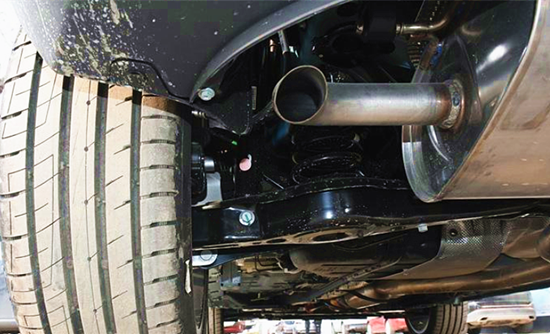
Roestvrij staal van type 409 of 410L wordt gebruikt als materiaal voor de emissiebeheersing van uitlaatgassen van voertuigen, zoals de voorste en centrale uitlaatpijp en de uitlaatdemper, vanwege de uitstekende intergranulaire corrosieweerstand, vormbaarheid en hittebestendigheid. In de afgelopen jaren is de ontwerptemperatuur van de uitlaatgassen toegenomen vanwege de katalytische omzetting en de vermindering van schadelijke gassen zoals NOx, SOx en koolwaterstoffen (HC). De toegenomen temperatuur van chroomcarbide zal echter residuen op de demper veroorzaken, namelijk temperaturen van 400 tot 500 °C leiden tot corrosie aan de korrelgrens. Omdat het lasgebied bijzonder gevoelig is voor interkristallijnige corrosie, is het noodzakelijk om de corrosieweerstand van ferritisch roestvrij staal met 12% Cr te verbeteren. Daarom werd een nieuw ferritisch roestvrij staal ontwikkeld door niobium toe te voegen aan staal met 12% Cr. Het is bekend dat het verminderen van het koolstof- en stikstofgehalte in staal zeer effectief is bij het voorkomen van interkristallijn corrosie. Op deze manier kan de interkristallijn corrosieweerstand verder worden verbeterd door niobium en titanium toe te voegen aan staal. 409L roestvrij staal wordt gebruikt als materiaal voor de uitlaatklep van auto’s, en de uitlaattemperatuur wordt zo ingesteld dat deze ongeveer 800°C bedraagt. 430J1L roestvrij staal wordt aanbevolen wanneer de uitlaattemperatuur ongeveer 900°C bedraagt.


Huisapparatuur en keukengerei

Ferritisch roestvrij staal van de 400-serie is vanwege zijn unieke esthetische eigenschappen, corrosieweerstand tegen reinigingsmiddelen en desinfectiemiddelen, lage thermische uitzettingscoëfficiënt en magnetisme (geschikt voor elektromagnetische kookplaten) veel gebruikt in huishoudelijke apparatuur en keukengerei. Ferritisch roestvrij staal vermindert het gewicht aanzienlijk in vergelijking met koolstofstaal. Ferritisch roestvrij staal bevat geen nikkel en is veel stabieler in prijs dan austenitisch staal, waardoor fabrikanten de kosten gemakkelijker kunnen beheren bij aankoop en verkoop. Het gebruik van ferritisch roestvielstaal is zo breed; elke toepassing vereist een andere prestatie van ferritisch roestvrij staal. Typische toepassingen zijn vaatwasmachines, elektrische ketels, wasmachines, vuilnisbakken, keukenslangen, ovens, gasapparaten, koffiemachines, magnetronovens, gasfornuizen, koelruimtes, restaurantwagens.


Ferritisch roestvrij staal wordt ook gebruikt in transport en andere industriële toepassingen. Omdat het zoveel voordelen heeft ten opzichte van koolstofstaal en austenitisch roestvrij staal, is het uitstekend vormbaar bij buigen, snijden en boren, waardoor het veel toepassingen heeft. Omdat er veel ferritische roestvrijstalen kwaliteiten bestaan, moet u de juiste kwaliteit kiezen om aan de klantvereisten te voldoen om een goede corrosieweerstand, goede sterkte en een lagere prijs te verkrijgen.

Puntentelling Chemische samenstelling Charakteriseren Aanvragen
409L 11.3Cr-0.17Ti

Laag C en N

De toegevoegde Ti zorgt ervoor dat het materiaal een goede hittebestendigheid en sterkte heeft bij hoge temperaturen. Automaatuitlaatpijpen, warmtewisselaars, containers en andere producten zonder warmtebehandeling na het lassen.
410L 13Cr

Laag C

De C-waarde is gebaseerd op 410 en heeft een goede verwerkingseigenschappen, een goede lasvormingbestendigheid en een goede weerstand tegen hoge temperaturen bij oxidatie. Onderdelen voor mechanische constructie, uitlaatpijpen van motoren, brandstofverspreider van ketels, brander.
430 16Cr Het is een typische ferritische staalsoort met een lage thermische uitzettingscoëfficiënt, uitstekende vormbaarheid en oxidatiebestendigheid. Hittebestendige apparaten, branders, huishoudelijke apparaten, keukengerei, kookplaten, decoratieve materialen voor buiten, bouten, moeren, schermen
430J1L 18-Cr0.5Cu-Nb

Laag C&N

Toevoeging van Cu en Nb op basis van 430, goede corrosieweerstand, vormbaarheid, lasbaarheid en hoge temperatuuroxideringsbestendigheid. Bouwmaterialen voor de buitenkant van gebouwen, auto-onderdelen, apparatuur voor het leveren van warm en koud water.
436L 18Cr-1Mo-Ti, Nb, Zr

Laag C&N

Nb en Zr zijn toegevoegd; deze materialen bieden uitstekende hittebestendigheid en slijtvastheid, en zijn ook goed te bewerken en te lassen. Wasmachines, uitlaatgassen van auto's, elektronica, kookpannen.