RVS buizen 310S VS 309S voor toepassingen bij hoge temperaturen

310S stainless steel is austenitic chromium-nickel stainless steel, which has good oxidation resistance and corrosion resistance. The high percentage of chromium and nickel content makes it have good creep strength, can work continuously at high temperatures, has good high-temperature resistance. High Ni (Ni), Cr (Cr) content makes it has good oxidation resistance, corrosion resistance, acid and alkali resistance, high-temperature resistance, used in the manufacture of electric furnace tubes, and other occasions. The strength of austenitic stainless steel increases with the increase of carbon content due to its solution strengthening effect. The austenitic stainless steel has high strength and creeps strength at high temperatures due to its face-centered cubic structure, which is based on chromium and nickel.

309S(23Cr-13Ni) stainless steel has excellent corrosion resistance and strength, suitable for the working temperature of 1000℃ parts. It has excellent high-temperature acid resistance and high-temperature strength, also known as high alloy stainless steel, widely used in exhaust machines, heat treatment furnaces and heat exchangers, etc. 309S and 310S austenitic stainless steels are often used in high-temperature applications. Their high chromium and nickel content ensures good corrosion resistance and oxidation resistance, and they are slightly stronger at room temperature than austenitic 304 alloys.


The difference is the working temperature at which they are applied:

310S available temperature: 1000~1200℃, the highest working temperature of 1200℃, continuous use temperature of 1150℃. It is the mainstream steel of heat-resistant steel series;

309S usable temperature: 900~1000℃. The highest working temperature is 1050℃, in 650-700℃ can be used under a large load for a long time.


310S stainless steel pipe used for a large number of fluid pipelines, such as petroleum, natural gas, water, gas, steam, and bending, torsional strength of the same stainless steel compared to lightweight, so it is also widely used in the manufacture of mechanical parts and engineering structures and conventional weapons, barrels, shells.

Finally, the biggest difference between 309S and 310S stainless steel is their content of Ni and Cr, which ensures that they not fail due to fatigue, stress, or corrosion, as is often the case with other types of tubes. This is why the 309S and 310S SS seamless tubes are used in applications where high-temperature performance is required. So if you are looking for the ideal high-quality stainless steel tubes, it is always better to purchase them from stainless steel manufacturers that offer quality products at reasonable prices.


De voordelen van roestvrij staal 904L

Super austenitisch roestvrij staal 904L (UNS N08904EN1.4539) is een austenitisch roestvrij staal met een hoog gehalte aan legeringen en een laag koolstofgehalte, speciaal ontworpen voor zware corrosiewerende omstandigheden. Het heeft een hoog chroomgehalte en een hoog nikkelgehalte; de toevoeging van koper maakt het bestand tegen zure stoffen, met name zure zwavelzuur, en biedt een bijzonder goede weerstand tegen chloridecorrosie en spanningscorrosie. Het is niet gemakkelijk te beschadigen door erosieplekken en scheuren. De barstbestendigheid is iets beter dan die van andere staalsoorten. Het heeft een goede bewerkbaarheid en lasbaarheid en wordt veelvuldig toegepast in vele industriële sectoren: petrochemische installaties en pijpleidingen, zoals reactoren, enz.; afvalgasontziltingseenheid van een energiecentrale; zeewaterzuiveringseenheid; papierindustrie-apparatuur; farmaceutische industrie; voedingsmiddelenindustrie en andere sectoren.


Metallografische structuur

904L is volledig austenitisch. In vergelijking met austenitische roestvrijstalen met een hoog molybdeengehalte is 904L ongevoelig voor de precipitatie van ferrit en α-fase.


Smedeprestaties

Net als bij standaard roestvrij staal kan 904 L op verschillende manieren worden gelast. De meest gebruikte lasmethoden zijn handmatig buiglassen of inertgas-geëmailleerd lassen. De elektrode of draadmetaal is gebaseerd op de samenstelling van het basismetaal en heeft een hogere zuiverheid. De molybdeenconcentratie is hoger dan die van het basismetaal. Voorverwarmen is over het algemeen niet nodig voor het lassen, behalve bij koud weer, om condensatie van waterdamp te voorkomen; het samenvoegdeel of aangrenzende gebied kan gelijkmatig worden verwarmd. Houd er rekening mee dat de lokale temperatuur niet hoger mag zijn dan 100 °C, om te voorkomen dat er koolstofaanhechting ontstaat en intergranulaire corrosie ontstaat. Voor het lassen moet gebruik worden gemaakt van kleine lasenergie, continuiteit en een snelle lassnelheid. Over het algemeen is geen warmtebehandeling nodig na het lassen. Indien warmtebehandeling nodig is, moet deze worden uitgevoerd op 1100 tot 1150 °C en vervolgens snel worden afgekoeld. Geschikte lasmaterialen: elektrode (E385-16/17), lasdraad (ER385).


Behandelingseigenschappen

De bewerkingskenmerken van 904 L Ze zijn vergelijkbaar met die van andere austenitische roestvrijstalen, en er is een tendens tot kleverigheid van het mes en verharding tijdens het bewerken. Positieve fronthoekcarbide-snijgereedschappen moeten worden gebruikt, waarbij vulkanisatie en gechloreerd olie dienen te worden gebruikt als snijkoelmiddel. Apparatuur en processen moeten worden geoptimaliseerd om het verharden van het mes te verminderen. In het snijproces moet de snelle snijsnelheid en de snelheid van de invoer worden verminderd.


De corrosieweerstand van 904L roestvrij staal

904L heeft een goede activatie-passivering-omzettingcapaciteit, heeft uitstekende corrosieweerstand, pittingweerstand, goede barstcorrosieweerstand en stresscorrosieweerstand in niet-oxiderende zuren zoals zwavelzuur, azijnzuur, mofzuur en fosforzuur. Het heeft goede corrosieweerstand in neutrale media die chloorkoolstofionen bevatten. Het is geschikt voor alle concentraties zwavelzuur onder 70°C en heeft goede corrosieweerstand tegen azijnzuur en mengsels van mofzuur en azijnzuur bij elke concentratie en bij elke temperatuur onder normale druk.

Omdat 904L een laag koolstofgehalte heeft (max. 0,020%), ontstaat er bij normale warmtebehandeling en lassen geen carbideafzetting. Dit elimineert het potentieel voor intergranulaire corrosie, die normaal gesproken optreedt na warmtebehandeling en lassen. De hoge Cr-Ni-Mo-gehalte en de toevoeging van koper zorgen ervoor dat 904L ook in reducerende omgevingen zoals zwavelzuur en maïzamine wordt gepasivated. De hoge nikkelgehalte zorgt ervoor dat het materiaal een lage corrosiegraad heeft in de actieve toestand. In het concentratiespectrum van 0 tot 98% zuivere zwavelzuur kan 904L bij een temperatuur tot 40°C worden gebruikt. In het concentratiespectrum van 0 tot 85% zuivere fosforszuur heeft het nog steeds goede corrosieweerstand.

904L SS Het is superieur aan gewone roestvrij staal wat betreft corrosieweerstand tegen alle fosfaten. In zeer oxiderende zuurzuur heeft 904L een slechte corrosieweerstand in vergelijking met legeringen zonder molybdeen. In zoutzuur is het gebruik van 904L beperkt tot een lagere concentratie van 1-2%, waarbij de corrosieweerstand beter is dan die van conventionele roestvrij staal. Staal 904L heeft een sterke corrosieweerstand tegen scheurcorrosie in chloordragende oplossingen, geconcentreerde hydroxide-oplossingen en omgevingen met een hoog gehalte aan waterstofsulfide, vanwege de hoge nikkelgehalte die de corrosiepercentages in kuilen en spleten vermindert. Gewone austenitische roestvrijstalen kunnen gevoelig zijn voor spanningscorrosie bij temperaturen boven 60 °C in een omgeving met een hoog gehalte aan chloor. Deze gevoeligheid kan worden verminderd door de nikkelgehalte van het roestvrij staal te verhogen.

Why Precision Stainless Steel Tubes Is the Best Choice for Mechanical processing Industry

Precision stainless steel tubes are mainly used in precision machining operations. This product is a cross-section of high performance, precision size, and high precision surface treatments. It is used to produce a variety of products for the automotive, aerospace, marine, communications, medical and food processing industries. The tubes have high tensile strength, hardness, tensile strength and dimensional stability and these features make them ideal for heavy-duty applications. Precision stainless steel tube can be used to form many different shapes including round, square, triangle, plate, tubular, rectangular and many more. It can also be custom-formed to match the exact specifications of the customer.

Precision stainless is bright or polished annealed steel tubes with precise tolerance to microscopic flaws. A perfect annealed edge can be provided on request. The internal surface roughness 0.4 mm on both the inside and outside surfaces is covered by various coatings to improve the inherent characteristics. This product has excellent heat conducting properties, which ensures that it works well for high-temperature applications and produces low friction. It has high resistance to corrosion and is capable of resisting extreme temperature fluctuations, good toughness and ductility, tensile strength and hardness. It has good resistance to wear and tear and is unaffected by the alkalis and acids. It features a tough anodized surface and a hard, wear-resistant interior.

Seamless stainless steel pipes feature a cold-rolled ligation process and an oxygen-coated interior. The cold-rolling ligation process ensures that the entire pipe remains homogenous, which ensures maximum durability. The seamless steel pipe has a precision welded finish and therefore, they require minimum welding. They have high resistance to abrasion, erosion and rust and therefore, they are suitable for use in various industries. They have good ductility and hardness and are suitable for pipe joints and other bending applications. In addition, it can also be used in the following industries:

Water transportation pipeline: corrosion resistance, high-pressure resistance, smooth inner wall characteristics make it used for the transportation of pure water pipeline, but also can be used for fire water supply, also used in sanitary appliances drainage pipeline and production equipment of non-corrosive production drainage pipeline, industrial plant rainwater pipeline, etc.

Medical instruments: such as stethoscopes, operating beds and other parts of medical instruments. Disinfectants and various chemical potions have strong corrosion performance, and 316L stainless steel has strong corrosion resistance, and in line with the medical level, safety and health.

Food field: such as stainless steel straw, beverage machine coil, juicer liner, etc., most of the 304 stainless steel and some 316 stainless steel.

For the precision engineering and mechanical processing industry, stainless steel tubes with anodized surface finish and high tensile strength are the best choices. The 304 seamless steel pipes also come with 18-8  chromium-nickel content and high rigidity. Thus, these are ideal for making pipes and tubing for these fields. If you are looking for precision-engineered and ductile stainless steel pipes, you should contact us now for fast, reliable and cost-effective service.

Grafiek van de drukklasse van roestvrijstalen buizen van 304L

Stainless pipes are ideal in many applications because they have a low resistance to corrosion and high strength that allows them to be used where there are varying amounts of dissolved gas and oil. 304 and 304L stainless steel pipes and tubing are used in almost every field in the world. Making up 50% of stainless steel global usage, 304L stainless steel is currently the second most widely used grade of stainless steel up to 304 steel. It’s a low carbon grade that makes it corrosion resistant and ideal for shipping and industrial use.

There are many different characteristics that come from using 304L stainless steel pipes. One of the key characteristics is that it is excellent corrosion resistance. This means that it is able to resist rusting, which is essential for shipping pipes. These pipes are also able to resist corrosion after they are exposed to moisture and water, making them ideal for use in applications where the pipes are expected to stand up against severe weather conditions. You should also note that these pipes will not corrode once they are exposed to air, meaning that they can be used effectively in places that air would normally present a problem. With all the different pressure that you can get with 304L stainless steel, which depends on the wall thickness and seamless or welded processing, you are sure to find something that will meet your needs. These types of steel pipes are also able to be used in the environment because they conduct heat well and are very durable against abrasion and impact. Here is the following pressure rating chart for 304L stainless steel pipe.

TP304L

TEMPERATUR F 100 200 300 400 500 600 650 700 750 800 850 900 950 1000 1050 1100 1150 1200 1250 1300 1350 1400 1450 1500
TEMPERATUR C 38 93 149 204 260 316 343 371 399 427 454 482 510 538 566 593 621 649 677 704 732 760 788 816
D mm

DESIGN PRESSURE(PSI)

6 1 6423 6423 6423 6077 5692 5385 5269 5192 5115 5000 4923 4577 3808 3000 2423 2040 1739 1391 1130 913 739 478 435 391
6.35 1.24 7730 7730 7730 7313 6850 6480 6341 6249 6156 6017 5925 5508 4582 3610 2916 2475 2150 1720 1397 1129 914 591 537 484
8 1 4639 4639 4639 4389 4111 3889 3806 3750 3694 3611 3556 3306 2750 2167 1750 1457 1212 970 788 636 515 333 303 273
10 1 3630 3630 3630 3435 3217 3043 2978 2935 2891 2826 2783 2587 2152 1696 1370 1133 930 744 605 488 395 256 233 209
12 1 2982 2982 2982 2821 2643 2500 2446 2411 2375 2321 2286 2125 1768 1393 1125 927 755 604 491 396 321 208 189 170
12 2 6423 6423 6423 6077 5692 5385 5269 5192 5115 5000 4923 4577 3808 3000 2423 2040 1739 1391 1130 913 739 478 435 391
15.88 1 2215 2215 2215 2095 1963 1857 1817 1790 1764 1724 1698 1578 1313 1034 836 685 552 442 359 290 235 152 138 124
14 2 5387 5387 5387 5097 4774 4516 4419 4355 4290 4194 4129 3839 3194 2516 2032 1700 1429 1143 929 750 607 393 357 321
15 1.5 3630 3630 3630 3435 3217 3043 2978 2935 2891 2826 2783 2587 2152 1696 1370 1133 930 744 605 488 395 256 233 209
15 2 4985 4985 4985 4716 4418 4179 4090 4030 3970 3881 3821 3552 2955 2328 1881 1569 1311 1049 852 689 557 361 328 295
16 2 4639 4639 4639 4389 4111 3889 3806 3750 3694 3611 3556 3306 2750 2167 1750 1457 1212 970 788 636 515 333 303 273
20 2 3630 3630 3630 3435 3217 3043 2978 2935 2891 2826 2783 2587 2152 1696 1370 1133 930 744 605 488 395 256 233 209
22 2 3275 3275 3275 3098 2902 2745 2686 2647 2608 2549 2510 2333 1941 1529 1235 1020 833 667 542 438 354 229 208 188
25 2 2855 2855 2855 2701 2530 2393 2342 2308 2274 2222 2188 2034 1692 1333 1077 887 721 577 468 378 306 198 180 162
25 2.5 3630 3630 3630 3435 3217 3043 2978 2935 2891 2826 2783 2587 2152 1696 1370 1133 930 744 605 488 395 256 233 209
38 2 1835 1835 1835 1736 1626 1538 1505 1484 1462 1429 1407 1308 1088 857 692 567 455 364 295 239 193 125 114 102
50 2.5 1740 1740 1740 1646 1542 1458 1427 1406 1385 1354 1333 1240 1031 813 656 537 430 344 280 226 183 118 108 97
60 2.5 1440 1440 1440 1362 1276 1207 1181 1164 1147 1121 1103 1026 853 672 543 443 354 283 230 186 150 97 88 80
6 1.50 10438 10438 10438 9875 9250 8750 8563 8438 8313 8125 8000 7438 6188 4875 3938 3400 3077 2462 2000 1615 1308 846 769 692
8 1.50 7368 7368 7368 6971 6529 6176 6044 5956 5868 5735 5647 5250 4368 3441 2779 2354 2034 1627 1322 1068 864 559 508 458
10 1.50 5693 5693 5693 5386 5045 4773 4670 4602 4534 4432 4364 4057 3375 2659 2148 1800 1519 1215 987 797 646 418 380 342
10 2.00 7952 7952 7952 7524 7048 6667 6524 6429 6333 6190 6095 5667 4714 3714 3000 2550 2222 1778 1444 1167 944 611 556 500
12 1.50 4639 4639 4639 4389 4111 3889 3806 3750 3694 3611 3556 3306 2750 2167 1750 1457 1212 970 788 636 515 333 303 273
18 1.50 2982 2982 2982 2821 2643 2500 2446 2411 2375 2321 2286 2125 1768 1393 1125 927 755 604 491 396 321 208 189 170
18 2.00 4073 4073 4073 3854 3610 3415 3341 3293 3244 3171 3122 2902 2415 1902 1537 1275 1053 842 684 553 447 289 263 237
14 1.50 3914 3914 3914 3703 3469 3281 3211 3164 3117 3047 3000 2789 2320 1828 1477 1224 1008 807 655 529 429 277 252 227
6.35 1.24 7730 7730 7730 7313 6850 6480 6341 6249 6156 6017 5925 5508 4582 3610 2916 2475 2150 1720 1397 1129 914 591 537 484
12.70 1.20 3414 3414 3414 3230 3026 2862 2801 2760 2719 2658 2617 2433 2024 1595 1288 1064 871 697 566 457 370 240 218 196
12.70 1.63 4777 4777 4777 4520 4234 4005 3919 3862 3805 3719 3662 3404 2832 2231 1802 1502 1252 1001 814 657 532 344 313 282
12.70 2.11 6400 6400 6400 6055 5672 5365 5250 5173 5097 4982 4905 4560 3794 2989 2414 2032 1732 1386 1126 909 736 476 433 390
12.70 2.41 7473 7473 7473 7070 6622 6264 6130 6041 5951 5817 5727 5325 4430 3490 2819 2389 2067 1654 1344 1085 879 569 517 465
15.90 1.00 2212 2212 2212 2093 1960 1854 1815 1788 1762 1722 1695 1576 1311 1033 834 685 552 441 359 290 234 152 138 124

Hoe kies je de juiste roestvrijstalen kwaliteiten?

Roestvrij staal is vanwege zijn duurzaamheid en corrosieweerstand het meest populaire metaal voor keukengerei en andere commerciële toepassingen. Roestvrij staal is echter kwetsbaar voor corrosie als het wordt blootgesteld aan zoutwater en bepaalde chemicaliën. Wanneer u de juiste kwaliteiten van roestvrij staal koopt, moet u ervoor zorgen dat de volgende vier termen in acht worden genomen: corrosieweerstand, mechanische eigenschappen, bewerkbaarheid en lasbaarheid. Deze kenmerken zijn afhankelijk van de mate van resistentie tegen slijtage en corrosieve oplossingen tijdens het afwerken of bereiden van gerechten. Bovendien bepalen het type afwerking en de mate van legering in de constructie de samenstelling van de uiteindelijke kwaliteit.


Corrosiebestendig

De corrosieweerstand omvat prestaties tegen roest en zure, alkalische, zoute en andere corrosieve media, evenals hoge temperatuuroxideringsbestendigheid, corrosieweerstand en andere eigenschappen. Het selecteren van het roestvrijstalen project is bedoeld om verschillende corrosieproblemen die in de techniek voorkomen op te lossen. De corrosieweerstand van roestvrij staal in een corrosieve omgeving kan dus garanderen dat de apparatuur binnen de levensduur voldoende bestand is tegen corrosie, zodat de veilige werking van de apparatuur kan worden gegarandeerd. Dit is een prioriteit bij het selecteren van materiaal; bij de keuze van materiaal moet de volgende punten in aanmerking worden genomen: de standaard voor corrosieweerstand wordt bepaald door mensen; deze kan niet worden beperkt en mag niet worden genegeerd; de geschikte graad moet worden bepaald aan de hand van de vereisten voor gebruiksomstandigheden.

Tot nu toe bestaat er geen roestvrij staal dat een goede roestbestendigheid heeft in elke omgeving, noch corrosieweerstand. Een bepaalde kwaliteit is echter meer geschikt voor een specifieke omgeving. Het is vermeldenswaard dat bij de keuze voor roestvrij staal niet alleen de algemene roestbestendigheid moet worden overwogen, maar ook de lokale corrosieweerstand. Vooral in waterige en chemische omgevingen is deze laatste bijzonder belangrijk. Uit ervaring is gebleken dat de plotselinge beschadiging van roestvrij staalapparatuur en -onderdelen, lokale corrosie, meer schadelijk is dan algemene corrosie. Bij het citeren van de corrosieweerstandgegevens van roestvrij staal in verschillende handleidingen en literatuurstoffen moet er rekening worden gehouden met het feit dat veel van deze gegevens testgegevens zijn en vaak grote verschillen zijn met de werkelijke mediaomgeving.


Mechanische eigenschappen

Mechanische eigenschappen omvatten sterkte, hardheid, plasticiteit, taaiheid, vermoeidheid en andere eigenschappen. Let op dat de meeste van deze eigenschappen zijn gemeten in atmosferische omstandigheden zonder sterke corrosieve media. Wanneer deze in een corrosieve omgeving worden gebruikt, worden deze mechanische eigenschappen, zoals de vermoeidheidssterkte, aanzienlijk verminderd en kunnen ze soms zelfs veel onder hun maximale sterktewaarden uiteenvallen bij statische trekspanning en omgeving. Voor apparatuur die vaak wordt belast, is naast de ontwerpfase ook een frictieonderzoek vereist. Voor gebruik bij lage temperaturen en bij het belasten met impact moet de taaiheid, de overgangstemperatuur en de breuksterkte van roestvrijstalen componenten worden overwogen. Soms moet ook rekening worden gehouden met de lineaire uitzettingscoëfficiënt.


Maakbaarheid, lassenbaarheid, oppervlaktebehandeling

Het zijn zogenaamde technologiekenmerken, het vermogen van roestvrij staal om zich aan te passen aan het proces van de apparatuurproductie, zoals: na verwerking van vorm, grootte, precisie, gladheid, enz.; de lasmethode.

Om de goede weerstand tegen zuren en oxidatie te bepalen, is het belangrijk om de samenstelling van het roestvrij staal te kennen. Een goede combinatie van deze legering met materiaal met een lage koolstofconcentratie leidt tot een combinatie van uitstekende corrosieweerstand en een uitstekende weerstand tegen onzuiverheden. Deze combinatie wordt toepasselijk aangeduid als 904L, wat staat voor hooggelegeerd austenitisch staal. Met deze legering bent u gegarandeerd niet alleen van een robuuste machine maar ook van de mogelijkheid om elk type oppervlakte te snijden.

Grade 904L Roestvrij staal is een austenitisch roestvrij staal met een laag koolstofgehalte en een hoog chroomgehalte. Dit hoge chroomgehalte verbetert de weerstand tegen zuren, waaronder zwavelzuur, waardoor de kans op corrosie wordt verminderd. Bovendien verbetert het de sterkte van de constructie door de taaiheid te vergroten en vermoeiingsscheuren te voorkomen. Wij zijn een professionele leverancier en verwerkingscentrum van hoogwaardige 904L roestvrijstalen platen en buizen. Iedereen die interesse heeft, kan ons bellen.

De keuze voor roestvrij staal voor de voedings- en drankindustrie

Most of the challenges facing the use of stainless steel in dairy and other food processing industries are related to heat exchangers and natural surface water such as well water. Like breweries, most food-related industries frequently use hot media that are heated by steam or cooled by water, which is associated with pasteurization and sterilization, and thus often encounter problems such as stress corrosion cracks. In general, food processing does not corrode standard stainless steel such as AISI304 or 316. However, the wide range of processing methods in this industry leads to many different corrosion failures. Such as:

  • Erosion/corrosion in stainless steel milk heat exchangers.
  • Uniform corrosion caused by lactic acid and other organic acids at high temperature.
  • Microbial corrosion caused by surface water or well water.
  • Stress corrosion cracks, mainly “chloride crack”.
  • Corrosion fatigue caused by vibration.


For plate type heat exchangers in the dairy industry, whey, milk and process water are processed through plate heat exchangers made of 1.4401 stainless steel, as shown in the table below.

Producten Inlet temperature, ℃  Outlet temperature,℃ Pressure
Whey 30 10 Medium
Milk 7 30 High
Process water 57 14 Low


In order to avoid leaking contaminated food, the pressure of process water is kept as low as possible. Leakage occurs when the thin plates collide with each other at the pressure point, which is caused by fatigue cracks in the thin cross-section after the pressure point is eroded and corroded. Metallographic microscopic study of the section shows that no stress corrosion crack has occurred. Since the low pressure is on the process waterside, coupled with pressure fluctuations and fluid flow vibrations, erosion/corrosion occurs on this side. The way to avoid the physical collision of the plates is to change the pressure and pressure fluctuation or increase the spacing between the plates.


Microbial corrosion caused by well water
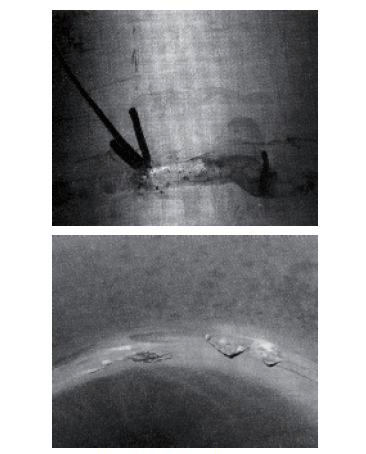
The food industry usually uses well water. The iron content in well water is quite high, which can activate iron-related bacteria and cause severe corrosion. One of the commonly used water treatment methods is to remove iron from well water in order to make food taste better and to avoid corrosion of packaging and processing equipment after cleaning and rinsing. Surface and well water also contain a number of types of microorganisms that are active in both aerobic and anaerobic conditions. Aerobic iron-related bacteria oxidize iron ions, while anaerobic iron-related bacteria reduce iron ions. These two reactions are ultimately classified as microbial corrosion (MIC). Other microorganisms may also be active in the water such as sulfuric acid-reducing bacteria, acid-producing bacteria. In the same biofilm, aerobic bacteria and (below) anaerobic bacteria may be active.

When using well water to treat canned vegetables (flush and cool after pasteurization). Where water does not flow for a long time, 316L manufactured pipes will leak within six months due to the high temperature of the water. The well water itself is cold (below 10 ° C), but can easily rise to 30 ° C in summer if it remains stationary in the pipe for a long period of time. Compared with Legionella, corrosive biofilms formed at higher activity rates at higher temperatures.


Pitting corrosion caused by chlorine disinfection and sterilization

Sodium hypochlorite is commonly used in cleaning and disinfecting stainless steel equipment. If the concentration of sodium hypochlorite is too high or the cleaning and disinfection time is too long, sodium hypochlorite will cause serious corrosion of stainless steel, especially when the temperature is above 25℃.


Stress corrosion fracture

There is a risk of chloride stress corrosion fracture at temperatures above 60 ° C. As cold deformation, tensile stress and chloride content increase, the risk increases. Compared with the cold-deformed pipe without annealing, the annealed pipe is insensitive to chloride stress corrosion fracture. The outside of straight-seam welded steel tubes used in the dairy industry is much more sensitive to chloride, due to tensile stresses in the section caused by bending during the manufacturing process. In other applications, tubular heat exchangers may be responsible for chloride stress corrosion cracking. Chloride stress cracks are more likely to develop on one side of the shell if the temperature exceeds 60 ° C. AISI 304 and 316 are sensitive to this problem and there is a risk of stress corrosion fracture when used in sugar evaporators where ferritic stainless steels can be used instead. Ferritic stainless steel AISI 441 has been widely used in the sugar industry, especially AISI 439. In practical use, the choice of piping is developed in 304 stainless steel and 439 stainless steel. Roestvrij staal 304 for shorter pipes and 439 for longer pipes.

304 stainless steel: The steel can be selected when the length of the pipe is less than 3 meters. The thermal expansion coefficient of 304 stainless steel is 1.8×10⁻²mm/m℃, which is much larger than that of carbon steel. When the vessel is at a high temperature, the thermal stress of the pipe is high. AISI 304 stainless steel pipes were annealed after straight seam welding in the factory.

439 Stainless Steel: ASTM439 is a titanium stabilized ferritic stainless steel (17% ~ 19%Cr) used for evaporators or coils up to 5 m in length. The risk of stress corrosion fracture is greater when the length of the pipe is more than 7 m, the concentration of chloride is high, and the degree of cold deformation is high. No stress corrosion fracture occurs in ferritic stainless steels such as AISI 439. In order to avoid crevice corrosion, if corrosion resistance and sanitary conditions allow, people usually use the heat exchanger with the shell is thick carbon steel plate and the inner wall is thin thickness AISI439 steel pipe. In this way, carbon steel can provide cathodic protection for the thin-walled stainless steel pipe, and can reduce the design and production cost and prolong the service life.