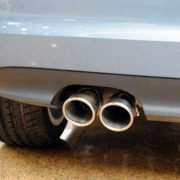
Ferrite stainless steel refers to the stainless steel with 11%~30%Cr and cubic crystal ferrite structure. Its high chromium content is the main element that affects its performance. The advantages of Ferritic stainless steel include low cost (without nickel), good magnetic conductivity, excellent stress corrosion resistance; Small working hardening tendency, easy to cold heading and cutting; High thermal conductivity (1.5 times that of Austenitic steel), low linear expansion coefficient (60% of Austenitic steel), but also obvious disadvantages such as poor plasticity and low strength in post-processing, easy welding cracking. Ferritic stainless steel is mainly used in oxidizing medium and nitride medium, suitable for heat exchange and heat circulation purposes, provides a wide range of applications.
Architecture and structure applications
Ferritic stainless steel is used as the roof and curtain wall of buildings because of its good resistance to atmospheric corrosion. High-chromium ferritic stainless steels used in coastal areas have been developed, and atmospheric corrosion-resistant stainless steels contain high levels of chromium and molybdenum and are supplemented with small amounts of niobium and titanium. The steel actually contains 22% chromium and 1.2% molybdenum. Sufficient chromium and molybdenum are necessary to improve the pitting resistance of stainless steel. The rusting area of type 304 and Type 316 austenitic stainless steel increased significantly with the increase of the number of periodic corrosion test cycles. On the contrary, the rust area of type 444 ferritic stainless steel increased slightly during the first 600 test cycles and was saturated after longer tests.
Automobile industry
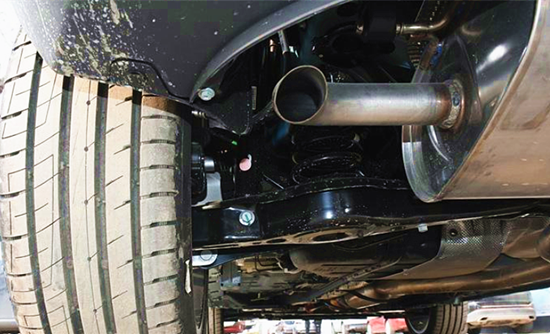
Type 409 or 410L stainless steel is used as a vehicle exhaust emission control system material such as front pipe, center pipe and muffler due to its excellent intergranular corrosion resistance, formability and heat resistance. In recent years, the design temperature of vehicle exhaust has increased because of the catalytic conversion rate and reduction of harmful gases such as NOx, SOx and hydrocarbon (HC) emissions. However, the increased temperature of chromium carbide will produce deposits on the silencer, i.e., temperatures of 400 ~ 500℃will lead to grain boundary corrosion. Because the weld area is particularly sensitive to intercrystalline corrosion, it is necessary to improve the corrosion resistance of Ferritic stainless steel containing 12% Cr. Therefore, a new Ferritic stainless steel was developed by adding niobium to steel containing 12% Cr. It is well known that reducing carbon and nitrogen content in steel is quite effective in preventing intercrystalline corrosion. In this way, the intercrystalline corrosion resistance can be further improved by adding niobium and titanium to steel. 409L stainless steel is used as the material for the exhaust manifold of automobiles, and the exhaust temperature is designed to be about 800℃. 430J1L stainless steel is recommended when the exhaust temperature is approximately 900℃.
Home appliances and kitchenware
400 series ferrite stainless steel has been widely accepted in the field of household appliances and kitchenware because of its unique aesthetic properties, corrosion resistance to cleaners and disinfectants, low thermal expansion coefficient and magnetism (suitable for electromagnetic cookers). Ferritic stainless steel greatly reduces weight compared with carbon steel. Ferritic stainless steels do not contain nickel and are far more price stable than Austenitic steels, making it easier for manufacturers to manage costs, purchase and sell. The use of ferritic stainless steel is so wide, each use of the required ferrite stainless steel performance is different. Typical applications include dishwashers, electric kettles, washing machines, dustbins, kitchen drains, ovens, gas appliances, coffee makers, microwave ovens, gas stoves, cold storage, restaurant trolleys.
Ferritic stainless steel is also used in transportation and other industrial applications. Because it has so many advantages over carbon steel and Austenitic stainless steel, it’s excellent formability like bending, cutting and drilling making it has a wide applications. Because there are many ferritic stainless steel grades, in order to obtain good corrosion resistance, good strength and lower price, you need to choose the right grade to meet customer requirements.
| 成績 |
Chemical composition |
Characterize |
Applications |
| 409L |
11.3Cr-0.17Ti
Low C and N |
The added Ti making it has good high-temperature corrosion resistance and strength. |
Automobile exhaust pipes, heat exchangers, containers and other products without heat treatment after welding. |
| 410L |
13Cr
Low C |
Reduce the C based on 410, has good processing, welding deformation resistance, high-temperature oxidation resistance. |
Parts for mechanical construction, engine exhaust pipes, boiler combustor, burner. |
| 430 |
16Cr |
Typical grades of ferrite steel, it has a low thermal expansion rate, excellent formability and oxidation resistance. |
Heat resistant appliances, burners, home appliances, tableware, kitchen sinks, external decorative materials, bolts, nuts, screen |
| 430J1L |
18-Cr0.5Cu-Nb
Low C&N |
Addition of Cu, Nb based on 430, good corrosion resistance, formability, weldability and high-temperature oxidation resistance. |
Building exterior decoration materials, auto parts, hot and cold water supply equipment. |
| 436L |
18Cr-1Mo-Ti、Nb、Zr
Low C&N |
Added Nb, Zr, excellent heat resistance and abrasion resistance, good processing and weldability. |
Washing machines, car exhausts, electronics, cooking POTS. |

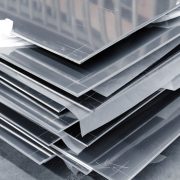
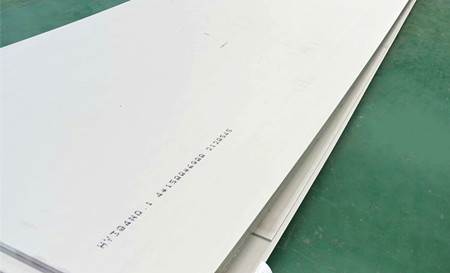 ステンレス鋼冷延板は表面品質が良く、酸化物層がなく、様々な表面処理が可能です。ステンレス鋼熱延板は通常、No 1処理で、酸化物層、グレーホワイト(ピクルス)、またはブラックブラウン(電気めっきされていない)があります。電気めっき後の冷延板の平滑度は、熱延板のものよりも高いです。