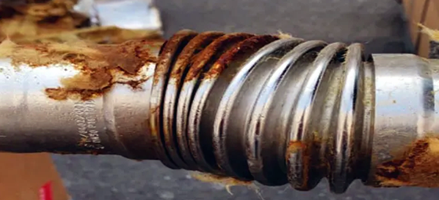

High strength stainless steel used in aircraft applications

We usually call tensile strength higher than 800MPa, yield strength higher than 500MPa stainless steel is high strength stainless steel, yield strength higher than 1380MPa stainless steel is called ultra high strength stainless steel. The development of the aviation industry has proved that the improvement of aircraft and aero-engine performance largely depends on metal materials. Due to the high strength, high toughness, high stress corrosion cracking resistance and good impact resistance of steel, some key structural components of aircraft such as landing gear, girder, high stress joints, fasteners and other high strength stainless steel are still used.

High strength stainless steel mainly includes Martensite precipitation hardening stainless steel and semi – Austenite precipitation hardening stainless steel. The strength of martensite precipitation hardening stainless steel is achieved by martensite transformation and precipitation hardening treatment, the advantage is high strength, at the same time due to low carbon, high chromium, high molybdenum and/or high copper, its corrosion resistance is generally not less than 18Cr-8Ni austenitic stainless steel; Free cutting, good welding ability, do not need local annealing after welding, heat treatment process is relatively simple. The main disadvantage is that even in annealed state, its structure is still low carbon martensite, so it is difficult to conduct deep deformation cold working. The typical steel grade is 17-4PH and PH13-8Mo, used for the manufacture of high strength corrosion resistant bearing components, such as engine bearing parts, fasteners, etc. working at 400℃. PH13-8Mo is widely used in aeronautical bearing corrosion resistant medium temperature structural parts.

The semi-Austenite precipitation hardened stainless steel can be machined, coldly deformed and welded in Austenite state, and then the martensite transformation and precipitation hardening can be controlled by adjusting aging to obtain different strengths and toughness coordination. The steel has good corrosion resistance and thermal strength, especially stress corrosion resistance, and is especially suitable for the manufacture of parts used below 540℃. The disadvantage is that the heat treatment process is complex, the heat treatment temperature control requirements are very accurate (±5℃); The work hardening tendency of steel is large, and many intermediate annealing times are often needed for deep deformation cold working. Typical grades are 17-7PH, PH15-7Mo, etc. This kind of steel is mainly used in the aviation industry to work at 400℃ below the corrosion bearing structure, such as all kinds of pipes, pipe joints, springs, fasteners, etc.


Aircraft landing gear

The materials used for the construction of aircraft landing gear are 30CrMnSiNi2A, 4340, 300M, Aermet100 and other aircraft landing gear and fasteners with higher requirements are mostly made of precipitation hardened stainless steel, such as 17-4PH for THE landing gear of F-15 aircraft, 15-5pH for the landing gear of B-767 aircraft. PH13-8mo steel has the potential to replace 17-4PH, 15-5PH, 17-7PH, PH15-7Mo and other steels due to its better stress corrosion resistance than precipitation hardened stainless steel of the same grade.

The plane bearing

German FAG company developed the nitrogen-added martensite stainless steel Cronidur30 (0.31%C-0.38%N-15% Cr-L %Mo), which is produced by PESR process of electroslag remelting under high pressure nitrogen atmosphere. It is a high temperature stainless steel with high nitrogen completely hardened, which is more resistant to corrosion than SUS440. It is not suitable for high DN value (D: bearing inner diameter/mm, N: shaft revolution/arin) because of its characteristics of full hardening type, the same Cronidur30 can satisfy the residual compressive stress and fracture toughness value of DN4 million at the same time through high-frequency quenching. But the tempering temperature is lower than 15O℃, it can not withstand the rise in bearing temperature caused by thermal shock after engine shutdown.

Aircraft bearing structural components

High-strength stainless steel in aircraft bearing structure is mainly 15-5PH, 17-4PH, PH13-8Mo, etc., including hatch cover latch, high-strength bolt, spring and other parts. Civil aircraft use such high-strength stainless steel for wing spars, such as 15-5PH steel for Boeing 737-600 wing spars; Type A340-300 wing SPAR PH13-8Mo steel. Ph13-8Mo is used for parts requiring high strength and toughness, especially for transverse performance, such as fuselage frames. More recently, Custom465 has been tested due to increased toughness and stress corrosion resistance. Custom465 was developed by Carpenter on the basis of Custom450 and Custom455 for the manufacture of aircraft flap guides, slat guides, transmissions, engine mounts, etc. The steel is currently included in the MMPDS-02, AMS5936 and ASTM A564 technical specifications. HSL180 high strength stainless steel (0.21C-12.5Cr-1.0Ni-15.5Co-2.0Mo) is used to manufacture the aircraft structure, which has the same strength of 1800MPa as low alloy steel such as 4340 and the same corrosion resistance and toughness as precipitation hardened stainless steel such as SUS630.
 

Why is duplex stainless steel used in nuclear power plant cooling water systems?

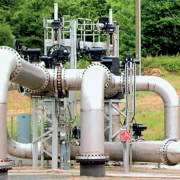
As a clean energy source, nuclear power is a major contributor to reducing carbon emissions worldwide. The cooling water piping system is the key to the safe operation of a nuclear power plant. It consists of thousands of feet of pipes of various diameters and sizes. It provides a reliable water supply for the cooling of plant equipment. The non-safety piping system must provide enough cooling water to cool the plant, while the safety system must provide enough cooling water to bring the reactor under control and safely shut it down in case of an emergency.

These pipe materials must be resistant to cooling water corrosion throughout the service life of the equipment. Depending on the plant’s location, the type of cooling water can range from relatively clean fresh water to contaminated seawater. Experience has shown that as systems age, a variety of corrosion problems and varying degrees of corrosion can occur, damaging the system and preventing it from providing the required cooling water.

Problems with cooling water piping often involve materials and their interactions with cooling water. Leakage from fouling (plugging) and corrosion of the system are the most common problems, including sediment accumulation, Marine biological attachment (biofouling), accumulation of corrosion products, and blockage of foreign matter. Leakage is usually caused by microbial corrosion (MIC), which is very corrosive corrosion caused by certain microorganisms in water. This form of corrosion occurs frequently in carbon steel and low-alloyed stainless steel.

Stainless steel has long been considered a viable option for building new water supply piping systems and for repairing or replacing existing carbon steel systems. The stainless steel commonly used in piping upgrade solutions is 304L, 316L, or 6%-Mo stainless steel. 316L and 6% Mo stainless steel yo big differences in performance and price. If the cooling medium is untreated water, which is highly corrosive and carries a risk of microbial corrosion, 304L and 316L are not suitable choices. As a result, nuclear plants have had to upgrade to 6%-Mo stainless steel or accept the high maintenance costs of carbon steel systems. Some nuclear power plants still use carbon steel lining pipes because of the lower initial cost. According to ASTM A240,Industrial water supply piping systems are often made of stainless steel below:

Calificaciones UNS C N Cr No Mo Cu
304L S30403 0.03 / 18.0-20.0 8.0-12.0 / /
316L S31603 0.03 / 16.0-18.0 10.0-14.0 2.0-3.0 /
6%Mo N08367 0.03 0.18-0.25 20.0-22.0 23.0-25.0 6.0-7.0 0.75
2205 S32205 0.03 0.14-0.2 22.0-23.0 4.5-6.5 3.0-3.5 /

The 2205 duplex stainless steel proved to be an excellent choice. Duke Power’s Catawba nuclear power plant in South Carolina is the first nuclear power plant to use 2205 (UNS S32205) dual-phase stainless steel in its systems. This grade contains approximately 3.2% molybdenum and has improved corrosion resistance and significantly better microbial corrosion resistance than 304L and 316L stainless steels.

The carbon steel lining piping on the overground portion of the piping system conveying the supply water to the cooling tower of the main condenser was replaced with 2205 duplex stainless steel piping.

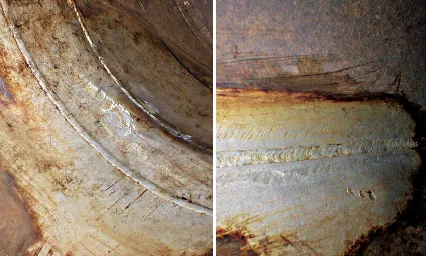
The new replacement 2205 duplex stainless steel pipe was installed in 2002. The pipe is 60 meters long, 76.2 cm and 91.4 cm in diameter, and the wall thickness of the pipe is 0.95 cm. The system specified in accordance with ASME B31.1 Power piping, which is one of the management codes for the safe use of power plant piping systems and is widely used in the world. After 500 days of service, the system was thoroughly inspected. No scaling or corrosion was found during the inspection. 2205 duplex stainless steel performed very well. 2205 stainless steel piping has been performing well for more than a decade since its installation. Based on this experience, Duke Power has used 2205 duplex stainless steel pipes in other parts of its system.

Internal of 2205 pipe after 500 days use.


Designers of nuclear power plant water systems now have one more option when it comes to choosing piping materials for corrosion-resistant cooling water. The successful application of 2205 duplex stainless steel can reduce maintenance costs, reduce downtime and ensure the operation safety of nuclear power plants.

What’s DSS?

DSS, the abbreviation of Duplex stainless steel, is a classification of stainless steels composed of two steel with the center one composed of either austenitize or ferric. These are also known as duplex steels since their chemical structure features two distinct phases, both of which are usually represented by martensite respectively. These steels are very useful in applications requiring extreme toughness since the two phases can be applied together at high temperatures and pressures. The duplex stainless steel is able to obtain sufficient hardness in both its austenitic and martensite phases due to the presence of significant amounts of residual austenite. The commonly used DSS grades are S31803, S32750 and SS32550.

The duplex stainless steel grades

Type UNS Suecia German France Japan
Low alloy UN23(SAF2304) SS232(SAF2304) W.Nr.1.4362 UR35N DP11
Medium alloy UNS S31500

UNS S31803

SS2376(3RE60)

SS2377(SAF2205)

W.Nr.1.4417

W.Nr.1.4462

UR45N DP1

DP8

High alloy UNS S32900

UNS S31260

SS2324(10RE51) W.Nr.1.4460

W.Nr.1.4501

  329J1

329J2L

Super duplex UNS S32750

UNS S32550

SS2328(SAF2507) W.Nr.1.4410

W.Nr.1.4507

UR47N+

UR52N+


Apart from the alloy itself, another important factor that contributes to its corrosion resistance is the nickel content. Nickel is commonly found in higher percentages in most alloys, which makes it an extremely useful component. In comparison to nickel, which is often used in high-performance alloys for its electrical conductivity and ability to form good-quality alloys, nickel is not as frequently used in making high-quality duplex stainless steel. One of the most interesting aspects of nickel alloys is its corrosion resistance ability, which makes it the best alternative for high-performance materials. When mixed with the steel, nickel produces a more stable alloy, which can increase the alloy’s wear-ability and mechanical strength.

Another significant property of this alloy is its high resistance to thermal expansion. It exhibits a high level of thermal expansion resistance despite the expansion resistance ability of austenitic stainless steels, due to its superior mechanical properties. This property gives it an excellent corrosion protection capability, especially during the tempering/stain removal cycle. The excellent corrosion resistance feature of duplex stainless steel enables it to stand up against a wide range of chemicals. It also has high levels of resistance towards oil, grease and other liquids with a high viscosity level.

Apart from the above features, duplex stainless steel is also popular because of its high strength and durability. Its high strength rating of up to 300Kg is made possible through its ability to make use of two-directional mandrel rolls. It is comprised of a hard carbon fiber rolled into strips that are interlaced on both sides and formed into a bar with a mandrel. A further feature that makes it an excellent alloy is that its surface is completely smooth with no ridges.

One of the most important factors that contribute to the durability of duplex stainless steels is their low rate of pitting corrosion resistance. These steels exhibit a low rate of formation of crystalline grains inside the hot alloy. They can be used to build both large and small structures in different industries. Due to their resistance to crystalline grains, they are highly valued by the construction industry.

The mechanical properties of duplex stainless steel offer a number of benefits that make them an excellent choice for a wide range of applications. These properties allow these steels to be used for a variety of applications including precision engineering component building, heat exchangers and sheet metal fabrication. Some other important properties of this type of alloy include high heat tolerance, low density and excellent corrosion resistance. They also offer a number of mechanical properties that contribute to the overall properties of the alloy. These include extreme hardness, toughness, chemical resistance and creep resistance.

Grados de acero inoxidable austenítico de níquel

Nickel is known to be an expensive alloying element and is essential in some applications where both stress corrosion resistance and austenite structure are required. For example, creep resistance is important in high temperature environments, where austenitic stainless steels are needed. Similar to the traditional austenitic stainless steels, the twin boundary is a significant feature of the nickel-rich austenitic stainless steels because of the lower stacking fault energy. Austenitic stainless steels are prone to stress corrosion cracking (SCC). However, the stress corrosion resistance is greatly improved when the nickel content exceeds 20%. The effect of nickel on the stress intensity of stress corrosion threshold (105℃, 22% NaCl aqueous solution) in Fe-Ni-Cr alloys containing 16%~21% chromium is studied. Nickel-rich austenitic stainless steel (NiASS) can be considered as a separate class of stainless steel. In fact, the stress corrosion resistance of biphasic and ferrite stainless steels is comparable to that of biphasic and ferrite stainless steels when the nickel content exceeds 30%. Several limited grades of nickel-rich austenitic stainless steels are listed in the table below. Super austenitic stainless steels 254SMO and 654SMO are designed specifically for the oil and gas industry. Typical applications are seawater cooling, pulp bleaching, and hydraulic and instrument piping equipment.


Ni-Austenitic stainless steels grades

Alloy C Sí Mn Cr No Mo W Co Cu Nb N
254SMo 0.01 0.8 1.0 20 18 6.1 0.7 0.2
654SMo 0.01 3.5 24 22 7.3 0.5 0.5
Sanicro 25 0.1 0.2 0.5 22.5 25 3.6 3.5 3.0 0.5 0.23
Sanicro 28 0.02 0.6 2.0 27 31 3.5 1.0
Alloy 800 0.07 0.6 0.6 20.5 30.5
353MA 0.05 1.6 1.5 25 35 0.16
Alloy 825 0.03 0.5 0.8 20 38.5 2.6
Alloy 625 0.03 0.5 0.5 21 Bal 8.5
Alloy 690 0.02 0.5 0.5 30 60
Alloy 600 0.05 0.4 0.8 16.5 Bal 0.5

SANICRO 25, a 22Cr-25Ni alloy, is designed for use in boilers up to 700 °C. It is a material suitable for superheaters and reheaters due to its good creep fracture strength and high temperature corrosion resistance,. In fact, the creep fracture strength of SANICRO 25 is superior to that of most austenitic stainless steels in the range of 600~750℃. In a highly corrosive acidic environment, The Sanicro 28 is usually the best choice. It is used in high-intensity drilling Wells with tubing, casing and acid gas lining, and other applications include heaters, pump systems, and pumps and containers in wet phosphoric acid plants and super phosphoric acid plants.

Alloy 800 is often used in the environment range from 550 to 1100℃, which requires excellent creep resistance, good high-temperature corrosion resistance and high-temperature strength of materials. These alloys are also used in the inlet and outlet ports of the production of ammonia, methanol and civil gas, as well as in the furnace tubes used in the production of vinyl chloride and ethylene. Other applications include heat exchange tubes and radiation tubes for fluidized combustion beds and parts of heat treatment furnaces, such as muffler tubes and protective sleeves for thermocouples.

The 25Cr-35Ni alloy 353Ma is designed for use in cracking furnaces and reforming tubes where synthetic gases are treated in environments where carburizing and nitrogen absorption are potentially problematic. Although there are other alternatives that contain more chromium, 353 MA is the best choice. One reason is that it contains the element Ce, which helps form a very stable surface oxide layer.

Alloy 690 contains 60 percent nickel and is used mainly in the piping of steam generators in nuclear power plants. The operating temperature is 365℃, at which the stress corrosion crack between grains is a potential problem. Under given service conditions, alloy 690 is almost free from corrosion, making it the preferred alloy.

It is interesting to note that nickel-rich Austenitic stainless steel 254SMO is also used for art. “God, Over the Rainbow” sculpture by Carl Milles was installed in 1995 on the south coast of the Nak Strand in Stockholm. The sculpture is about 23m high and is a famous scenic spot where a large number of sailors pass by every day. The surrounding seawater contains salt, chloride is very easy to cause surface corrosion, high strength super austenitic stainless steel 254SMO is very suitable for this environment.

Cuando los muelles de acero inoxidable se utilizan en los intercambiadores de calor de la carcasa

El intercambiador de calor de manguito es una mejora basada en un intercambiador de calor de manguito recto. El diseño de la cresta y la depresión de la onda heredan las ventajas del intercambiador de calor tubular, como la durabilidad y la seguridad, y al mismo tiempo superan los defectos como la mala capacidad de transferencia de calor y la fácil acumulación de depósitos. El principio consiste en mejorar el coeficiente total de transferencia de calor para reducir la superficie de transferencia de calor requerida, lo que puede ahorrar materiales y reducir el peso bajo el mismo efecto de transferencia de calor.

Porque el cuerpo del balde se procesa mediante prensado en frío tubo brillante Generalmente se cree que el cuerpo del émbolo se puede fortalecer después de su formación. Los experimentos de estabilidad a la presión externa muestran que la inestabilidad del tubo de intercambio térmico corrugado bajo presión externa se produce primero en la sección recta del tubo, y el tubo corrugado solo será inestable si la presión externa continúa aumentando. Esto indica que la estabilidad de la sección corrugada es mejor que la de la sección recta y que la presión crítica de la sección corrugada es mayor que la de la sección recta.

Los experimentos muestran que la ondulación de la deformación de flexión se produce en la cavidad de la onda, especialmente en la cavidad de onda local, generalmente no más de dos cavidades en el mismo momento; esto indica que la estabilidad de la cresta de la onda es mejor que la de la cavidad, pero a veces también puede producirse lo contrario: en el proceso de presión en frío, tanto la cavidad como el espesor de la pared de la sección recta son constantes; después de la presión en frío, el tubo en realidad se vuelve más corto.

La existencia de picos y valles de onda en el balón aumenta el efecto de la convección de intercambio de calor radial en los tubos, como se muestra en la figura siguiente:

La convección radial tiene una gran influencia en el coeficiente de transferencia de calor total, que es la razón fundamental de la baja precio y la ligera construcción del intercambiador de calor de placa de doble tubo. El área de intercambio de calor del tubo La superficie corporal del balde y el tubo recto son grandes a la misma longitud, pero este cambio es mucho menor que la contribución del cambio en el valor del coeficiente. Se puede observar claramente que la velocidad de flujo del tubo recto (luz) se reduce significativamente cuando se encuentra cerca de la pared del tubo.

El intercambiador de calor de carcasa con balones puede hacer que la velocidad y la dirección del fluido cambien constantemente para formar turbulencias, en comparación con un intercambiador de tubos rectos, lo que hace que el intercambio de calor con la pared no exista más. Se puede aumentar el coeficiente de transferencia de calor en un 2 a 3 veces, y la operación real incluso puede llegar a 5 veces, y el peso es ligero, razón por la cual el precio del intercambiador de calor de balones es más bajo que el del intercambiador de tubos rectos. De acuerdo con los cálculos y la experiencia práctica, el coeficiente de transferencia de calor total de un intercambiador de balones de 1 mm de espesor es 10% veces inferior al de un intercambiador de balones de 0,5 mm de espesor. Los datos de operación de cientos de intercambiadores de balones muestran que el espesor de la pared (casi todos de 0,5 mm) es la principal razón para que funcionen durante 10 a 14 años sin reparaciones ni daños importantes.

Además, el intercambiador de calor de balones puede resistir eficazmente el impacto de un martillo de agua. La carcasa del intercambiador de calor de placa de doble tubo está conectada a una junta de expansión. Si sufre el impacto de un martillo de agua, la junta de expansión se desajustará. Esto ocurre tanto con los intercambiadores de calor de balones como con los intercambiadores de calor de tubo recto, y la deformación de la carcasa puede hacer que el tubo se torce. Esto se debe a que los balones tienen más margen de expansión, el margen elástico de la deformación es grande, es decir, la capacidad de resistir la inestabilidad es fuerte en este caso. Pero en cualquier caso, en el proceso de instalación para evitar la aparición de un martillo de agua, se puede tomar medidas como el uso de una válvula de asiento angular, un interruptor de retardo y otras medidas.

Ventajas del intercambiador de calor de carcasa de acero inoxidable

  • Alta eficiencia de transferencia de calor

El diseño especial de la cresta y la depresión del muelle hace que el flujo de fluido se produzca debido a la mutación continua de la sección interior y exterior del tubo, formando así una fuerte turbulencia. Incluso en el caso de una velocidad de flujo muy baja, el fluido puede generar una fuerte perturbación dentro y fuera del tubo, lo que mejora considerablemente el coeficiente de transferencia de calor del tubo de intercambio de calor. El coeficiente de transferencia de calor es 2 a 3 veces mayor que el de los intercambiadores de calor de tubo tradicionales.

  • Sin escalado ni bloqueo

El medio dentro y fuera del balde siempre se encuentra en un estado muy turbulento, lo que hace que las partículas sólidas en el medio sean difíciles de depositar como escamas; Por otra parte, debido a la diferencia de temperatura del medio, se producirá una deformación por expansión axial; la curvatura cambiará con frecuencia; el tubo de intercambio de suciedad y calor producirá una gran fuerza de tracción; incluso si la escama se detiene, se desprenderá automáticamente, de modo que el intercambiador de calor siempre mantendrá un rendimiento de transferencia de calor duradero y mejor.

  • Compensación automática

La estructura y la forma especiales de los muelles pueden reducir eficazmente la tensión térmica en condiciones de calentamiento sin la necesidad de añadir juntas de expansión, simplificando así la estructura de los productos y mejorando su fiabilidad.

  • Vida útil larga

La capacidad de expansión axial se mejora, lo que reduce eficazmente la tensión de la diferencia de temperatura y puede adaptarse a las grandes variaciones de temperatura y presión, por lo que no se producirá ninguna fuga causada por la rotura de la boca del tubo. La conexión entre la placa de barrera y el balón prolonga la vida útil del intercambiador de calor.


¿Cómo afecta el nitrógeno al acero inoxidable 316LN?

316LN es la versión basada en la adición de nitrógeno Acero 316L (0,06% ~ 0,08%), de manera que tenga las mismas características que el acero inoxidable 316L. Se ha utilizado en la fabricación de componentes estructurales de alta temperatura en reactores de enriquecimiento rápido (FBRS). La reducción del contenido de carbono reduce considerablemente la susceptibilidad a la fisuración por corrosión debido a la soldadura en entornos corrosivos posteriores. La interacción entre el escalamiento, la fatiga de bajo ciclo y el escalamiento son las consideraciones más importantes para los componentes de los reactores de enriquecimiento rápido. La resistencia a altas temperaturas de estos componentes es muy superior a la del acero inoxidable 316L. Acero inoxidable 316L Se puede mejorar el acero inoxidable 316 mediante la aleación 0.06% de ~0,08% N. En este artículo se analizará la influencia del contenido de nitrógeno superior a 0,08% en las propiedades mecánicas del acero inoxidable 316L a alta temperatura.


Composición química del acero inoxidable 316LN

Horno N C Mn Cr Mo No Sí S P Fe
Normas 0.06-0.22 0.02-0.03 1.6-2.0 17-18 2.3-2.5 12.0-12.5 ≤0.5 ≤0.01 ≤0.03 –
1 0.07 0.027 1,7 17.53 2.49 12.2 0.22 0.0055 0.013 –
2 0.11 0.033 1.78 17.63 2.51 12.27 0.21 0.0055 0.015 –
3 0.14 0.025 1.74 17.57 2.53 12.15 0.20 0.0041 0.017 –
4 0.22 0.028 1.70 17.57 2.54 12.36 0.20 0.0055 0.018 –

Estos cuatro lotes de acero inoxidable 316LN con un contenido de nitrógeno de 0,07%, 0,11%, 0,14% y 0,22, y un contenido de carbono de 0,03%%, fueron sometidos a pruebas para estudiar los efectos del nitrógeno en las propiedades de tracción, fluencia, fatiga de bajo ciclo y fluencia-fatiga del acero inoxidable 316LN. El objetivo de este experimento es encontrar el contenido de nitrógeno óptimo para obtener la mejor combinación de propiedades de tracción, fluencia y fatiga de bajo ciclo. Los resultados experimentales muestran que el nitrógeno puede mejorar la resistencia a la tracción, la fluencia y la fatiga del acero inoxidable austenítico. Las razones para este aumento de la resistencia incluyen la mejora de la solución, la reducción de la energía de fallo de empalme (SFE), el endurecimiento por precipitación, la formación de compuestos (solutos intersticiales), la segregación atómica y el endurecimiento ordenado. Debido a sus diferentes propiedades de intercambio de electrones, el nitrógeno disuelto en el acero inoxidable austenítico tiene un volumen de expansión mayor que el del carbono.

Además de la interacción elástica entre el nitrógeno y las dislocaciones, la interacción electrostática intersticial de las dislocaciones también influye en la resistencia. Los núcleos de dislocación se caracterizan por la ausencia de electrones libres, lo que significa que tienen una carga positiva. Los átomos de nitrógeno en los aceros inoxidables austeníticos están cargados negativamente debido a la posición de los electrones libres cerca de los átomos de nitrógeno y a la interacción electrostática entre las dislocaciones y los átomos de nitrógeno.

La energía de enlace efectiva entre el átomo de nitrógeno y la dislocación aumenta con el aumento del contenido de nitrógeno en el acero austenítico, pero la correlación no es evidente para el carbono. En los aceros austeníticos, el nitrógeno intersticial interactúa con los elementos sustituyentes y tiende a formar composiciones atómicas de sustituyentes intersticiales. El compuesto se une fácilmente a los elementos situados a la izquierda del hierro en la tabla periódica, como Mn, Cr, Ti y V. Existe una fuerte correlación entre las propiedades de la unión interatómica (es decir, la orientación versus la no orientación) y la proximidad de los átomos adyacentes en un sistema de aleación multicomponente. La unión entre los átomos metálicos facilita la ordenación de corto alcance, que es la unión de átomos de elementos diferentes. La polarización interatómica facilita el intercambio de electrones covalentes, la unión entre los átomos del mismo elemento. El carbono promueve la agregación de átomos de sustitución en la solución sólida basada en hierro, mientras que el nitrógeno facilita la ordenación a corto alcance.

En general, la resistencia a la tracción (YS) y la resistencia a la tracción final (UTS) de 316L El acero inoxidable se mejora significativamente mediante la aleación de 0,07% ~ 0,22% de nitrógeno. Se observó un aumento de la resistencia en todos los ensayos en el intervalo de temperatura de 300 ~ 1123 K. Se observó un envejecimiento dinámico por deformación dentro de un rango de temperatura limitado. El rango de temperatura del envejecimiento dinámico por deformación (DSA) disminuye con el aumento del contenido de nitrógeno.