
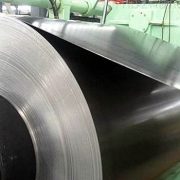
Dvouvrstvé nerezové oceli 304/304L, 316/316L
Austenitic stainless steels are the most widely used stainless steels, accounting for about 75% of the total stainless steel consumption. The rapid development of the chemical industry and petrochemical industry has put forward higher requirements for the corrosion resistance and strength of stainless steel. For example, the 304/304L dual grades stainless steel means it has lower carbon content, that’s less than 0.03%, meeting the 304L grades, while its yield and tensile strength are higher than the lower limit of 304 stainless steel, the stainless steel can be defined as 304/304L dual grades stainless steel, that is, its chemical composition meets that of 304L, and mechanical properties to meet the requirements of 304 stainless steel. Similarly, a stainless steel sheet can be 304/304H dual certified because it has enough carbon content to meet the 304H (minimum 0.040%) requirement and also meets the 304H grain size and strength requirements, there are 316/316L and other dual grades of stainless steel.
The most important is the difference in carbon and the resulting strength. Carbon is an effective austenitic stabilizing element and can be considered as an impurity or an alloying element that improves the strength of stainless steel, especially at high temperatures. The carbon content in most austenitic stainless steels is below 0.02% ~ 0.04%. In order to have good corrosion resistance after welding, the carbon content of low carbon grade stainless steel is controlled below 0.030%. In order to improve the high-temperature strength, the high carbon or “H” grade carbon content is maintained at 0.04% or slightly higher.
The smaller carbon atoms in the face-centered cubic structure are in the lattice gaps between the larger Cr, Ni and Mo atoms, which limit the dislocation motion, hinder the ductility deformation and strengthen the stainless steel. Under the condition of rising temperature such as in the welding process, carbon has a strong tendency to precipitate chromium in stainless steel matrix with chrome-rich carbide, and the second phase tends to precipitate at grain boundary rather than grain center, so chromium carbide is easy to form at the grain boundary.
Chromium is a necessary element for enhancing the corrosion resistance of stainless steel, but chromium carbide is removed from the stainless steel matrix, so the corrosion resistance here is worse than the rest of the stainless steel matrix. Increasing the carbon content can extend the temperature range, so that the time of sensitization or corrosion resistance loss is shortened, reducing the carbon content can delay or completely avoid the formation of carbide in welding. Low carbon grades such as 304L and 316L carbon content less than 0.030%, most of the higher alloyed Austenite grades such as 6%Mo stainless steel carbon content is less than 0.020%. To compensate for the decrease in strength due to the decrease in carbon content, another interstitial element nitrogen is sometimes added to strengthen the stainless steel.
Dual-grade stainless steel has both the high strength of conventional stainless steel and the corrosion resistance of ultra-low carbon stainless steel. It can solve the problem of weak welding joint performance of most Austenitic stainless steel, has been widely used in low-temperature LNG receiving station equipment and large diameter pipeline. The price of dual-grade stainless steel is basically the same as ultra-low carbon stainless steel. Now several Chinese steel mills can supply the grades for mature market, any interested, please contact us.