Thép không gỉ 304 có phải là loại thép y tế không?

So với thép không gỉ công nghiệp, thép không gỉ y tế có yêu cầu về thành phần hóa học nghiêm ngặt hơn vì các tính chất chính của nó là giảm sự hòa tan của các ion kim loại và tránh sự ăn mòn cục bộ như ăn mòn liên tinh thể và ăn mòn do ứng suất. Hàm lượng các nguyên tố hợp kim như Ni và Cr cao hơn so với thép không gĩ thông thường (thường là giới hạn trên của thép không gĩ thông thường), trong khi hàm lượng các nguyên tố tạp như S và P thấp hơn so với thép không gĩ thông thường. Trong nhiều năm qua, thép không gĩ y tế đã được coi là vật liệu ưu tiên cho các ứng dụng phẫu thuật, đặc biệt là trong các tình huống chăm sóc tích cực và phẫu thuật. Các nguyên tố Ni và Cr có tính chống ăn mòn cao hơn, cho phép sử dụng chúng trong các mục đích đòi hỏi các thiết bị chỉnh hình, miệng và các thiết bị y tế. Thép không gĩ, một loại hợp kim Ni-Cr, mang lại nhiều lợi ích khi so sánh với loại thép không gĩ thông thường. Loại hợp kim được sử dụng trong thép không gỉ y tế dùng cho dụng cụ phẫu thuật là yếu tố quyết định khả năng chống ăn mòn của dụng cụ và đảm bảo không có các lỗi bên trong cũng như khe hở.

Nhiều loại thép không gỉ có thể được sử dụng cho mục đích y tế, trong đó phổ biến nhất là Austenitic 316 (AISI 316L), còn được gọi là “thép phẫu thuật”. AISI 301 là loại kim loại được sử dụng phổ biến nhất để sản xuất các loại lò xo y tế. Các loại thép không gỉ khác được sử dụng phổ biến cho mục đích y tế bao gồm 420, 440 và 17-4PH. Các loại thép không gỉ Martensitic này không có khả năng chống ăn mòn như các loại Austenitic 316, nhưng lại có độ cứng cao hơn. Do đó, các nhà máy sản xuất thép không gỉ Martensitic được sử dụng để chế tạo các dụng cụ cắt hoặc các thiết bị không phải cấy ghép khác. Chúng có khả năng đàn hồi khi gia công ở nhiệt độ lạnh nhưng lại mất đi khả năng chống ăn mòn. Thép không gỉ y tế đã đạt được mức độ phổ biến rộng rãi nhờ độ bền vượt trội, khả năng xử lý nhiệt, chức năng phẫu thuật và khả năng chống ăn mòn. Nó được sử dụng trong nhiều ứng dụng khác nhau bao gồm khung ghế bệnh viện, nôi trẻ, tấm cuối, găng tay phẫu thuật, cột IV và keo dán. Do tính chịu lực cực cao và nhu cầu sử dụng trong các ứng dụng đặc biệt, nên các nhà sản xuất sử dụng loại thép không gỉ này phải đặc biệt chú ý đến việc kiểm soát chất lượng và quy cách sản xuất. Các loại thép không gỉ y tế phổ biến nhất được sử dụng trong sản xuất các dụng cụ phẫu thuật là: 304 Tuy nhiên, các hợp kim tốt nhất có hàm lượng carbon thấp hơn và thêm Mo như thép 316L và 317L.

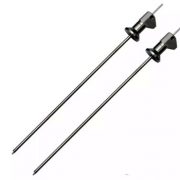
Thép không gỉ 304, cụ thể là thép không gỉ 18-8, dòng thép không gỉ 304 còn bao gồm carbon thấp hơn. 304LĐối với mục đích chống nóng, có câu hỏi rằng liệu thép không gỉ 304 có thể được sử dụng cho mục đích y tế không? Có một thực tế là vào năm 1926%, thép không gỉ CR-8% Ni (AISI 304) lần đầu tiên được sử dụng như một vật liệu cấy ghép chỉnh hình và sau đó trong nha khoa. Chỉ đến năm 1952, thép không gỉ AISI 316 có chứa 2%Mo mới được sử dụng trong phòng khám và dần dần thay thế thép không gỉ 304. Để giải quyết vấn đề ăn mòn giữa các hạt của thép không gỉ, vào những năm 1960, loại thép không gỉ siêu carbon AISI 316L và AISI 317L có độ nhạy cảm với carbon thấp, khả năng tương thích sinh học tốt, tính chất cơ học và khả năng chống ăn mòn tốt hơn đã bắt đầu được sử dụng trong lĩnh vực y tế. Tuy nhiên, Ni là một yếu tố gây dị ứng tiềm ẩn đối với cơ thể người. Trong những năm gần đây, nhiều quốc gia đã hạn chế hàm lượng Ni trong các vật dụng thiết yếu hàng ngày và vật liệu y tế; hàm lượng Ni tối đa được phép cũng ngày càng thấp hơn. Tiêu chuẩn 94/27/EC của Nghị viện châu Âu ban hành vào năm 1994 yêu cầu hàm lượng Ni trong các vật liệu được cấy vào cơ thể người (vật liệu cấy ghép, răng giả chỉnh hình, v.v.) không được vượt quá 0,105%; đối với các vật liệu kim loại (vật trang sức, đồng hồ, nhẫn, vòng đeo tay, v.v.) tiếp xúc với da người trong thời gian dài, hàm lượng Ni tối đa không được vượt quá 0,15Lg/cm2 mỗi tuần. Ngày nay, 304 vẫn được sử dụng trong sản xuất các dụng cụ y tế thông thường như ống tiêm, kéo y tế, kẹp tay, và các loại dao mổ.
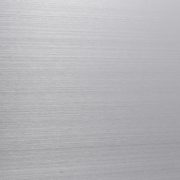
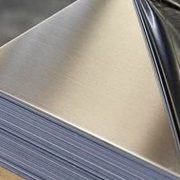
 

Sự khác biệt giữa tấm thép không gỉ 2B và 2D

Stainless steel has become a widely used metal material for its excellent corrosion resistance, good mechanical properties and machining properties. Different processing methods and cold rolling after processing, stainless steel surface can have different levels of surface finish, grain and color. The surface processing of cold-rolled stainless steel plate has 2D, 2B, No.3, No.4, 240, 320, No.7, No.8, HL, BA, TR hard state, embossed surface grade. It can be further applied to electroplating, electropolishing, undirected hairline, etching, shot peening, coloring, coating and other deep-processing surfaces based on the cold-rolled stainless steel. Stainless steel cold rolled sheet is widely used in construction, decoration, home appliances, rail transportation, automobile, elevator, container, solar energy, precision electronics and other fields, including construction, decoration, elevator, container and other products directly use 2D, 2B, BA, grinding and another surface after cold rolling processing, and household appliances, rail transportation, automobiles, solar energy, precision electronics and other industries often use direct processing of cold-rolled stainless steel plate or shallow grinding and polishing stainless steel plate.


No.2D stainless steel sheet

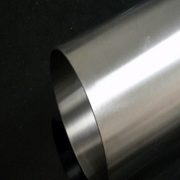
No.2D is a kind of cold-rolled dull surface without an oxide scale. After cold rolling, it only goes through heat treatment and pickling. The brightness of its surface is determined by the degree of deformation of cold rolling and the finish of the work roll surface of the finished product pass, and it is also related to the pickling method of removing oxidation. No.2D surface also includes a rough surface roller for light leveling on the above basis. The rough surface roll is a special process to coat the surface of the roll, that is, a number of phase change hard particles are formed on the surface of the roll, and the uneven surface structure is realized on the surface of the steel plate during the leveling process. This kind of surface is suitable for the deep drawing forming process, can improve the friction and contact condition between steel plate and die, is conducive to material flow, improve the forming quality of the workpiece. No.2D surface stainless steel is widely used in building curtain walls, especially those parts of the building that do not require reflection. The roughness Ra of the surface measured by the instrument is about 0.4 ~ 1.0μm.


No.2B stainless steel sheet

The most difference between No. 2B and the 2D surface is that No 2B have a smooth process of leveling roll, it looks more light compared with the 2D surface, the instrument measuring the surface roughness of the Ra value is 0.1 ~ 0.5 mu m, is the most common process and have the most extensive application, suitable for the chemical industry, papermaking, oil, medical and other general purposes, also used for building wall.

Appearance


Features Colour Process Applications
NO.2D The surface is even and matte Shiny silver white


Hot rolling + annealing shot peening pickling + cold rolling + annealing pickling 2D is suitable for non-strict surface requirements, general purposes, deep stamping processing, such as automotive components, water pipes, etc
NO.2B More gloss than NO.2D Silvery white with better gloss and finish than 2D surfaces Hot rolling + annealing peening pickling + cold rolling + annealing pickling + quenching and tempering rolling.NO.2D treatment is followed by a final mild cold rolling with a polishing roller, which is the most commonly used surface finish General applications such as tableware, building materials, etc.


Lớp thép không gỉ gương 8K là gì?

Do có khả năng chống ăn mòn độc đáo, hiệu suất gia công tốt và bề mặt đẹp mắt, thép không gỉ đã được ứng dụng rộng rãi trong nhiều lĩnh vực như hàng không vũ trụ, năng lượng, quân sự, xây dựng, hóa dầu… Chải bóng là một phần quan trọng của thép không gỉ. Thép tấm Trong ngành công nghiệp trang trí, mục đích của nó là để có được tấm gương cuối cùng (8K) bằng thép không gỉ. Bề mặt 8K (số 8) là bề mặt được đánh bóng gương, có độ phản xạ cao, hình ảnh phản chiếu rõ ràng, thường có độ phân giải và tỷ lệ lỗi bề mặt để đo chất lượng của tấm gương bằng thép không gỉ; đánh giá trực quan chung: cấp độ 1 là bề mặt sáng như gương, có thể nhìn thấy rõ nét các đặc điểm của người và lông mày; cấp độ 2 là bề mặt sáng, có thể nhìn thấy rõ nét các đặc điểm của người và lông mày, nhưng phần lông mày không rõ ràng; cấp độ 3 là độ sáng bề mặt tốt, có thể nhìn thấy rõ nét các đặc điểm khuôn mặt của người và đường viền, nhưng phần lông mày bị mờ; cấp độ 4 là bề mặt bóng, nhưng không thể nhìn thấy rõ nét các đặc điểm khuôn mặt của người; cấp độ 5 là bề mặt màu xám và sờn.


Bảng gương bằng thép không gỉ được hoàn thiện bằng quá trình đánh bóng gương từ bề mặt ban đầu của tấm thép không gỉ BA, 2B hoặc No.1 để trở nên tương tự như bề mặt gương (tên khoa học là gương 8K hoặc No.8). Bảng gương bằng thép không gỉ là chất nền để chế tạo các tấm màu hoặc khắc sau này. Chủ yếu được sử dụng trong tất cả các loại sản phẩm trang trí hoặc quang học bằng kim loại. Độ chống ăn mòn của thép không gỉ phụ thuộc vào thành phần hợp kim của nó (crom, niken, titan, silic, mangan, v.v.) và cấu trúc bên trong, trong đó đóng vai trò quyết định đối với nguyên tố crom; nó có thể tạo thành một lớp bảo vệ trên bề mặt thép, việc cách ly kim loại với thế giới bên ngoài không tạo ra quá trình oxy hóa, tăng cường khả năng chống ăn mòn. Thép tấmCon số “8” trong 8K đề cập đến tỷ lệ hàm lượng hợp kim, và chữ “K” đề cập đến mức độ phản xạ đạt được sau khi đánh bóng (K là mức độ phản xạ gương). Ống kính 8K là loại kính làm từ hợp kim crom-niken.


Thép không gỉ gương thông thường còn có các loại 6K, 10K, 12K, v.v., số càng lớn thì tấm gương càng mịn. 6K là loại tấm gương được mài và đánh bóng thô, 10K là loại tấm gương được mài và đánh bóng mịn hơn, tương đương với gương thông thường; và 12K là loại tấm gương được mài và đánh bóng siêu mịn, có thể đáp ứng các mục đích quang học. Độ sáng càng cao thì độ phản xạ càng lớn và các khuyết tật bề mặt càng ít. Trong một số sản phẩm không đạt tiêu chuẩn nghiêm ngặt, chúng có thể được gọi chung là 8K. Các kỹ thuật đánh bóng chính được sử dụng để sản xuất thép không gỉ gương chất lượng cao bao gồm đánh bóng điện phân, đánh bóng hóa học và đánh bóng cơ học.


Làm bóng bằng điện phân

Việc đánh bóng bằng điện phân là việc ngâm sản phẩm trong dung dịch điện phân để tạo ra lớp thép không gỉ chất lượng cao trên bề mặt sản phẩm, trong quá trình này thép không gỉ đóng vai trò là chất điện cực, với sự trợ giúp của dòng điện trực tiếp, dòng điện sẽ chảy qua dung dịch điện phân đến một kim loại, bề mặt của chất điện cực sẽ tạo thành một lớp màng nhầy có điện trở cao, lớp màng nhầy dày đặc này ở các bề mặt cong và lõm khác nhau của các sản phẩm thép không gĩ có độ dày khác nhau, dẫn đến mật độ dòng điện trên bề mặt của các chất điện cực không đồng đều, dòng điện sẽ chảy nhanh trong vùng lõm, dòng điện ở vùng lõm sẽ chảy chậm, nhằm giảm độ nhám bề mặt của thép không gĩ, cải thiện độ bóng và độ sáng, đồng thời tạo thành một lớp bảo vệ không có khuyết tật. Dung dịch đánh bóng bằng điện phân phải chứa đủ chất oxy hóa và không có ion hoạt động nào có thể phá hủy lớp bảo vệ này.


Chất tẩy hóa học

Nguyên lý đánh bóng hóa học và đánh bóng điện phân tương tự nhau, thép không gỉ được đặt trong một dung dịch có thành phần nhất định, bề mặt của phần vi hình trên có tốc độ giải thể cao hơn so với phần vi lõm trên, và bề mặt thép không gỉ trở nên mịn màng, trơn tru. Có thể thấy rằng nguyên lý của phương pháp đánh bóng hóa học và phương pháp đánh bóng điện phân về cơ bản là giống nhau, nhưng phương pháp đánh bóng điện phân trong quá trình bổ sung điện phân dưới tác động cưỡng bức để đẩy nhanh quá trình giải thể của phần vi hình thì hoàn toàn phụ thuộc vào khả năng tự ăn mòn của dung dịch để làm mịn bề mặt thép không gỉ.


Làm bóng bằng máy

Việc đánh bóng cơ học liên quan đến việc sử dụng bánh xe đánh bóng quay với chất đánh bóng để loại bỏ cơ học bề mặt không đồng đều của thép không gỉ và đạt được kết quả xử lý bề mặt sáng bóng. Bánh xe đánh bóng được sử dụng để phân biệt mức độ hạt theo các loại vải được tạo ra từ nó, và các cấu trúc chính bao gồm kiểu khâu, kiểu gấp và các kiểu khác. Chất đánh bóng theo nhu cầu đánh bóng của nó, dựa trên khả năng oxy hóa crom và chất kết dính bao gồm chất đánh bóng xanh lá cây, cũng có thể là chất đánh bóng dạng nhám, chất kết dính dạng hữu cơ, hoặc chất phụ gia bao gồm sáp đánh bóng. Việc đánh bóng cơ học thường được chia thành hai loại: đánh bóng thô và đánh bóng mịn, hoặc là cùng một lúc đánh bóng với chất đánh bóng khác nhau và bánh xe đánh bóng, dưới tác động của sự quay cơ học, hình ảnh phản xạ cuối cùng của thép không gỉ gương trong suốt. Khi người dùng chọn thép không gỉ BA để thực hiện quá trình đánh bóng gương, không cần phải tiến hành quá trình đánh bóng thô.

Loại ống thép không gỉ dùng trong lĩnh vực dầu khí

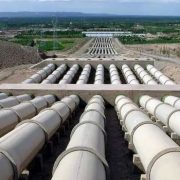
Generally speaking, some low alloy steels can meet the requirements for corrosive oil and gas environment containing H2S, but the corrosive environment containing CO2 or H2S, CO2, Cl – coexistence where the Martensitic stainless steel need, duplex stainless steel or even nickel-based alloy. The 1988 version of API 5CT added corrosion-resistant tubing steel grades, specified the C75 steel grade with Martensitic stainless steel grades of 9Cr and 13Cr


High strength Martensitic stainless steel pipe for oil well

 In the wet environment with CO2 as the main gas, local corrosion damage of oil well pipe often occurs, such as pitting corrosion and intergranular corrosion, etc. If Cl – exists, the local corrosion will be intensified. It is generally considered that the corrosion can be ignored when the Carbon dioxide pressure is lower than 0.021MPa, and the corrosion will occur when the carbon dioxide pressure reaches 0.021MPa. When the pCO2 is higher than 0.021MPa, appropriate anti-corrosion measures should be taken. Generally, there is no damage caused by pitting when the co2 fraction is lower than 0.05Mpa.

It has been proved that the effect of using a sustained-release agent to prevent CO2 corrosion is limited, and the effect of using high chromium steel such as 9%-13%Cr steel is better. Since the 1970s, some natural gas Wells have used 9%Cr and 13Cr% stainless steel tubing to prevent CO2 corrosion. The American Petroleum Institute (API) recommends 9Cr and 13Cr martensitic stainless steel tubes (API L80-9Cr and L80-13Cr) for standardized use. 13Cr steel has better resistance to CO2 corrosion, while 9Cr-1Mo steel has better resistance to H2S stress corrosion cracking. In principle, neither steel is suitable if H2S is present in a CO2 atmosphere. When H2S exists in CO2 oil well, the SSCC resistance of the oil well pipe should be improved as far as possible, and the quenching and tempering heat treatment should be adopted to obtain uniform martensite and the hardness should be controlled below HRC22 as far as possible.

The stainless steel grade of oil well

Độ cao C Mo Cr Ni Cu
9Cr ≤0.15 0.9-1.1 8.0-10.0 ≤0.5 /
13Cr 0.15-0.22 / 12.0-14.0 ≤0.5 /
SUP9Cr ≤0.03 1.5-2.5 12.0-13.5 4.0-6.0 /
SUP13Cr ≤0.03 1.5-2.5 14.0-16.0 5.0-7.0 0.5-1.5

However, API 13Cr steel tubes have significantly reduced CO2 resistance and shortened service life when the oil well temperature reaches 150℃ or higher. In order to improve the CORROSION resistance of API 13Cr steel tubes to CO2 and SSC (sulfide stress cracking), low carbon SUP13Cr steel tubes with Ni and Mo added were developed. The steel tube can be used in wet environments with high temperatures, high CO2 concentrations and a small amount of hydrogen sulfide. The structure of these tubes is tempered martensite and less than 5% ferrite. The corrosion resistance to CO2 can be improved by reducing carbon or adding Cr and Ni, and the corrosion resistance to pitting can be improved by adding Mo. Compared with API 13Cr steel pipe, the corrosion resistance to CO2 and SSC is greatly improved. For example, in the same corrosive environment, the corrosion rate of API 13Cr steel pipe is more than 1mm/a, while the corrosion rate of SUP13Cr steel pipe is reduced to 0.125mm/a. With the development of deep and ultra-deep wells, the oil well temperature continues to increase. If the oil well temperature is further increased to more than 180℃, the corrosion resistance of SUP13Cr oil well pipe also begins to decline, which cannot meet the requirements of long-term use. According to the traditional material selection principle, duplex stainless steel or Nickel base alloy should be selected.


Martensitic stainless steel pipe for oil pipeline

The pipeline pipe conveying corrosive oil and gas requires the same corrosion-resistant material as the oil well pipe. Previously, the pipe was usually injected with sustained-release agents or corrosion-resistant materials such as dual-phase stainless steel. The former is unstable in anticorrosion effect at high temperature and may cause environmental pollution. Although dual-phase stainless steel has good corrosion resistance, the cost is high, and welding heat input is difficult to control, welding preheating and post-welding heat treatment to the construction of the site brings difficulties. The martensitic 11Cr pipe for CO2 environment and the martensitic 12Cr pipe for CO2+ trace H2S environment are put into use. The column has good weldability, without preheating and post-weld heat treatment, its mechanical properties can be equal to X80 steel grade, and its corrosion resistance is better than that of the pipeline with retarded release agent or dual-phase stainless steel pipe.

Stainless steel pipe for pipeline

Độ cao C Cr Ni Mo
11Cr ≤0.03 11 1.5 /
12Cr ≤0.03 12 5.0 2.0


Duplex stainless steel pipe for the petroleum industry

The martensitic stainless steel SUP 15Cr cannot meet the corrosion resistance requirements when the temperature of the oil (gas) well containing CO2 exceeds 200℃, and duplex stainless steel with good resistance to CO2 and Cl — stress corrosion cracks is required. Currently, 22Cr and 25Cr duplex (Austenitic and Ferrite) stainless steels are suitable for CO2 Wells above 200℃, while manufacturers adjust Cr and Ni content to adjust corrosion resistance. Duplex steel is composed of ferrite plus the Austenitic phase. Besides Cr and Ni, Mo and N can be added to improve the corrosion resistance. In addition to the duplex stainless steel has good high-temperature corrosion resistance, compared with martensite stainless steel, it has better H2S stress corrosion cracking resistance, at room temperature NACE TM 0177-A test, in A solution, 85%SMYS loading environment, martensite stainless steel can only pass the 10kPa H2S partial pressure test, Duplex stainless steel 25Cr can pass 100kPa H2S partial pressure test.


In general, in the coexistence of CO2 and H2S environments, or H2S partial pressure does not reach critical but Cl- is very high, 13Cr steel (including super 13Cr steel) can not meet the requirements, 22Cr duplex stainless steel (ASF 2205) or super duplex stainless steel 25Cr, Even high Ni, Cr stainless steel and Ni-based and Fe-Ni based alloys such as G3, alloy 825 containing more than 20% Cr, Ni30% are required.

Nguyên tố hợp kim có ảnh hưởng như thế nào đến thép không gỉ?

Chemical composition has a great influence on the microstructure, mechanical properties, physical properties and corrosion resistance of steel. Chromium, molybdenum, nickel and other alloying elements can replace the vertex Angle of the austenite lattice and the center of the six sides of the cube iron, carbon and nitrogen are located in the gap between the lattice atoms (gap position) due to small volume, produce huge strain in the lattice, so become effective hardening elements. Different alloying elements have different effects on the properties of steel, sometimes beneficial and sometimes harmful. The main alloying elements of Austenitic stainless steel have the following effects:


Cr

Chromium is an alloying element that makes stainless steel “rust free”. At least 10.5% chromium is required to form the surface passivation film characteristic of stainless steel. The passivation film can make stainless steel effectively resist corrosive water, a variety of acid solutions and even strong oxidation of high-temperature gas corrosion. When the chromium content exceeds 10.5%, the corrosion resistance of stainless steel is enhanced. The chromium content of 304 stainless steel is 18%, and some high-grade Austenitic stainless steels have chromium content as high as 20% to 28%.


Ni

Nickel can form and stabilize the Austenitic phase. 8%Ni makes 304 stainless steel, giving it the mechanical properties, strength and toughness required by austenite. High-performance austenitic stainless steels contain high concentrations of chromium and molybdenum, and nickel is added to maintain the austenitic structure when more chromium or other ferrite forming elements are added to the steel. The austenite structure can be guaranteed by about 20% nickel content, and the stress corrosion fracture resistance of stainless steel can be greatly improved.

Nickel can also reduce the work hardening rate during cold deformation, so the alloys used for deep drawing, spinning and cold heading generally have a high nickel content.


Mo

Molybdenum improves the pitting and crevice corrosion resistance of stainless steel in a chloride environment. The combination of molybdenum and chromium, especially nitrogen, makes the high-performance austenitic stainless steel have strong resistance to pitting and crevice corrosion. Mo can also improve the corrosion resistance of stainless steel in reductive environments such as hydrochloric acid and dilute sulfuric acid. The minimum molybdenum content of Austenitic stainless steel is about 2%, such as 316 stainless steel. High-performance Austenitic stainless steels with the highest alloy content contain up to 7.5% molybdenum. Molybdenum contributes to the formation of the Ferrite phase and affects the phase equilibrium. It is involved in the formation of several harmful secondary phases and will form unstable high-temperature oxides, have a negative impact on high-temperature oxidation resistance, the use of molybdenum-containing stainless steel must be taken into account.


C

Carbon stabilizes and strengthens the Austenitic phase. Carbon is a beneficial element for stainless steel used in high temperature environments such as boiler tubes, but in some cases can have a detrimental effect on corrosion resistance. The carbon content of most Austenitic stainless steel is usually limited to the lowest practicable level. The carbon content of welding grades (304L, 201L and 316L) is limited to 0.030%. The carbon content of some high alloy high-performance grades is even limited to 0.020%.


N

Nitrogen stabilizes and strengthens the Austenite phase, and slows down carbide sensitization and secondary phase formation. Both standard austenitic stainless steels and high performance austenitic stainless steels contain nitrogen. In low carbon grade (L), a small amount of nitrogen (up to 0.1%) can compensate for the loss of strength due to low carbon content. Nitrogen also helps improve resistance to chloride pitting and crevice corrosion, so some of the best corrosion-resistant high-performance austenitic stainless steels have nitrogen content as high as 0.5%.


Mn

Steel mills use manganese to deoxidize molten steel, so a small amount of manganese remains in all stainless steel. Manganese can also stabilize the Austenitic phase and improve the solubility of nitrogen in stainless steel. Therefore, in 200 series stainless steel, manganese can be used to replace part of the nickel to increase the nitrogen content, improve the strength and corrosion resistance. Manganese is added to some high-performance Austenitic stainless steels to achieve the same effect.


Cu

Copper can improve the corrosion resistance of stainless steel in reducing acids, such as some mixed solutions of sulfuric and phosphoric acid.


Si

In general, silicon is a beneficial element in Austenitic stainless steel because it can improve the corrosion resistance of steel in concentrated acid and a high oxidation environments. It is reported that UNS S30600 and other high silicon special stainless steels have high pitting corrosion resistance. Silicon, like manganese, can also be used to deoxidize molten steel, so small oxide inclusions containing silicon, manganese and other deoxidizing elements always remain in steel. But too many inclusions will affect the surface quality of the product.


Nb and Ti

These two elements are strong carbide-forming elements and can be used in place of low carbon grades to mitigate sensitization. Niobium carbide and titanium carbide can improve the high-temperature strength. 347 and 321 stainless steels containing Nb and Ti are commonly used in boilers and refining equipment to meet high temperature strength and weldability requirements. They are also used in some deoxidation processes as residual elements in high performance Austenitic stainless steels.


S and P

Sulfur is both good and bad for stainless steel. It can improve the machining performance, the harm is to reduce the thermal workability, increase the number of manganese sulfide inclusion, resulting in stainless steel pitting corrosion resistance reduced. High-grade Austenitic stainless steel is not easy to heat process, so the sulfur content should be controlled at the lowest level as far as possible, about 0.001%. Sulfur is not normally added as an alloying element to high-performance austenitic stainless steels. However, the sulfur content of standard grade stainless steel is often high (0.005% ~ 0.017%), in order to improve the weld penetration depth of self-fusion welding, improve cutting performance.

Phosphorus is a harmful element and can adversely affect the hot working properties of forging and hot rolling. In the cooling process after welding, it will also promote the occurrence of thermal cracking. Therefore, phosphorus content should be controlled at a minimum level.

Why dental instruments are made of stainless steel?

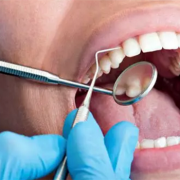
Many types of tools are used to clean and care for teeth, including probes, mirrors, scrapers, dental burnishers and pressors. Mirrors help examine the patient’s mouth, and scrapers scrape to remove plaque and tartar. The polisher gives a final finish to the fill, smoothing out scratches left by other tools. The probe is used to find the cavity and pressure area of the tooth so that the restorative material can be placed. They have a variety of angles and pointed shapes, so the dentist can freely reach all sides of the teeth. A variety of materials are available to manufacture dental instruments, including stainless steel, carbon steel, titanium, and plastics. Important factors to consider when choosing a tool include strength and toughness of the material, weight, balance, ability to maintain sharp edges, and corrosion resistance.

Dental instruments should have enough strength and toughness to prevent their fracture and avoid stabbing accidents. Stainless steel offers the most suitable properties for each class of instrument. The high hardness of surgical stainless steel maximizes tip life and reduces maintenance time. Stainless steel tips have excellent toughness, scrapers and probes require sharp edges to reduce the pressure applied by the dentist, thus avoiding damage to the patient’s teeth or the tool itself. Blunt instruments are difficult to use, reducing the quality and accuracy of the operation and taking up more time for dentists.

As with all medical practices, cleanliness is a key factor to the safety and success of dental practices. Dental appliances need to be disinfected after each use, usually by means of high-temperature steam disinfection in an autoclave using dry heat sterilization or chemical steam pressure sterilization. Stainless steel is resistant to corrosion during any of these sterilized treatments and its inert surfaces are easily cleaned and disinfected. Scrapers are used to remove hardened dental plaque from the surface of teeth.

A widely used grade is AISI 440A, a high-carbon, 0.75% molybdenum hardened stainless steel. A manufacturer in California uses the Model 440A to manufacture high-quality dental and surgical instruments. According to the experience of the company’s metallurgists, this grade offers the best hardness, toughness and wear resistance of any stainless steel. Another top tool manufacturer in the United States uses 440A stainless steel to make durable, reliable, and high-quality instruments that enable dentists and technicians to achieve the best in medical practice and patient care.

A German dental instrument manufacturer manufactures probes using super duplex stainless steel containing 3% molybdenum. The super duplex stainless steel has high strength, good toughness and excellent wear resistance, ensuring that the tip of the instrument remains sharp for a long time. Sandvik, a stainless steel manufacturer, has offered a range of molybdenum-containing grades for medical and dental instruments – molybdenum-containing 4% precipitation hardening (PH) grade. It can be formed at low hardness, then heat-treated to reach final hardness in one step, and has better toughness than the hardened martensite grade, which requires more heat treatment steps.