L'acciaio inossidabile 304 è magnetico?

Ordinary consumers have some misunderstandings about stainless steel, they think that the magnetic stainless steel is not qualified 304 stainless steel. As we know, according to the structure under room temperature,stainless steel can be divided into Austenite such as 201, 304, 321, 316, 310, Martensite or Ferric such as 430, 420, 410. Austenites are non-magnetic or weakly magnetic and Martensite or ferrite are magnetic. 304 is a representative grade of the austenitic stainless steel, it has excellent workability, weldability and corrosion resistance, account for 60% of the world consumption of stainless steel, generally, it is no magnetic, but sometimes it is magnetic or weak magnetism caused by smelting chemical composition fluctuations or processing, but we cannot think this is fake or substandard, what reason is this?

304 is metastable stainless steel, is a single austenite structure after annealing state, with no magnetic. Smelting composition segregation or improper heat treatment will produce a small amount of martensite or ferrite structure, so with a weak magnetic. In addition, after the cold processing deformation (such as stamping, stretching, rolling, etc.), part of the austenite structure also underwent phase change (general mutagenesis into martensite) and with magnetic.

For example, in the same batch of steel strips, the outer diameter of 76mm steel pipe has no obvious magnetic while the outer diameter of 9.5mm steel pipe has obvious magnetic. The magnetic properties of the square rectangular tube are more obvious because the cold bending deformation is greater than that of the round tube, especially in the bending part.

Most of the water sink is made of 304 stainless steel. Many consumers judge it is made of 304-grade stainless steel according to whether the water tank is magnetic or not. At present, there are many kinds of processing technology for the sink, such as welding forming, integral tensile forming, etc., if used 304 material welding forming, is generally annealed after the plate processing, will not be magnetic or weakly magnetic (because of the surface treatment of the sink); One of the water tank drawing molding needs to go through several stretching, general annealing and then stretching (annealing increases the cost, and 304 is not necessary to anneal again), it will be magnetic, that is a very normal phenomenon.

Quando i fili in acciaio inox utilizzati negli scambiatori di calore delle custodie

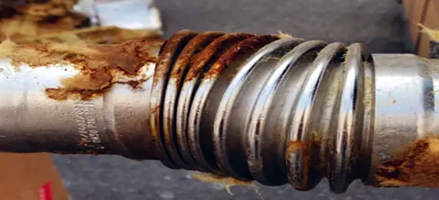
The bellows tube heat exchanger is an upgrade based on a straight (bright) tube heat exchanger. The design of the crest and trough of the wave inherits the advantages of the tubular heat exchanger such as durability and safety, and at the same time overcomes the defects such as poor heat transfer capacity and easy scaling. The principle is to improve the total heat transfer coefficient so as to reduce the required heat transfer area, which can save materials and reduce weight under the same heat transfer effect.

Because the bellows body is processed by cold pressing of bright pipe billet, it is generally believed that the bellows body can be strengthened after forming. The external pressure stability experiment shows that the instability of the corrugated heat exchange tube under external pressure first occurs in the straight pipe section, and the corrugated tube will be unstable only if the external pressure continues to rise. This indicates that the stability of the corrugated section is better than that of the straight section and that the critical pressure of the corrugated section is higher than that of the straight section.

Experiments show that the ripple of buckling deformation occurred in the wave trough, especially local single wave trough, generally not more than two troughs instability at the same time, it shows that the stability of the wave crest is better than trough but sometimes also can appear the opposite, in the cold pressing mark process, both trough and the wall thickness of the straight section is constant, cold after the tube is actually shorter.

The existence of wave peaks and troughs in the bellows increases the effect of radial heat exchange convection in the tubes, as shown in Fig below:

Radial convection has a great influence on the total heat transfer coefficient, which is the fundamental reason for the low price and lightweight of the double tube plate bellows heat exchanger. The heat exchange area of the tube body surface of the bellows and the straight tube is large at the same length, but this change is far less than the contribution of changing the coefficient value. It can be clearly seen that the flow velocity of the straight (light) tube is significantly reduced when it is close to the tube wall.

The shell heat exchanger with bellows can make the fluid speed and direction of constant change to form turbulence compared with a straight tube exchanger, making exchange heat with the wall, the boundary effect that affects heat transfer will no longer exist. The total heat transfer coefficient can be increased by 2 ~ 3 times, and the actual operation can even reach 5 times, and the weight is light, which is the reason why the price of bellows heat exchanger is lower than that of the straight tube heat exchanger. According to calculation and practical experience, the total heat transfer coefficient of 1 mm thick bellows is 10% lower than that of 0.5 mm thick bellows. The operation data of hundreds of bellows heat exchangers show that the wall thickness (almost all 0.5 mm) is the main reason for the operation of 10 ~ 14 years without major repair or damage.

In addition, the bellows heat exchanger can effectively resist the impact of a water hammer. The shell of the double tube plate heat exchanger is connected with an expansion joint. If it suffers from the impact of water hammer, the expansion joint will be misplaced. This happens to both bellows and straight tube heat exchangers, and the deformation of the shell may cause the tube to twist. It is because the bellows have more expansion margin, the elastic margin of strain is large when undergoing deformation, that is to say, the ability to resist instability is strong in this case. But in any case, in the process of installation to avoid the occurrence of water hammer, can be taken through the use of Angle sitting valve, delay switch and other measures.
Advantages of stainless steel bellow shell heat exchanger

  • High heat transfer efficiency

The special crest and trough design of the bellows makes the fluid flow because of the continuous mutation of the inside and outside section of the tube to form a strong turbulence. Even in the case of a very small flow rate, the fluid can form a strong disturbance inside and outside the tube, which greatly improves the heat transfer coefficient of the heat exchange tube. The heat transfer coefficient is 2~3 times higher than that of the traditional tube heat exchanger.

  • No scaling and blocking

The medium inside and outside the bellows is always in a highly turbulent state, which makes the solid particles in the medium-difficult to deposit scale; On the other hand, affected by the temperature difference of the medium will produce a trace of axial expansion deformation, the curvature will change frequently, the dirt and heat exchange tube will produce a large pull force, even if there is scale calm will therefore break off automatically, so that the heat exchanger has always maintained a lasting, better heat transfer performance.

  • Automatic compensation

The special structure and shape of bellows can effectively reduce the thermal stress under the condition of being heated without adding expansion joints, thus simplifying the structure of products and improving the reliability of products.

  • Long service life

The axial expansion ability is enhanced, which effectively reduces the temperature difference stress and can adapt to the large temperature difference and pressure change, so there will be no leakage caused by pipe mouth rupture. The connection between the baffle plate and the bellows extends the service life of the heat exchanger.


 

Acciaio inossidabile 304 vs acciaio inossidabile 403

I materiali in acciaio inox più comunemente utilizzati sono i gradi 304 e 430. L’acciaio inox 304 è un tipo generale di acciaio austenitico cromato-nichel, con una densità di 7,93 g/cm3 e conosciuto anche come acciaio inox 18/8. La serie 300 di acciaio inox è l’acciaio più comunemente utilizzato. Può resistere a temperature elevate di 800 °C, presenta buone prestazioni di lavorazione e una buona resistenza alla trazione, ed è ampiamente utilizzato nelle applicazioni che richiedono prestazioni complete (resistenza alla corrosione e lavorabilità). L’acciaio inox 304L è una versione a basso tenore di carbonio dell’acciaio inox 304, che non richiede accoppiamento post-fusione, quindi è ampiamente utilizzato per componenti di spessore maggiore (circa 5 mm e oltre). Il tenore più elevato di carbonio dell’acciaio inox 304H consente di utilizzarlo a temperature elevate. La struttura austenitica accoppiata conferisce a questi gradi una buona resistenza alla trazione anche a basse temperature di congelamento.

L’acciaio inossidabile a basso tenore di carbonio e ad alto contenuto di cromo 430 è uno degli acciai inossidabili ferritici più comuni; ha una buona resistenza alla corrosione ed è noto anche come 18/0 o 18-0; è uno degli acciai della serie 400. Può essere leggermente rinforzato lavorandolo a freddo, ma la sua resistenza alla corrosione a basse temperature è scarsa e, in genere, non può essere temprato mediante trattamento termico. La sua conduttività termica è migliore rispetto all’acacetato; il coefficiente di dilatazione termica è inferiore a quello dell’acacetato; la resistenza alla fatica termica, l’aggiunta di un elemento stabilizzante come il titanio migliora le proprietà meccaniche della zona di saldatura, consentendo l’utilizzo per la decorazione degli edifici, le parti dei bruciatori di combustibile, gli elettrodomestici e le parti degli elettrodomestici. L’acciaio 430F è un tipo di acciaio con prestazioni di taglio libere su acciaio 430; viene utilizzato principalmente per torni automatici, bulloni e dadi, ecc. L’acciaio 430LX aggiunge Ti o Nb all’acciaio 430, riducendo il contenuto di C e migliorando le prestazioni di lavorazione e di saldatura. È utilizzato principalmente per serbatoi per acqua calda, sistemi di riscaldamento dell'acqua, apparecchi sanitari, elettrodomestici duraturi per uso domestico, volani delle biciclette, ecc.


Secondo la norma ASTM A240: Specifiche per le piastre, i listelli e le strisce in acciaio inossidabile crômico e nichelico per recipienti a pressione e per usi generali, l’acciaio inossidabile 430 deve contenere meno di 0,12% di carbonio, tra 16-18% di cromo e meno di 0,75% di nichel, la differenza tra 304 e 430 come indicato nella tabella seguente:

Confronto della composizione chimica 

UNS C Mn P S Si Cr Ni Mo
S30400 0.07 2.00 0.045 0.03 0.75 17.5-19.5 8.0-10.5 /
S43000 0.12 1,00 0.04 0.03 1.00 16.0-18.0 0.75 /


Confronto delle proprietà meccaniche

Valutazioni Resistenza alla trazione, Mpa Resistenza alla trazione, Mpa Allungamento in 2/50mm, min, % Durezza, HBW
304 205 515 40 183
403 205 450 22 201


Riassumendo, differiscono principalmente nei seguenti aspetti:

  • Resistenza alla corrosioneLa resistenza alla corrosione dell'acciaio inossidabile 304 è migliore rispetto a quella dell'acciaio inossidabile 430. Poiché l'acciaio inossidabile 430 contiene tra il 16,00 e il 18,00% di cromo, in sostanza non contiene nichel, l'acciaio inossidabile 304 contiene più cromo e più nichel;
  • StabilitàL'acciaio inossidabile 430 è formato da ferrite, l'acciaio inossidabile 304 è formato da austenita, più stabile dell'acciaio inossidabile 430;
  • ResistenzaLa durezza del 304 è superiore a quella dell’acciaio inossidabile 430;
  • Conductivita termicaLa conducibilità termica dell'acciaio inossidabile 430 è simile a quella dell'acciaio inossidabile 304;
  • Proprietà meccanicheLe proprietà meccaniche delle cuciture di saldatura in acciaio inox 430 sono migliori rispetto a quelle dell’acciaio inox 304 grazie all’aggiunta dell’elemento chimico stabile del titanio.

Come influenza il nitrato l'acciaio inossidabile 316LN?

316LN è la versione a base di additivo di azoto Acciaio 316L (0,06% ~ 0,08%), in modo che abbia le stesse caratteristiche del 316L, è stato utilizzato nella produzione di componenti strutturali ad alta temperatura nei reattori a breeder rapido (FBRS). La riduzione del contenuto di carbonio riduce notevolmente la suscettibilità ai crack di corrosione da stress a causa della saldatura in ambienti corrosivi successivi. La flessione, la fatica a ciclo ridotto e l’interazione tra flessione e fatica sono le considerazioni più importanti per i componenti dei FBRS. La resistenza ad alta temperatura dei Acciaio inossidabile 316L Può essere migliorata a acciaio inossidabile 316 mediante l’aggiunta di leganti tra lo 0,06% e lo 0,08% N. In questo documento verrà discusso l’influenza del contenuto di azoto superiore allo 0,08% sulle proprietà meccaniche dell’acciaio inossidabile 316L a temperatura elevata.


Composizione chimica dell'acciaio inossidabile 316LN

Forno N C Mn Cr Mo Ni Si S P Fe
Norme 0.06-0.22 0.02-0.03 1.6-2.0 17-18 2.3-2.5 12.0-12.5 ≤0.5 ≤0.01 ≤0.03 –
1 0.07 0.027 1,7 17.53 2.49 12.2 0.22 0.0055 0.013 –
2 0.11 0.033 1.78 17.63 2.51 12.27 0.21 0.0055 0.015 –
3 0.14 0.025 1.74 17.57 2.53 12.15 0.20 0.0041 0.017 –
4 0.22 0.028 1.70 17.57 2.54 12.36 0.20 0.0055 0.018 –

Questi quattro lotti di acciaio inossidabile 316LN con un contenuto di azoto dello 0,07%, dello 0,11%, dello 0,14% e dello 0,22%, e un contenuto di carbonio dello 0,03%, sono stati testati per studiare gli effetti dell’azoto sulle proprietà di trazione, creep, fatica a bassa frequenza e fatica-creep dell’acciaio inossidabile 316LN. Lo scopo di questo esperimento è di trovare il contenuto di azoto ottimale per ottenere la migliore combinazione di proprietà di trazione, creep e fatica a bassa frequenza. I risultati sperimentali mostrano che l’azoto può migliorare la resistenza alla trazione, la resistenza al creep e la resistenza alla fatica degli acciai inossidabili austenitici. Le ragioni dell’aumento della resistenza includono l’intensificazione della soluzione, la riduzione dell’energia delle fessure (SFE), l’indurimento per precipitazione, la formazione di composti (soluti interstiziali), la segregazione atomica e l’indurimento ordinato. A causa delle loro diverse proprietà di scambio di elettroni, l'azoto disciolto nell'acciaio inossidabile austenitico ha un volume di espansione maggiore rispetto al carbonio.

Oltre all’interazione elastica tra azoto e dislocazione, anche l’interazione elettrostatica interstiziale delle dislocazioni influisce sulla resistenza. I nuclei delle dislocazioni sono caratterizzati dalla mancanza di elettroni liberi, il che significa che presentano una carica positiva. Gli atomi di azoto negli acciai inossidabili austenitici sono carichi negativamente a causa della posizione degli elettroni liberi vicino agli atomi di azoto e dell’interazione elettrostatica tra le dislocazioni e gli atomi di azoto.

L’energia di legame effettiva tra l’atomo di azoto e la dislocazione aumenta con l’aumento del contenuto di azoto nell’acciaio austenitico, ma la correlazione non è evidente per il carbonio. Nei metalli austenitici, l’azoto interstiziale interagisce con gli elementi sostitutivi e tende a formare composizioni atomiche di sostituenti interstiziali. Il composto si lega facilmente agli elementi a sinistra del Fe nell’ambito della tavola periodica, come Mn, Cr, Ti e V. C’è una forte correlazione tra le proprietà della legatura interatomica (ossia orientamento versus non orientamento) e la vicinanza degli atomi adiacenti in un sistema multicomponente di leghe. La legatura tra gli atomi metallici facilita l’ordinamento a breve distanza, che è la legatura degli atomi degli stessi elementi. La polarizzazione interatomica facilita lo scambio di elettroni covalenti, la legatura tra gli atomi dello stesso elemento. Il carbonio favorisce l’aggregazione degli atomi di sostituzione nella soluzione solida a base di ferro, mentre l’azoto facilita l’ordinamento a breve distanza.

In generale, la resistenza alla trazione (YS) e la resistenza alla trazione massima (UTS) 316L Gli acciai in acciaio inox sono significativamente migliorati grazie all’aggiunta di 0,07% ~ 0,22% di azoto nell’alluminio. L’aumento della resistenza è stato osservato in tutti i test nel range di temperatura da 300 ~ 1123 K. L’invecchiamento dinamico sotto sforzo è stato osservato entro un range di temperatura limitato. Il range di temperatura dell’invecchiamento dinamico sotto sforzo (DSA) diminuisce con l’aumento del contenuto di azoto.