
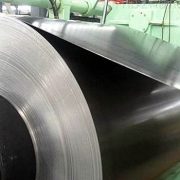
Tahan karat stainless steel 304/304L, 316/316L

Austenitic stainless steels are the most widely used stainless steels, accounting for about 75% of the total stainless steel consumption. The rapid development of the chemical industry and petrochemical industry has put forward higher requirements for the corrosion resistance and strength of stainless steel. For example, the 304/304L dual grades stainless steel means it has lower carbon content, that’s less than 0.03%, meeting the 304L grades, while its yield and tensile strength are higher than the lower limit of 304 stainless steel, the stainless steel can be defined as 304/304L dual grades stainless steel, that is, its chemical composition meets that of 304L, and mechanical properties to meet the requirements of 304 stainless steel. Similarly, a stainless steel sheet can be 304/304H dual certified because it has enough carbon content to meet the 304H (minimum 0.040%) requirement and also meets the 304H grain size and strength requirements, there are 316/316L and other dual grades of stainless steel.

The most important is the difference in carbon and the resulting strength. Carbon is an effective austenitic stabilizing element and can be considered as an impurity or an alloying element that improves the strength of stainless steel, especially at high temperatures. The carbon content in most austenitic stainless steels is below 0.02% ~ 0.04%. In order to have good corrosion resistance after welding, the carbon content of low carbon grade stainless steel is controlled below 0.030%. In order to improve the high-temperature strength, the high carbon or “H” grade carbon content is maintained at 0.04% or slightly higher.

The smaller carbon atoms in the face-centered cubic structure are in the lattice gaps between the larger Cr, Ni and Mo atoms, which limit the dislocation motion, hinder the ductility deformation and strengthen the stainless steel. Under the condition of rising temperature such as in the welding process, carbon has a strong tendency to precipitate chromium in stainless steel matrix with chrome-rich carbide, and the second phase tends to precipitate at grain boundary rather than grain center, so chromium carbide is easy to form at the grain boundary.

Chromium is a necessary element for enhancing the corrosion resistance of stainless steel, but chromium carbide is removed from the stainless steel matrix, so the corrosion resistance here is worse than the rest of the stainless steel matrix. Increasing the carbon content can extend the temperature range, so that the time of sensitization or corrosion resistance loss is shortened, reducing the carbon content can delay or completely avoid the formation of carbide in welding. Low carbon grades such as 304L and 316L carbon content less than 0.030%, most of the higher alloyed Austenite grades such as 6%Mo stainless steel carbon content is less than 0.020%. To compensate for the decrease in strength due to the decrease in carbon content, another interstitial element nitrogen is sometimes added to strengthen the stainless steel.

Dual-grade stainless steel has both the high strength of conventional stainless steel and the corrosion resistance of ultra-low carbon stainless steel. It can solve the problem of weak welding joint performance of most Austenitic stainless steel, has been widely used in low-temperature LNG receiving station equipment and large diameter pipeline. The price of dual-grade stainless steel is basically the same as ultra-low carbon stainless steel. Now several Chinese steel mills can supply the grades for mature market, any interested, please contact us.

 

What’s Super 304H steel?

With the development of ultra-supercritical units, the high-temperature strength of traditional 18-8 Austenitic stainless steels (such as TP304H steel) has been unable to meet their needs with steam parameters of 600℃. For this reason, Japan Sumitomo Metal Corporation has developed new materials for the boiler heating surface pipeline of the unit, like TP347HFG steel, SUPER304H steel and HR3C steel. Super 304H steel is a new type of 18-8 steel, mainly used in the manufacture of superheater and reheater of ultra-supercritical boilers whose metal wall temperature does not exceed 700 ℃. At present, Shasqida Mannesmann (formerly DMV Company) in Germany also produces similar steel tubes, with a grade DMV 304HCU.

Super304H steel is the steel by reducing the content of Mn, Si, Cr and Ni-based on TP304H steel, which adding 2.5% ~ 3.5% Cu and 0.30%~0.60% of Nb and 0.05%~0.12% of N, so that to produce the diffusion precipitation phase and copper-rich strengthened phase in service, occurs precipitation strengthening with NbC(N), NbCrN and M23C6, which greatly increases the allowable stress at service temperature, and the allowable stress at 600 ~ 650℃ is 30% higher than that of TP347H steel. The steam oxidation resistance of the steel is comparable to that of TP347HFG steel and significantly better than that of TP321H steel. It has been listed in ASME Code Case 2328-1, ASTM A-213 Standard, the number is S30432.


The Chemical Composition of Super 304H

C Si Mn P S Cr Ni N Al B Nb Cu V Mo
0.08 0.21 0.79 0.03 0.001 18.42 8.66 0.11 0.007 0.004 0.5 2.77 0.04 0.35


The Mechanical Property of Super 304H

Yield strength, Mpa Kekuatan tegangan, Mpa Elongation, %
360/350 640/645 58/60


Due to the high steam parameters of ultra-supercritical units, the oxidation resistance of steel used in high-temperature pressure parts of power plants becomes very important. Generally, the inner wall of the super 304H steel pipe is shot blasting to improve the anti-steam oxidation performance. A 30μm thickness shot blast layer was formed on the inner surface of the steel tube and its microstructure was refined compared with that of the non-shot peening steel tube. After the steam oxidation test at 650℃ and 600h, the oxide layer thickness of the steel tube treated by the shot blast is thinner and denser, and the steam oxidation resistance of the steel tube is improved. Currently, several leading steel mills in China have produced a similar grade 10CrL8Ni9NbCu3Bn, specified in GB 5310-2008, which is currently used in several ultra-supercritical unit projects in China.

Apakah baja stainless 304 magnetik?

Ordinary consumers have some misunderstandings about stainless steel, they think that the magnetic stainless steel is not qualified 304 stainless steel. As we know, according to the structure under room temperature,stainless steel can be divided into Austenite such as 201, 304, 321, 316, 310, Martensite or Ferric such as 430, 420, 410. Austenites are non-magnetic or weakly magnetic and Martensite or ferrite are magnetic. 304 is a representative grade of the austenitic stainless steel, it has excellent workability, weldability and corrosion resistance, account for 60% of the world consumption of stainless steel, generally, it is no magnetic, but sometimes it is magnetic or weak magnetism caused by smelting chemical composition fluctuations or processing, but we cannot think this is fake or substandard, what reason is this?

304 is metastable stainless steel, is a single austenite structure after annealing state, with no magnetic. Smelting composition segregation or improper heat treatment will produce a small amount of martensite or ferrite structure, so with a weak magnetic. In addition, after the cold processing deformation (such as stamping, stretching, rolling, etc.), part of the austenite structure also underwent phase change (general mutagenesis into martensite) and with magnetic.

For example, in the same batch of steel strips, the outer diameter of 76mm steel pipe has no obvious magnetic while the outer diameter of 9.5mm steel pipe has obvious magnetic. The magnetic properties of the square rectangular tube are more obvious because the cold bending deformation is greater than that of the round tube, especially in the bending part.

Most of the water sink is made of 304 stainless steel. Many consumers judge it is made of 304-grade stainless steel according to whether the water tank is magnetic or not. At present, there are many kinds of processing technology for the sink, such as welding forming, integral tensile forming, etc., if used 304 material welding forming, is generally annealed after the plate processing, will not be magnetic or weakly magnetic (because of the surface treatment of the sink); One of the water tank drawing molding needs to go through several stretching, general annealing and then stretching (annealing increases the cost, and 304 is not necessary to anneal again), it will be magnetic, that is a very normal phenomenon.

Ketika bellow baja tahan karat digunakan dalam penukar panas shell

Heat exchanger selang belanga adalah upgrade yang didasarkan pada heat exchanger selongsong lurus (berkilau). Desain puncak dan lembah gelombang mewarisi keunggulan heat exchanger tubular seperti daya tahan dan keamanan, dan pada saat yang sama mengatasi kekurangan seperti kapasitas transfer panas yang buruk dan mudah tergores. Prinsipnya adalah meningkatkan koefisien transfer panas secara keseluruhan agar dapat mengurangi area transfer panas yang dibutuhkan, yang dapat menghemat bahan dan mengurangi berat badan dengan efektivitas transfer panas yang sama.

Karena tubuh selang beralur diproses melalui teknik press dingin pipa yang terang Sebagai generalisasi, umumnya diyakini bahwa tubuh selang dapat diperkuat setelah dibentuk. Hasil percobaan stabilitas tekanan eksternal menunjukkan bahwa ketidakstabilan tabung pertukaran panas bergelombang terjadi pertama-tama di bagian pipa lurus, dan tabung bergelombang hanya akan tidak stabil jika tekanan eksternal terus meningkat. Hal ini menunjukkan bahwa stabilitas bagian bergelombang lebih baik daripada bagian lurus dan bahwa tekanan kritis bagian bergelombang lebih tinggi daripada bagian lurus.

Percobaan menunjukkan bahwa gelombang deformasi yang terjadi di dalam rongga gelombang, terutama gelombang tunggal lokal, umumnya tidak lebih dari dua gelombang yang mengalami instabilitas pada saat bersamaan; hal ini menunjukkan bahwa stabilitas puncak gelombang lebih baik daripada rongga gelombang, namun terkadang juga dapat terjadi sebaliknya; dalam proses pemerasan dingin, baik rongga maupun ketebalan dinding bagian lurus tetap konstan; setelah dipanaskan, sebenarnya tabung tersebut menjadi lebih pendek.

Keberadaan puncak dan lembah gelombang dalam baling-baling meningkatkan efek konveksi pertukaran panas radial dalam tabung, seperti yang ditunjukkan pada gambar di bawah:

Konveksi radial memiliki pengaruh besar pada koefisien transfer panas total, yang merupakan alasan utama mengapa heat exchanger berbentuk pelat tabung ganda harganya murah dan ringan. Luas area pertukaran panas heat exchanger ini lebih besar daripada heat exchanger berbentuk pelat tabung tunggal. tube permukaan tubuh selang belulang dan tabung lurusnya besar pada panjang yang sama, namun perubahan ini jauh lebih kecil daripada kontribusi dari perubahan nilai koefisien. Dapat dilihat dengan jelas bahwa kecepatan aliran tabung lurus (ringan) berkurang secara signifikan ketika berada dekat dengan dinding tabung.

Peredam panas kerang dengan beling dapat membuat kecepatan dan arah fluida berubah secara konstan untuk membentuk turbulensi dibandingkan dengan peredam panas tabung lurus, sehingga pertukaran panas dengan dinding tidak akan lagi terjadi. Koefisien transfer panas total dapat ditingkatkan hingga 2 ~ 3 kali, dan operasinya bahkan dapat mencapai 5 kali lipat, dan bobotnya ringan, itulah sebabnya harga peredam panas kerang lebih rendah daripada peredam panas tabung lurus. Menurut perhitungan dan pengalaman praktis, koefisien transfer panas total dari peredam panas kerang dengan ketebalan 1 mm lebih% rendah dari pada peredam panas kerang dengan ketebalan 0,5 mm. Data operasi ratusan peredam panas kerang menunjukkan bahwa ketebalan dinding (hampir semua 0,5 mm) merupakan alasan utama untuk beroperasi selama 10 ~ 14 tahun tanpa perbaikan atau kerusakan besar.

Selain itu, penukar panas beling dapat secara efektif menahan dampak air hammer. Cangkang penukar panas pelat tabung ganda terhubung dengan sambungan pelengkung. Jika mengalami dampak air hammer, sambungan pelengkung akan terlepas. Hal ini terjadi pada kedua jenis penukar panas beling dan penukar panas tabung lurus, dan deformasi cangkang dapat menyebabkan tabung berputar. Hal ini disebabkan oleh beling memiliki margin ekspansi yang lebih besar, margin elastis strain yang besar saat mengalami deformasi, yaitu kemampuan untuk menahan instabilitas yang kuat dalam kasus ini. Namun dalam setiap kasus, dalam proses pemasangan untuk menghindari terjadinya air hammer, dapat dilakukan dengan menggunakan katup sudut, saklar penundaan, dan langkah-langkah lainnya.

Keunggulan dari penukar panas dengan shell bellow terbuat dari stainless steel

  • Efisiensi transfer panas yang tinggi

Desain puncak dan lekukan khusus pada bellows membuat aliran fluida terjadi karena mutasi terus-menerus pada bagian dalam dan luar tabung sehingga terbentuk turbulensi yang kuat. Bahkan dalam kasus aliran yang sangat kecil, fluida dapat membentuk gangguan yang kuat di dalam dan di luar tabung, yang sangat meningkatkan koefisien transfer panas dari tabung pertukaran panas. Koefisien transfer panasnya adalah 2~3 kali lebih tinggi dibandingkan dengan tabung pertukaran panas tradisional.

  • Tidak ada scaling dan blocking

Medium di dalam dan di luar belerang selalu berada dalam kondisi sangat bergejolak, yang membuat partikel padat dalam medium sulit terakumulasi menjadi skala; Sebaliknya, dipengaruhi oleh perbedaan suhu medium, akan menghasilkan deformasi ekspansi aksial, kelengkungannya akan berubah secara sering, tabung pertukaran kotoran dan panas akan menghasilkan gaya tarik yang besar, bahkan jika skala tidak bergerak akan terlepas secara otomatis, sehingga penukar panas selalu mempertahankan kinerja perpindahan panas yang tahan lama dan lebih baik.

  • Kompensasi otomatis

Struktur dan bentuk khusus dari bellows dapat secara efektif mengurangi stres termal dalam kondisi dipanaskan tanpa menggunakan sambungan pelengkungan, sehingga mempermudah struktur produk dan meningkatkan keandalan produk.

  • Umur pemakaian yang lama

Kemampuan ekspansi aksial meningkat, yang secara efektif mengurangi tegangan perbedaan suhu dan dapat menyesuaikan diri dengan perubahan perbedaan suhu dan tekanan yang besar, sehingga tidak akan terjadi kebocoran akibat pecahnya lubang pipa. Sambungan antara pelat penyaring dan beling memperpanjang masa pakai penukar panas.


304 stainless steel VS 403 stainless steel

Grades 304 and 430 are commonly used stainless steel materials. 304 stainless steel is a general type of chromium-nickel austenitic stainless steel, the density of 7.93 g/cm3, also known as 18/8 stainless steel, is 300 series of stainless steel is the most commonly used steel. It can withstand high temperature 800℃, has good processing performance and toughness, widely used in the requirements of good comprehensive performance (corrosion resistance and molding) equipment and parts. 304L is a low-carbon version of 304, which does not require post-weld annealing, so it is widely used for thick gauge parts (approx. 5mm and above). The higher carbon content of 304H can be used at high temperatures. The annealed austenite structure also gives these grades excellent toughness, even at low freezing temperatures.

Low carbon high chromium 430 is one of the most common ferritic stainless steels, has good corrosion resistance, also known as 18/0 or 18-0, is one of the 400 series of stainless steels. It can be made slightly strengthened by cold working, but the low-temperature toughness is poor, and generally can not be hardened by heat treatment. Its thermal conductivity is better than austenite, the coefficient of thermal expansion is smaller than austenite, heat resistance fatigue, the addition of stabilizing element titanium makes the welding seam part of the mechanical property is good, can be used for building decoration, fuel burner parts, household appliances, household appliances parts. 430F is a kind of steel with free cutting performance on 430 steel, mainly used for automatic lathes, bolts and nuts, etc. 430LX adds Ti or Nb in 430 steel, reduces the content of C, and improves the processing performance and welding performance. It is mainly used for hot water tanks, heating water systems, sanitary appliances, household durable appliances, bicycle flywheels, etc.


According to ASTM A240- Specifications for chromium and chromium-nickel stainless steel plates, sheets and strips for pressure vessels and general purposes, 430 stainless steel shall contain less than 0.12% carbon, between 16-18% chromium, and less than 0.75% nickel, the difference between 304 and 430 as shown in the table below:

Chemical composition comparison 

UNS C Mn P S Si Cr Ni Mo
S30400 0.07 2.00 0.045 0.03 0.75 17.5-19.5 8.0-10.5 /
S43000 0.12 1,00 0.04 0.03 1.00 16.0-18.0 0.75 /


Mechanical property comparison

Nilai Yield strength, Mpa Kekuatan tegangan, Mpa Elongation in 2 /50mm, min, % Hardness, HBW
304 205 515 40 183
403 205 450 22 201


To sum up, they differ mainly in the following items:

  • Ketahanan terhadap korosi: The corrosion resistance of 304 stainless steel is better than 430. Because 430 stainless steel contains 16.00-18.00% chromium, basically does not contain nickel, 304 stainless steel contains more chromium and nickel;
  • Stability: 430 stainless steel is ferrite form, 304 stainless steel is austenite, more stable than 430 stainless steel;
  • Toughness: The toughness of 304 is higher than 430 stainless steel;
  • Konduktivitas termal: The thermal conductivity of ferrite 430 stainless steel is like 304 stainless steel;
  • Mechanical properties: 430 stainless steel welding seam mechanical properties than 304 stainless steel is better because of the addition of stable chemical element titanium.

How the Nitrogen affect 316LN stainless steel?

316LN is the Nitrogen addition version based on 316L steel (0.06% ~ 0.08%), so that it has the same characteristics as 316L,  has been used in the manufacture of high-temperature structural components in fast breeder reactor (FBRS). Reducing the carbon content greatly reduces the susceptibility to stress corrosion cracking due to welding in subsequent corrosive environments. The creep, low cycle fatigue and creep-fatigue interaction are the most important considerations for FBRS components. The high-temperature strength of 316L stainless steel can be improved to 316 stainless steel by alloying 0.06% ~ 0.08% N. The influence of nitrogen content higher than 0.08% on mechanical properties of 316L stainless steel at high temperature will be discussed in this paper.


Chemical composition of 316LN stainless steel

Furnace N C Mn Cr Mo Ni Si S P Fe
Standar 0.06-0.22 0.02-0.03 1.6-2.0 17-18 2.3-2.5 12.0-12.5 ≤0.5 ≤0.01 ≤0.03 –
1 0.07 0.027 1,7 17.53 2.49 12.2 0.22 0.0055 0.013 –
2 0.11 0.033 1.78 17.63 2.51 12.27 0.21 0.0055 0.015 –
3 0.14 0.025 1.74 17.57 2.53 12.15 0.20 0.0041 0.017 –
4 0.22 0.028 1.70 17.57 2.54 12.36 0.20 0.0055 0.018 –

Thses four batches of 316LN stainless steel with a nitrogen content of 0.07%, 0.11%, 0.14% and 0.22%, and carbon content of 0.03%, were tested to study the effects of nitrogen on tensile, creep, low-cycle fatigue and creep-fatigue properties of 316LN stainless steel. The aim of this experiment is to find the optimum nitrogen content to obtain the best combination of tensile, creep and low cycle fatigue properties. The experimental results show that nitrogen can improve the tensile strength, creep and fatigue strength of austenitic stainless steels. The reasons for the increase in strength include solution enhancement, reduced stacking fault energy (SFE), precipitation hardening, formation of composites (interstitial solutes), atomic segregation, and ordered hardening. Due to their different electron exchange properties, the dissolved nitrogen in austenitic stainless steel has a larger expansion volume than carbon.

In addition to the elastic interaction between nitrogen and dislocation, the electrostatic interstitial dislocation interaction also influences the strength. Dislocation nuclei are characterized by the lack of free electrons, which means they have a positive charge. The nitrogen atoms in austenitic stainless steels are negatively charged due to the position of free electrons near the nitrogen atoms and the electrostatic interaction between the dislocations and the nitrogen atoms.

The effective binding energy between the nitrogen atom and the dislocation increases with the increase of the nitrogen content in Austenitic steel, but the correlation is not obvious for carbon. In Austenitic steels, interstitial nitrogen interacts with substituent elements and tends to form interstitial substituent atomic compositions. The compound binds easily to elements to the left of Fe in the periodic table, such as Mn, Cr, Ti and V. There is a strong correlation between the properties of interatomic bonding (that is, orientation versus unorientation) and the proximity of adjacent atoms in a multicomponent alloy system. Bonding between metal atoms facilitates short-range ordering, which is the bonding of atoms of different elements. Interatomic polarization facilitates the exchange of covalent electrons, the bonding between atoms of the same element. Carbon promotes the aggregation of substitution atoms in the iron-based solid solution, while nitrogen facilitates short-range ordering.

In general, the yield strength(YS) and ultimate tensile strength(UTS) of 316L stainless steel are significantly improved by the alloying of 0.07% ~ 0.22% nitrogen. The increase in strength was observed in all tests in the temperature range of 300 ~ 1123K. Dynamic strain aging was observed within a limited temperature range. The temperature range of dynamic strain aging (DSA) decreases with the increase of nitrogen content.